
Nylon does dry relatively fast, but not as quickly as some might think. While the surface of nylon fabric can dry in 3-4 hours, deep moisture can take up to 24 hours to fully evaporate. The drying speed of nylon depends on various factors, including thickness, environmental conditions, and how wet the fabric is.
Key Takeaways:
- Surface drying: 3-4 hours
- Deep moisture drying: Up to 24 hours
- Optimal drying temperature: 75°C (167°F)
- Ideal drying duration: 12+ hours
Introduction to Nylon and Its Drying Properties
Nylon is a synthetic fabric that’s known for its strength and durability. But how does it handle moisture? Let’s dive into the world of nylon and explore its drying properties. 🏊♂️
Does Nylon Dry Fast? A Comprehensive Answer
Quick Surface Drying
Nylon has a unique ability to dry quickly on the surface. This is great news for those who need their clothes to look dry fast! In just 3-4 hours, the outer layer of nylon fabric can feel dry to the touch. But is that the whole story? 🤔
Longer Drying Times for Deep Moisture
While the surface might feel dry, nylon can hold onto moisture deep within its fibers. This deep moisture can take up to 24 hours to fully evaporate. It’s like a sponge that looks dry on the outside but still holds water inside. 🧽
Factors Affecting Drying Speed
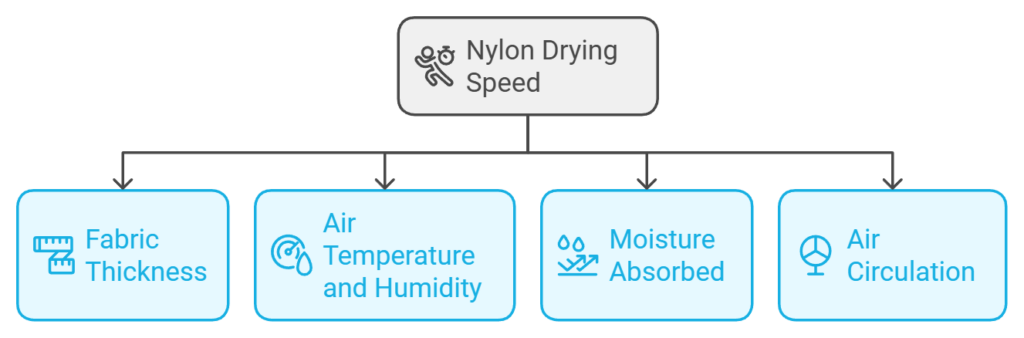
Several things can impact how fast nylon dries:
- Fabric thickness
- Air temperature and humidity
- Amount of moisture absorbed
- Air circulation
Understanding Nylon’s Moisture Absorption Characteristics
Nylon’s relationship with moisture is complex. It’s important to understand how it absorbs water to grasp why it dries the way it does.
Surface Moisture vs. Deep Moisture Absorption
Nylon can quickly absorb surface moisture, which is why it feels wet so fast when exposed to water. However, it also slowly absorbs moisture deep into its fibers. This dual nature of absorption affects its drying time.
Impact on Drying Time
Because of this dual absorption, nylon can seem to dry quickly at first but take much longer to dry completely. It’s like drying a wet towel – the outside feels dry, but the inside stays damp for a while.
Optimal Drying Conditions for Nylon
To get the best results when drying nylon, you need to create the right conditions. Let’s look at what works best.
Recommended Temperature
The ideal temperature for drying nylon is about 75°C (167°F). This temperature helps speed up evaporation without damaging the fabric. It’s like finding the perfect warmth for a cozy blanket – not too hot, not too cold. 🌡️
Ideal Drying Duration
For nylon to dry completely, it’s best to allow at least 12 hours of drying time. This ensures that both surface and deep moisture have a chance to evaporate fully.
Environmental Factors Influencing Drying Speed
Things like humidity and air flow can greatly affect how fast nylon dries. Dry, moving air helps speed up the process, while humid, still air slows it down.
Comparing Nylon’s Drying Speed to Other Fabrics
How does nylon stack up against other materials when it comes to drying time? Let’s compare:
| Fabric Type | Surface Drying Time | Complete Drying Time |
|---|---|---|
| Nylon | 3-4 hours | Up to 24 hours |
| Cotton | 4-5 hours | 24-48 hours |
| Polyester | 2-3 hours | 6-8 hours |
| Wool | 6-8 hours | 24-48 hours |
As we can see, nylon falls somewhere in the middle when it comes to drying speed.
Tips for Accelerating Nylon Drying
Want to speed up the drying process for your nylon items? Here are some helpful tips:
- Use proper ventilation – open windows or use fans
- Apply gentle heat sources like a hair dryer on low setting
- Wring out excess water before drying
- Use a high-speed spin cycle if machine washing
Remember, while these tips can help, it’s important not to rush the process too much to avoid damaging the fabric.
Common Misconceptions About Nylon Drying
There are some myths about nylon drying that need clearing up. Let’s address a few:
- Myth: Nylon dries instantly
- Fact: While it dries faster than some fabrics, it’s not instant
- Myth: High heat dries nylon faster without damage
- Fact: Too much heat can actually damage nylon fibers
Understanding these facts can help you take better care of your nylon items.
Applications and Implications of Nylon’s Drying Properties
Nylon’s drying properties make it suitable for various uses. Let’s explore some applications:
Outdoor Gear and Clothing
Nylon is often used in outdoor gear because it dries relatively quickly. This makes it great for activities like hiking or camping where you might get wet. 🏕️
Industrial Uses
In industrial settings, nylon’s drying properties are useful for things like filters and ropes that may get wet during use.
Care and Maintenance Considerations
When caring for nylon items, it’s important to remember its drying characteristics. For example, you might want to hang nylon items to dry rather than using a dryer to avoid heat damage.
Conclusion: Balancing Nylon’s Drying Speed with Its Benefits
Nylon dries relatively fast, especially on the surface, but it’s not the quickest-drying fabric out there. Its unique moisture absorption properties mean it can take up to 24 hours to dry completely. However, nylon’s strength, durability, and moderate drying speed make it a versatile fabric for many uses. By understanding its drying characteristics, you can better care for and appreciate your nylon items. 🌟