
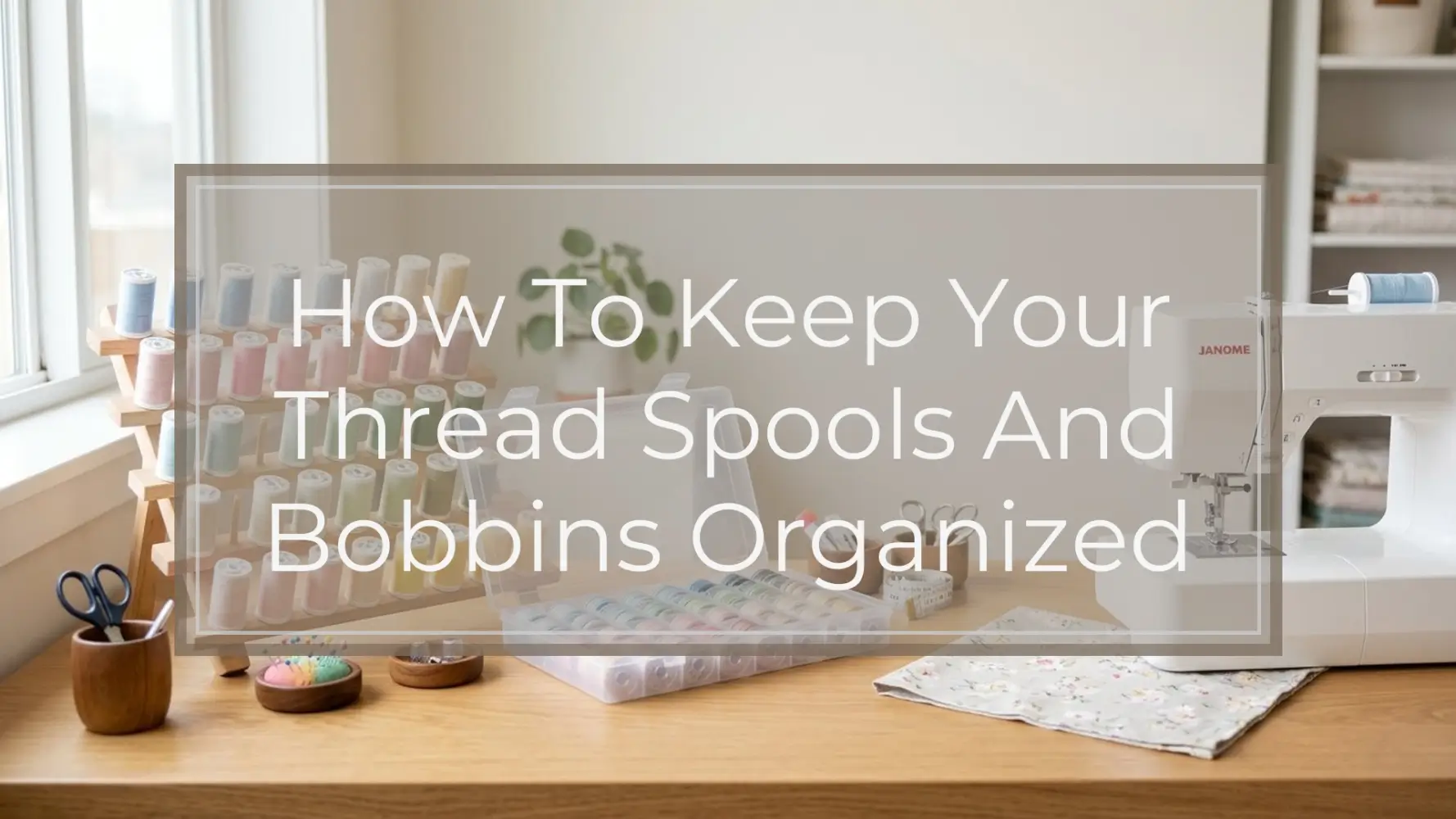
Quick answer: Keep thread spools and bobbins organized by sorting them by color, fiber type, and use; pairing each bobbin with its matching spool when possible; storing everything in covered, labeled containers; and keeping daily-use thread separate from specialty or overflow thread. The best system is one you can see, reach, and maintain after every sewing project.
You do not need a perfect sewing room to organize thread well. A small drawer, clear box, wall rack, or project tray can work if it prevents tangles and helps you find the right spool quickly. Start by gathering a few simple materials: storage boxes, bobbin cases, labels, clips or elastic bands, drawer dividers, and possibly a wall rack or pegboard if you like open storage.
The basic order is simple: sort, choose storage, pair bobbins, label, protect, and reset after each project.
Start With a Simple Thread and Bobbin Sorting System
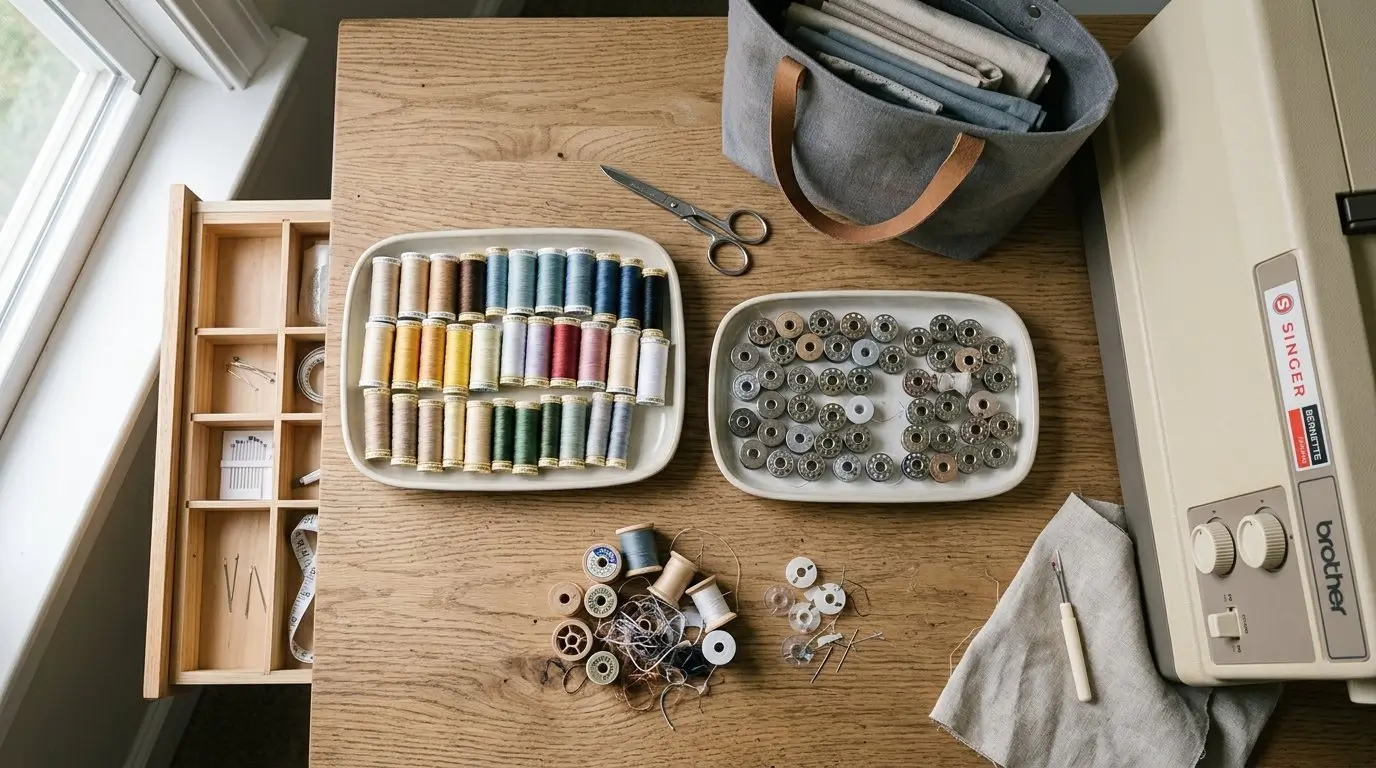
The first step is not buying a new organizer. It is sorting what you already own so you know what needs a home.
Empty your drawers, baskets, sewing machine case, and project bags. Put all thread spools in one area and all bobbins in another. Remove empty spools, thread nests, broken bobbins, duplicate thread scraps, and anything that looks dusty, brittle, or likely to snap when gently pulled. If a thread breaks easily, sheds heavily, or looks damaged, set it aside instead of letting it clutter your working thread collection.
Next, choose a sorting method that matches how you sew:
- By color family: best for general sewing, quilting, and quick matching.
- By fiber type: useful if you separate cotton, polyester, silk, rayon, metallic, or specialty thread.
- By thread weight: helpful for quilting, embroidery, topstitching, and decorative stitching.
- By project use: practical if you keep garment sewing, quilting, embroidery, and mending supplies separate.
- By frequency of use: ideal for small sewing spaces where everyday thread needs to stay close.
Separate everyday all-purpose thread from embroidery thread, serger cones, heavy topstitching thread, invisible thread, and older or questionable thread. Specialty thread is easier to manage when it is not mixed into your most-used sewing drawer.
If you own more than one sewing machine, sort bobbins by machine compatibility. Bobbins can look similar while being slightly different in size or shape, and using the wrong bobbin can cause stitching problems. Label bobbin groups by machine model or keep them in separate cases.
Choose the Right Storage Method for Your Sewing Space
Once your thread is sorted, choose storage based on your space, sewing habits, and how often you use each type of thread. The best thread organizer is not always the prettiest one. It is the one that protects your supplies and makes cleanup easy.
| Storage method | Best for | Pros | Watch out for |
|---|---|---|---|
| Wall rack | Frequently used spools in a sewing room | Easy to see colors, quick access, good capacity | Exposes thread to dust and sunlight |
| Drawer inserts | Small sewing corners or desks | Keeps supplies hidden and tidy | Can get crowded if not divided well |
| Clear storage boxes | General thread storage and overflow | Dust protection, easy to stack, visible contents | Must be labeled if boxes look similar |
| Bobbin case | Loose bobbins | Prevents rolling, tangling, and unwinding | Use the right case for your bobbin size |
| Spool box | Matching sets or portable storage | Protects thread, easy to carry | Limited capacity for large collections |
| Pegboard | Flexible sewing-room storage | Adjustable and visible | Needs wall space and regular dusting |
| Project container | Current projects, classes, retreats | Portable, keeps supplies together | Should be emptied or reset after use |
Open racks work well for thread you reach for often, especially neutrals and favorite colors. Keep them away from direct sunlight, which can fade thread and weaken some fibers over time. If your sewing room is dusty, sunny, damp, or shared with pets, covered storage is usually the better choice.
For a small sewing corner, try one clear box for everyday spools, one bobbin case, and one small tray for the current project. For a dedicated sewing room, you might combine a wall rack for daily thread, labeled boxes for specialty thread, and drawer dividers for bobbins, needles, and notions.
Avoid choosing storage that is too fussy to maintain. If returning thread takes too many steps, the system will fall apart after a few projects.
How to Pair Bobbins With Matching Thread Spools
Pairing bobbins with matching spools is one of the easiest ways to avoid wasted time, especially when several shades look almost identical. It is useful for quilting, garment sewing, topstitching, embroidery, and any project where the bobbin color matters.
Follow this simple process:
- Wind bobbins neatly. Fill them evenly, and avoid overfilling. Trim loose thread tails.
- Check the bobbin type. Make sure it belongs to the correct machine before storing it.
- Match the bobbin to its parent spool. Hold them together in good light if the colors are close.
- Secure the pair. Use a bobbin clip, bobbin buddy, elastic band, small zip bag, or a spool pin designed to hold the bobbin on top.
- Label when needed. Add a small label for thread weight, fiber, machine, or project if the information is not obvious.
- Store the pair in the correct group. Return it to the color family, project bin, drawer, or box where it belongs.
Loose bobbins rolling around in a drawer almost always lead to tangles. They unwind, catch on other thread, and make it harder to see what you actually have. A bobbin case, ring, clip system, or small divided box solves most of that problem.
If the matching spool is gone, store the leftover bobbin by color in a separate “leftover bobbins” section. These can be useful for basting, test stitching, muslins, or small repairs when an exact match is not critical.
A key caution: do not mix bobbin styles if you use different machines. Keep each machine’s bobbins in its own labeled case or compartment.
Label, Arrange, and Protect Your Thread Collection
Labels are most useful when they save time. You do not need to label every spool if your collection is small, but larger collections benefit from clear categories.
Good label options include:
- Cotton thread
- Polyester all-purpose
- Embroidery thread
- Quilting thread
- Topstitching thread
- Serger cones
- Machine-specific bobbins
- Current project
- Overflow or backup thread
Arrange thread in the way your eye naturally searches. Rainbow order is popular because color matching is quick. Neutrals-first works well if you sew garments, home decor, or mending projects often. Most-used-first is the most practical option for a compact setup because white, black, gray, beige, navy, and your favorite colors stay within reach.
Keep original spool labels when possible. They often include useful information such as fiber content, thread weight, color number, or brand. If the label falls off, you can add a small sticker or note, especially for specialty thread.
Thread lasts longer when it is protected from dust, moisture, direct sunlight, lint, and pet hair. Covered boxes, drawers, zip pouches, and cabinet storage are all helpful. Avoid storing thread near a sunny window, in a damp basement corner, or anywhere temperature and humidity swing noticeably.
For a large thread collection, take a quick photo of your drawers or boxes before shopping. You can also keep a simple inventory list of favorite neutrals, embroidery colors, or specialty threads. This prevents buying the same near-duplicate color while missing the shade you actually need.
Build a Daily-Use Setup That Is Easy to Maintain
A good thread organization system should reduce setup time, not create extra chores. The easiest way to maintain order is to separate daily-use supplies from long-term storage.
Keep your current project thread, matching bobbins, needles, presser feet, clips, and small notions in a tray or project box. This prevents half-used spools from spreading across your table, machine case, ironing area, and cutting mat. When you switch projects, switch the box or reset the tray.
After each project, do a quick reset:
- Return spools to their color, type, or project category.
- Secure bobbin thread tails with clips, bands, or a bobbin case.
- Throw away thread nests and tiny scraps.
- Move leftover bobbins to the matching spool or leftover section.
- Update labels if you created a new category.
- Restock basic neutrals if they are running low.
Keep backup neutrals like white, black, gray, cream, beige, and navy in an easy-to-reach spot if you use them often. These are the spools many sewists reach for repeatedly, so they should not be buried in an overflow bin.
If you attend sewing classes, retreats, or sew in more than one room, use portable storage. A small lidded project case with spools, bobbins, needles, and a seam ripper can save time and prevent forgotten supplies.
Result check: your system is working if you can find the right spool and bobbin within seconds, return them without thinking too hard, and start sewing without untangling a pile first.
Common Mistakes and Troubleshooting
Even a well-organized sewing space can get messy. Most thread problems come from loose storage, overfilled containers, or categories that do not match how you actually sew.
Mistake: storing bobbins loose.
Loose bobbins unwind and tangle with nearby spools. Fix this with a bobbin case, bobbin ring, clips, or a divided container.
Mistake: mixing bobbin sizes.
If you own multiple machines, similar bobbins can get mixed together. Label cases by machine model, or use different colored cases for each machine.
Mistake: overfilling drawers.
When drawers are too full, thread gets buried and you stop putting things back. Split your collection into daily-use thread, specialty thread, and overflow storage.
Mistake: storing thread in sunlight or damp areas.
Thread is best kept in a stable, dry location away from direct sun. Use covered containers if your sewing area is dusty, bright, or shared with pets.
Mistake: organizing too narrowly.
Sorting every spool by brand and exact number can be slow unless you rely on those numbers for embroidery or repeat projects. For everyday sewing, color and use are often faster.
Troubleshooting tangled thread: secure loose ends with spool caps, spool nets, small bands, or clips. If a spool is already messy, unwind the tangled section and rewind it neatly before storing.
Troubleshooting mystery bobbins: test the color on scrap fabric, then group the bobbin by color. If you cannot identify the thread type, use it only for low-risk testing or practice stitching.
Troubleshooting “I still cannot find anything”: reduce the number of categories. Try everyday, specialty, bobbins, and overflow first. You can add more detail later if needed.
FAQ
Should bobbins be stored with the matching thread spool?
Yes, when possible. Storing bobbins with matching spools saves time and helps prevent color mix-ups. Use bobbin clips, elastic bands, spool pins, or small bags. If the spool is gone, store the bobbin by color in a leftover section.
What is the best way to store bobbins so they do not unwind?
Use a bobbin case, bobbin ring, clip system, or divided container. The goal is to keep each bobbin from rolling and to secure the thread tail. Avoid tossing loose bobbins into drawers or project bags.
Is it better to organize thread by color or by type?
For everyday sewing, organizing by color is usually fastest. If you use many specialty threads, sort first by type, then by color within each group. Choose the method that helps you find the right thread quickly.
How do I organize thread if I have a small sewing space?
Use compact, covered storage: one clear box for spools, one bobbin case, and one small tray for your current project. Keep daily-use thread nearby and move specialty or overflow thread to a labeled bin or drawer.
Can old thread still be used?
Sometimes, but check it first. Gently pull a length of thread. If it snaps easily, sheds, feels brittle, or looks damaged, do not use it for important seams. Save questionable thread only for testing, basting, or discard it.