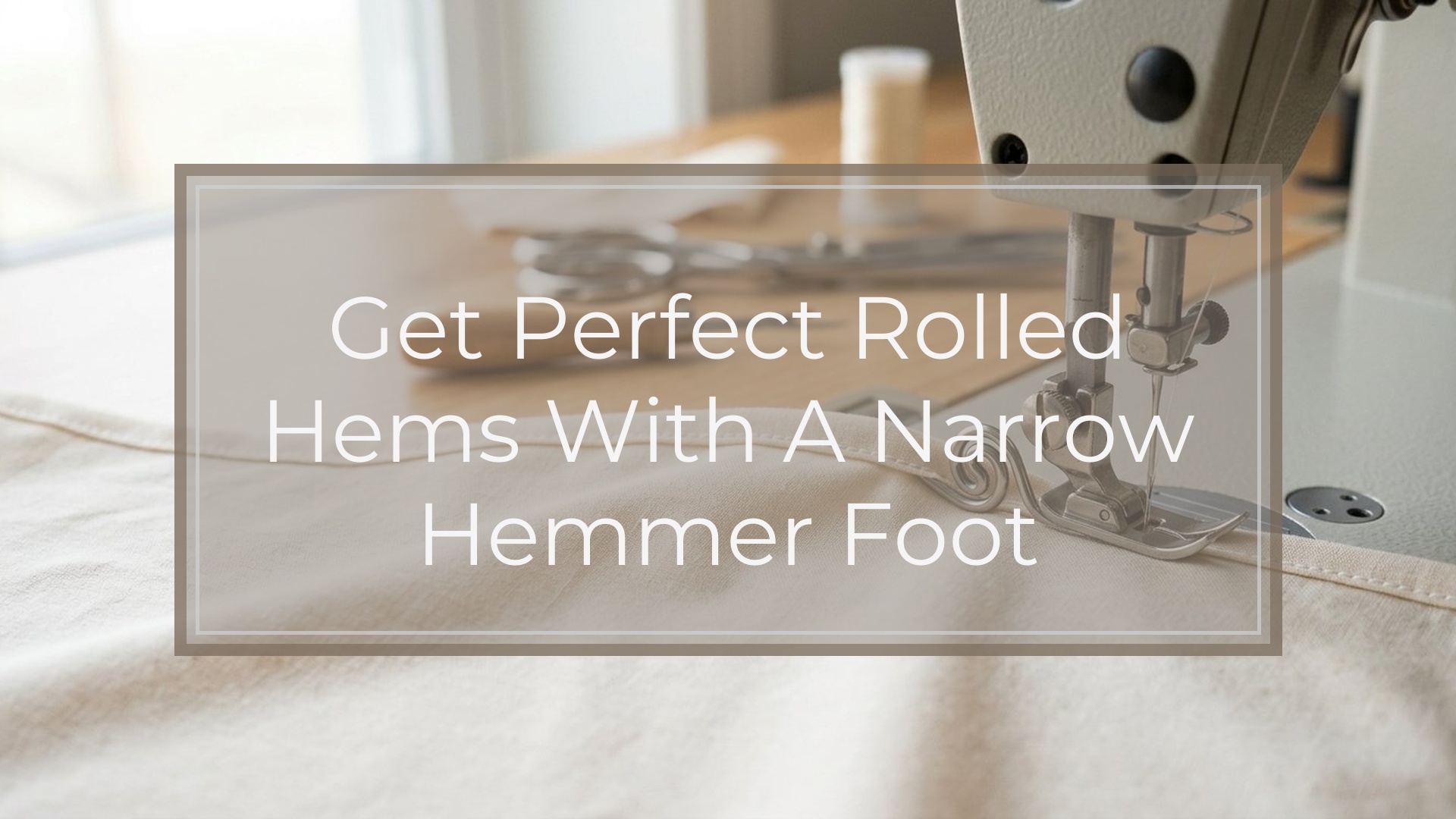
To get the perfect rolled hems with the narrow hemmer feet, start with the right foot size for your fabric, prepare a clean straight edge, and let the foot curl the fabric without forcing it. A narrow hemmer foot works by turning the raw edge under twice as you sew, creating a tiny enclosed hem in one pass.
The trick is steady feeding: guide the fabric into the scroll of the foot, keep the edge consistent, and avoid pulling from behind. Beginners often struggle at the start of the seam, around bulky cross seams, or on slippery fabric, but those problems improve quickly with careful setup and practice scraps.
What a Narrow Hemmer Foot Does
A narrow hemmer foot has a small curved scroll at the front. As the fabric enters that curl, the raw edge folds over once, then again, before passing under the needle. The stitch catches the folded edge and forms a neat, narrow hem.
Think of the foot as a fabric folder, not a fabric puller. Your job is to feed just enough fabric into the scroll so it rolls evenly. Too little fabric slips out and leaves a raw edge. Too much fabric bunches, twists, or creates a bulky ridge.
When to Use a Narrow Hemmer Foot
Use a narrow hemmer foot when you want a fine, lightweight edge without pressing and folding the whole hem by hand. It is especially useful for scarves, napkins, linings, ruffles, lightweight curtains, blouse hems, and delicate edges on woven fabric.
It is not the best choice for thick denim, bulky fleece, heavy canvas, or projects where you need a wide, structured hem. A narrow hemmer foot shines when the fabric is light enough to roll smoothly and the edge needs to look clean but not heavy.
Choose the Right Foot, Needle, Thread, and Fabric
Narrow hemmer feet come in different widths, often measured by the finished hem size. A very tiny foot makes a delicate hem but can be harder to control. A slightly wider foot is more forgiving for beginners.
Match the needle and thread to your fabric. Use a fine universal or microtex needle for lightweight woven cotton, lawn, voile, silk-like polyester, or chiffon. Choose fine all-purpose or lightweight polyester thread so the stitching does not overpower the hem.
| Foot size | Best for | Common projects | Beginner note |
|---|---|---|---|
| 2 mm | Very light fabric | Sheer scarves, fine ruffles | Delicate but less forgiving |
| 3 mm | Light woven fabric | Napkins, blouse hems, linings | Good beginner choice |
| 4–6 mm | Light to medium fabric | Casual hems, curtains | Easier to feed, less dainty |
Before sewing the project, test the exact fabric, thread, needle, and foot together.
Set up Your Sewing Machine
Attach the narrow hemmer foot securely and choose a straight stitch. Start with a medium stitch length, around 2.0 to 2.5 mm for most light fabrics. If the fabric puckers, try a slightly longer stitch or reduce the upper thread tension a little.
Position the needle so it stitches close to the inner folded edge without falling off the hem. On many machines, the center needle position works well, but test first. Sew at a slow to medium speed. Fast stitching gives you less time to correct the fabric before it enters the scroll.
Prepare the Fabric Edge
A clean edge makes the hem much easier to control. Trim loose threads, uneven cutting, and frayed spots before you begin. If the fabric is very slippery, lightly starch it or use a washable stabilizer strip near the edge.
For an easier start, fold the first inch of fabric by hand: turn the raw edge under twice to match the finished hem width, then press or finger-press it. Place this folded section under the foot before feeding the rest into the scroll. This gives the needle something stable to catch and prevents the beginning from chewing up or twisting.
How to Sew a Rolled Hem with a Narrow Hemmer Foot
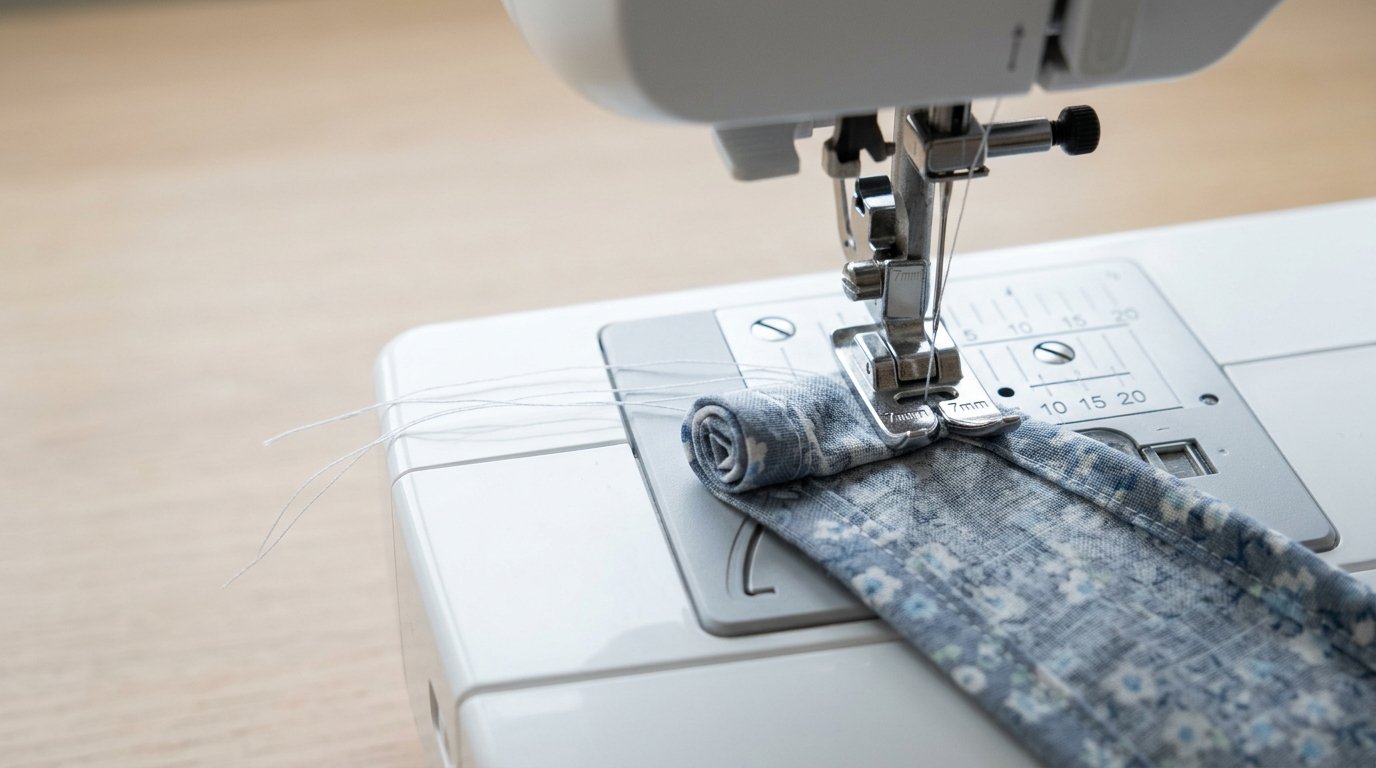
Start with the hand-folded section under the presser foot. Lower the needle into the folded hem, then lower the presser foot. Hold the thread tails behind the foot for the first few stitches so the fabric does not get pulled into the needle plate.
Sew three to five stitches slowly. Stop with the needle down. Lift the front edge of the fabric slightly and guide the raw edge into the scroll of the narrow hemmer foot. The fabric should curl naturally inside the metal spiral.
Continue sewing slowly. Keep the raw edge feeding into the scroll at a consistent angle. Do not push the fabric hard, and do not pull it from behind. Your hands should guide and support, while the feed dogs move the fabric.
Watch the fold forming in front of the needle, not just the needle itself. If the edge starts slipping out, angle the fabric slightly more toward the scroll. If the roll looks too thick or jammed, angle the fabric slightly away so less fabric enters.
Pause often with the needle down to adjust. This is normal, especially on long hems. When you reach the end, sew off carefully and trim threads close to the hem.
Tips for Corners, Curves, and Seams
For corners, a narrow hemmer foot can be tricky. The cleanest method is often to sew one side, stop before the corner, remove the fabric, fold the next edge by hand for an inch, and begin again. This avoids a bulky twisted corner.
For gentle curves, sew slowly and keep the edge feeding smoothly into the scroll. Tight curves may need a hand-pressed narrow hem instead.
When crossing seams, trim seam allowances diagonally and press them open if possible. Bulky seams may not fit well through the scroll, so help the fold by hand as it approaches the needle.
Troubleshooting Uneven or Messy Rolled Hems
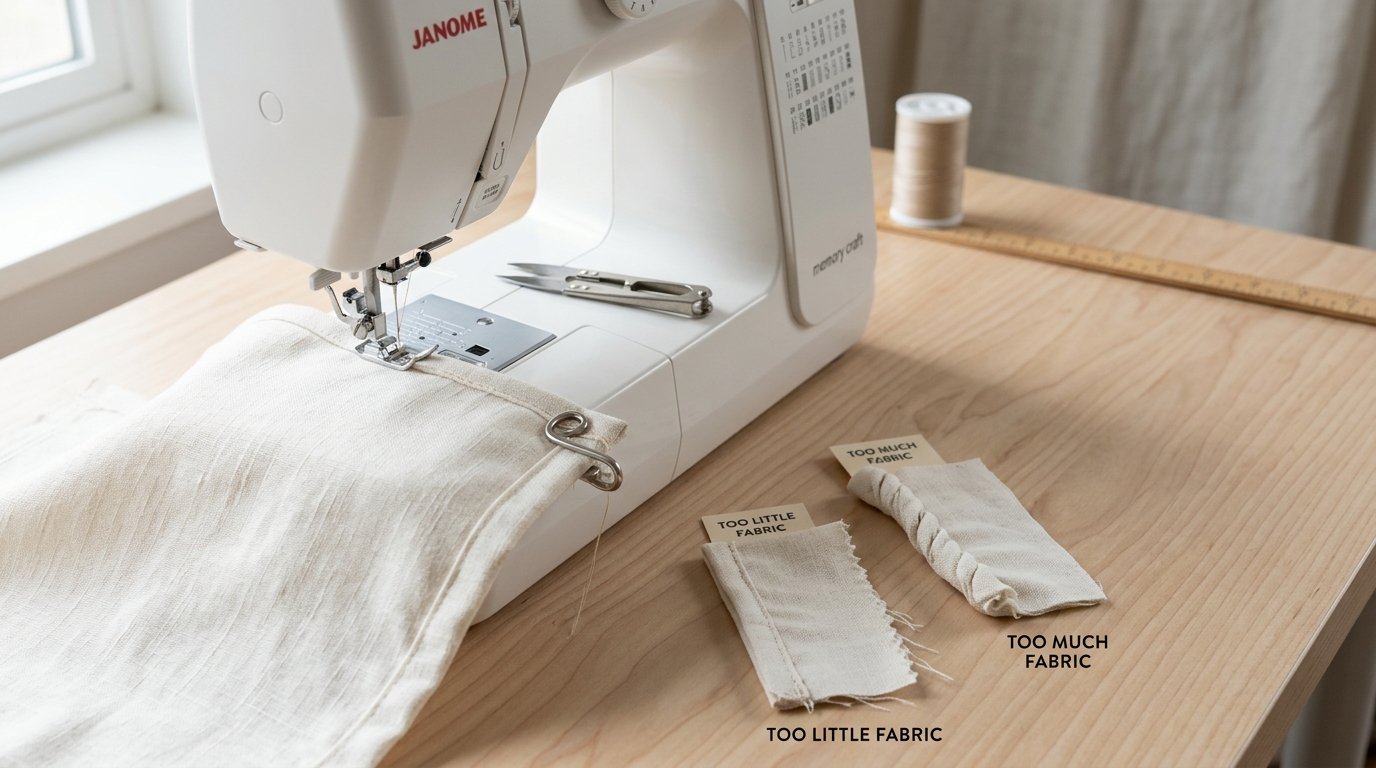
If the raw edge shows, too little fabric is entering the scroll. Guide the edge slightly deeper into the curl and slow down.
If the hem twists, bunches, or looks rope-like, too much fabric may be feeding into the foot. Trim the edge evenly and reduce the amount entering the scroll.
If the fabric slips out repeatedly, check that the edge is straight, the foot size is not too small, and your hands are not pulling the fabric backward.
If the stitches miss the fold, adjust the needle position or guide the fabric so the folded edge sits under the needle path.
If lightweight fabric puckers, use a finer needle, lighter thread, longer stitch, or a small amount of stabilizer.
Practice Plan for Beginners
Before hemming a real project, cut several long strips from similar fabric. Practice starting the hem, feeding into the scroll, stopping with the needle down, and correcting the angle.
Then practice one strip with a seam crossing and one with a gentle curve. Keep your best sample beside the machine as a reference. Ten minutes of scrap practice usually saves far more time than unpicking a messy project hem.
FAQ
Is a Narrow Hemmer Foot the Same as a Rolled Hem Foot?
Usually, yes. Many sewists use the terms interchangeably. A narrow hemmer foot or rolled hem foot folds the raw edge twice and stitches it down in one pass. Some brands label them by finished hem width, such as 2 mm or 3 mm.
What Size Narrow Hemmer Foot Should a Beginner Use?
A 3 mm narrow hemmer foot is often the easiest starting point. It is small enough to make a neat rolled hem but wide enough to feed more reliably than a very tiny 2 mm foot. Practice on stable cotton before trying slippery fabric.
Why Does My Fabric Keep Slipping Out of the Narrow Hemmer Foot?
The fabric may not be feeding deeply enough into the scroll, or the edge may be uneven or fraying. Slow down, trim the edge cleanly, and guide the fabric at a slight angle into the curl. Starting with a hand-folded inch also helps.
Can I Use a Narrow Hemmer Foot on Knit Fabric?
Sometimes, but it is harder than using it on woven fabric. Knits can stretch, curl, or ripple as they feed through the scroll. If you try it, use a ballpoint or stretch needle, stabilize the edge, and test carefully on scraps first.
Do I Need to Press the Hem Before Using the Foot?
You do not need to press the entire hem, because the foot folds it as you sew. However, pressing or finger-pressing the first inch makes starting much easier. For slippery or stubborn fabric, light pressing and starch can improve control.