
Sewing with homemade fabric twine is a practical way to turn fabric scraps into sturdy cord for coasters, baskets, trivets, mats, ornaments, and textured embellishments. The basic process is simple: cut fabric into strips, twist two sections in opposite directions, let them wrap around each other, then stitch the finished cord into a shape or onto a base.
The key is control. Homemade fabric twine is flexible but bulky, so it behaves differently from flat fabric. Choose soft cotton or similar woven scraps, make consistent strips, twist firmly, and sew slowly with a strong needle. You can use a sewing machine for most coiled projects, or hand stitch when the cord is thick, uneven, or decorative.
Quick Answer
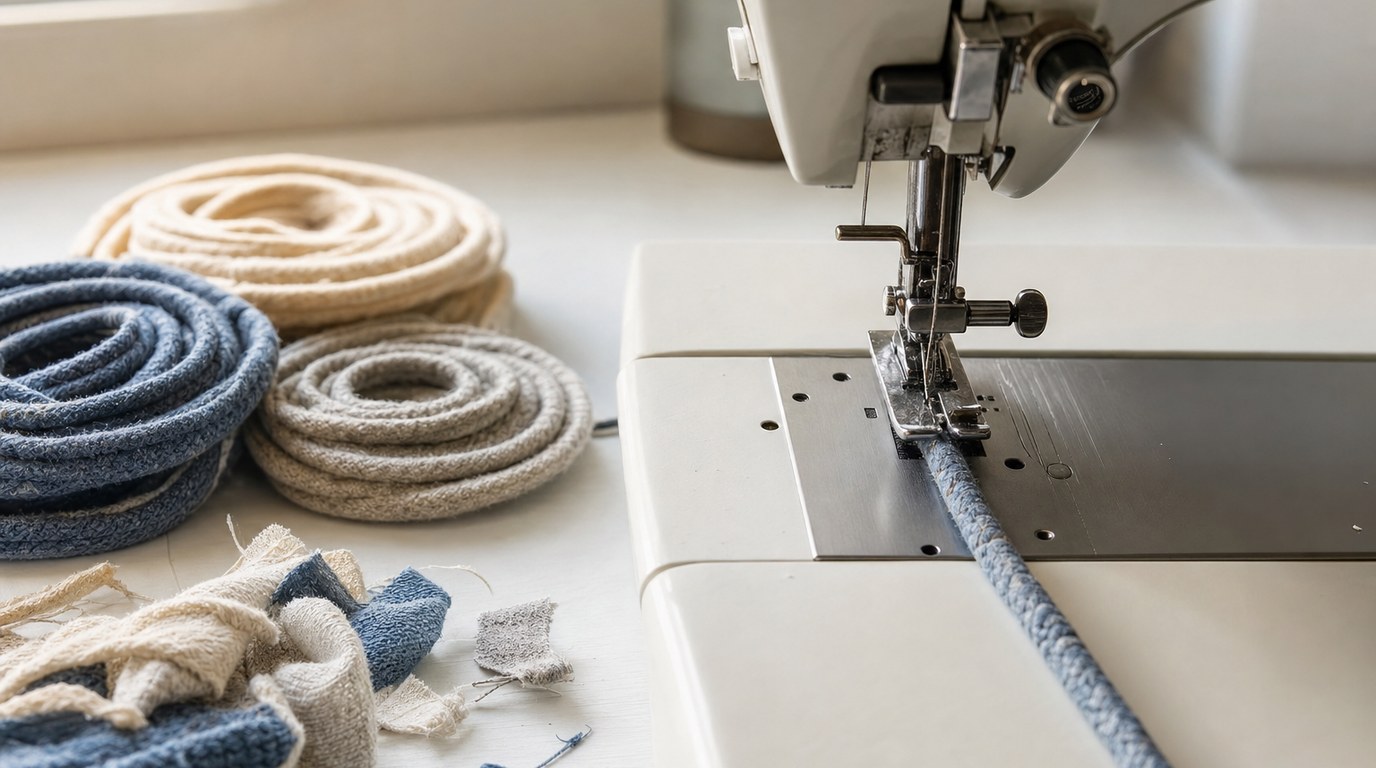
The main takeaway: homemade fabric twine works best when you treat it like a soft rope, not like regular fabric. First, make a firm, even cord. Then sew it slowly, using stitches that catch and join the cord without flattening it too much.
To make fabric twine, cut fabric scraps into strips about 1 to 1 1/2 inches wide. Tie or clip two strips together at one end. Twist each strip away from you, then wrap one over the other toward you. This “twist one way, wrap the other way” motion locks the fibers together and creates a cord. When a strip gets short, add a new strip by overlapping the ends and twisting them in. Keep the joins staggered so the twine does not become lumpy in one spot.
To sew with it, wind the twine into the shape you want and stitch where the edges touch. A wide zigzag stitch is the easiest machine option for coasters, bowls, and mats because it bridges two neighboring rows of cord. Use a denim, jeans, or heavy-duty universal needle, usually size 90/14 or 100/16. Lengthen the stitch if the machine struggles, and reduce speed so the needle does not deflect.
For hand sewing, use strong thread, embroidery floss, pearl cotton, or waxed thread. Stitch through or around the cord at regular intervals. Hand sewing is slower but gives more control, especially with rustic twine made from uneven scraps.
Good beginner projects include a small coaster, a flat trivet, a sewn spiral ornament, or a patch of fabric twine stitched onto a tote bag. Avoid starting with a deep basket until you understand how tightly your twine coils and how your machine handles the thickness.
How to Think About This Topic
The easiest way to understand sewing with homemade fabric twine is to separate it into two skills: making the cord and joining the cord. If the cord is loose, lumpy, or overstuffed with thick joins, sewing becomes frustrating. If the cord is firm and consistent, stitching it into projects is much easier.
Fabric twine is made by opposing twists. Each fabric strip is twisted in one direction, and the pair is wrapped together in the opposite direction. Those opposing forces keep the cord from untwisting immediately. This is the same basic idea behind many ropes and yarns: twist creates tension, and opposite wrapping balances it. You do not need perfect tension, but you do need enough twist for the cord to hold its shape.
Fabric choice affects almost everything. Thin quilting cotton makes smooth, beginner-friendly twine. Soft worn shirts create flexible cord with a casual look. Heavier denim or canvas makes a thicker, stiffer twine that may be better for hand-sewn projects than machine-sewn spirals. Stretch knits can work, but they often curl, stretch, and change thickness as you twist, so they are less predictable for beginners.
| Fabric type | Best use | What to watch for |
|---|---|---|
| Quilting cotton | Coasters, mats, ornaments, small bowls | Easy to twist; frays slightly for a rustic edge |
| Cotton lawn or voile | Fine decorative cord, small embellishments | Can become narrow and delicate |
| Old cotton shirts | Soft twine for casual projects | Seams and worn areas may create weak spots |
| Flannel | Plush-looking cord, hand-sewn items | Bulk builds quickly |
| Denim or canvas | Rugged baskets, handles, heavy mats | Harder to sew by machine |
| Jersey knit | Soft flexible cord | Stretch can make uneven twine |
Strip width is another part of the mental model. Narrow strips make thinner cord that is easier to sew but slower to produce. Wider strips make chunky twine, but they can become bulky and difficult under a presser foot. For a first project, start with 1-inch strips of cotton fabric. Once you see the finished thickness, adjust from there.
When sewing, think of the needle as joining rows, not piercing every part of the cord. In a coiled coaster, for example, the zigzag stitch should swing from one row of twine to the next. It does not need to bury itself deep into the middle of the cord. The goal is to catch enough fabric on both sides to hold the coil together securely.
Also consider the finished use. A decorative ornament can be loosely stitched. A trivet or mat needs stronger stitching because it will be handled, bent, and possibly washed. A basket needs both joining stitches and shaping control, because the angle of the cord determines whether the sides rise evenly.
This is why the user intent matters: sewing with homemade fabric twine is not just about making a pretty scrap cord. It is about producing a cord that can survive the next step. Good twine is consistent enough to sew, flexible enough to shape, and strong enough for the project you choose.
Practical Guidance
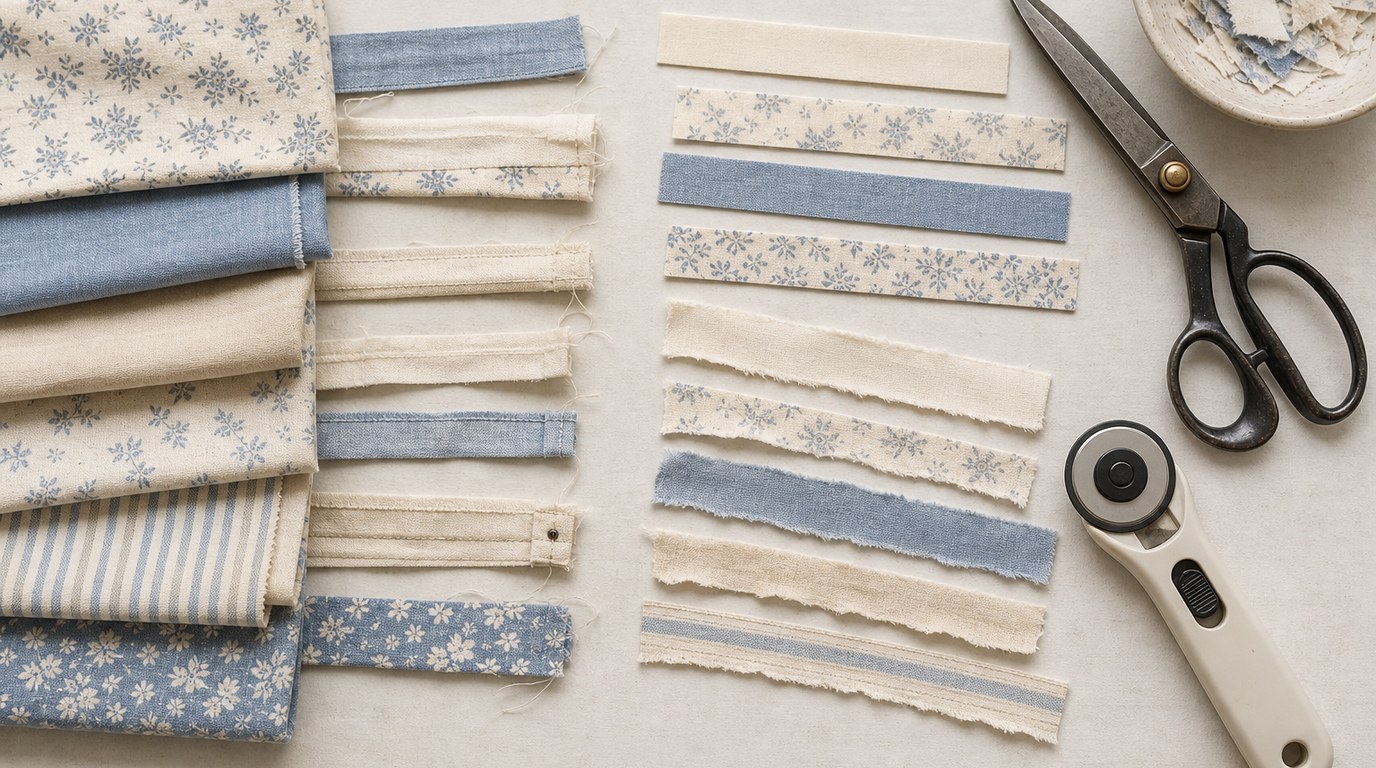
Start with clean, pressed fabric scraps. Remove thick seams, buttons, and stiff hems. Cut or tear strips along the grain if possible. Tearing is fast and gives a frayed handmade edge; cutting with scissors or a rotary cutter gives a neater look. For beginner twine, aim for strips about 1 inch wide and 18 to 30 inches long. Shorter strips are easier to control, but they require more joins.
To begin twisting, tie two strip ends together in a small knot or hold them with a clip. Twist the right strip away from you several times. Cross it over the left strip toward you. Now twist the new right strip away from you and cross it over. Repeat: twist away, wrap toward. Keep gentle tension on the growing cord so it stays firm. If it kinks, you may be twisting too tightly or letting the finished cord dangle without support.
To join a new strip, overlap the end of the old strip with the beginning of the new one by about 1 inch. Fold the new strip into the twist and continue. Do not add both new strips at exactly the same point if you can avoid it. Staggered joins make smoother twine and reduce bulky spots that can jam under the presser foot.
Once you have several yards of twine, wind it into a loose ball or wrap it around a card. Do not pull so tightly that you stretch or distort it. If the twine relaxes and opens up, add more twist as you use it.
For machine sewing, prepare the machine before you start the project. Use a strong needle, such as 90/14 for medium cotton twine or 100/16 for thicker cord. Choose all-purpose polyester thread for most projects because it has good strength and a little give. A walking foot can help feed the bulk evenly, but a standard presser foot can work for small, flat projects. Test on a short coil before sewing the final piece.
For a flat coaster, coil the twine into a small spiral. Place the center under the presser foot and choose a wide zigzag stitch. The stitch should reach from the inner row to the outer row. Sew slowly, turning the spiral as you go. Keep the rows touching, but do not force them so tightly that the coaster cups upward. If the piece starts to bowl when you want it flat, loosen your grip and let the twine feed naturally.
For a shallow bowl, start like a coaster. After the base is wide enough, tilt the coil upward slightly as you continue stitching. The more you raise the outer cord, the steeper the bowl wall becomes. Move gradually; sudden angle changes create puckers or weak joins.
For hand sewing, use a large sharp needle or a sturdy embroidery needle. You can whipstitch around neighboring rows, ladder stitch between them, or use visible decorative stitches. Hand sewing is useful when the twine is thick, the fabric is fragile, or you want a slower, more controlled finish. Keep stitches close enough that the piece does not gap when bent.
Troubleshooting usually comes down to thickness, tension, or stitch choice. If the machine skips stitches, change to a fresh heavier needle and slow down. If thread breaks, rethread the machine, check tension, and use stronger thread. If the cord flattens too much, reduce presser foot pressure if your machine allows it. If the project curls unintentionally, the coil may be too tight or the zigzag may be pulling the rows together too firmly.
Finish ends securely. On a machine-sewn piece, tuck the final tail along the edge and zigzag over it. For hand sewing, bury the end between rows and stitch through it several times. Trim loose threads, then gently press the finished item if the fabric allows. Use a pressing cloth and avoid crushing the texture.
Washability depends on the fabric and stitching. Cotton twine projects can often be hand washed or spot cleaned. Machine washing may distort bowls or mats unless they are very firmly stitched. Air dry flat or shaped over a bowl, depending on the project.
FAQ
What Should a Beginner Know First About Sewing with Homemade Fabric Twine?
Start with soft woven cotton and a small flat project, such as a coaster. The twine should be firm but still flexible. Learn the opposing twist first: twist each strip one way, then wrap the pair the other way. Consistent cord makes sewing much easier.
What Matters Most When Evaluating Sewing with Homemade Fabric Twine?
The most important factors are fabric weight, strip width, twist tension, and how the twine will be stitched. Smooth cotton strips around 1 inch wide are easiest for beginners. If the finished cord is too bulky or uneven, sewing will be harder and less secure.
What Mistakes Should Readers Avoid with Sewing with Homemade Fabric Twine?
Avoid using thick seams, adding joins in the same spot, twisting too loosely, or forcing bulky cord through the machine too fast. Also avoid starting with a large basket before testing a small coil. A quick sample shows whether your needle, stitch width, and twine thickness work together.
What Is the Next Logical Step After Learning About Sewing with Homemade Fabric Twine?
Make a small sample coil, then turn it into a coaster or ornament. This lets you practice twisting, joining strips, setting a zigzag stitch, and finishing the end. After that, try a larger mat, shallow bowl, or hand-stitched fabric twine embellishment.