
Sewing with stretch fabrics is easier when you treat them differently from stable woven fabrics. Knits and other stretchy materials move, curl, grow, and recover as you sew, so your goal is to support the fabric without stretching it out. Start with a beginner-friendly knit, cut it accurately, use a ballpoint or stretch needle, and choose a stitch that can expand with the fabric. Test your settings on scraps before sewing the real garment. Then handle the fabric gently, stabilize key seams, hem with care, and press lightly. These small changes help prevent skipped stitches, popped seams, rippled hems, and distorted garment shapes.
Why Stretch Fabrics Need a Different Sewing Approach
Stretch fabric has built-in movement. That is what makes it comfortable to wear, but it also means seams must stretch without breaking and edges can distort if pulled. Think of sewing stretch fabrics as guiding and supporting, not forcing. The needle, stitch, presser foot pressure, and handling all work together. If one part is wrong, you may see skipped stitches, puckers, or waves. The basic mental model is simple: stretch fabric needs flexibility where the body moves and control where the garment must keep its shape.
1. Choose a Stretch Fabric That Matches Your Skill Level
Not all stretch fabrics are equally easy to sew. If you are new to knits, start with a stable cotton jersey, ponte, interlock, or French terry. These fabrics usually lie flatter and curl less than lightweight rayon jersey or slippery athletic knits.
Check recovery, too. Stretch the fabric gently, then let go. A good beginner fabric should spring back close to its original shape. If it stays stretched out, it may grow while sewing and wearing.
2. Cut Stretch Fabric Carefully and Keep It Flat
Accurate cutting helps prevent twisted seams and uneven hems. Lay the fabric on a large surface so it is fully supported. Do not let part of it hang off the table, because the weight can stretch the grain before you cut.
Pattern weights and a rotary cutter are helpful because they reduce lifting and shifting. If you use pins and scissors, pin within the seam allowance and avoid pulling the fabric upward. For stripes or ribs, align the print or ribs before cutting.
3. Use the Right Needle for Knits
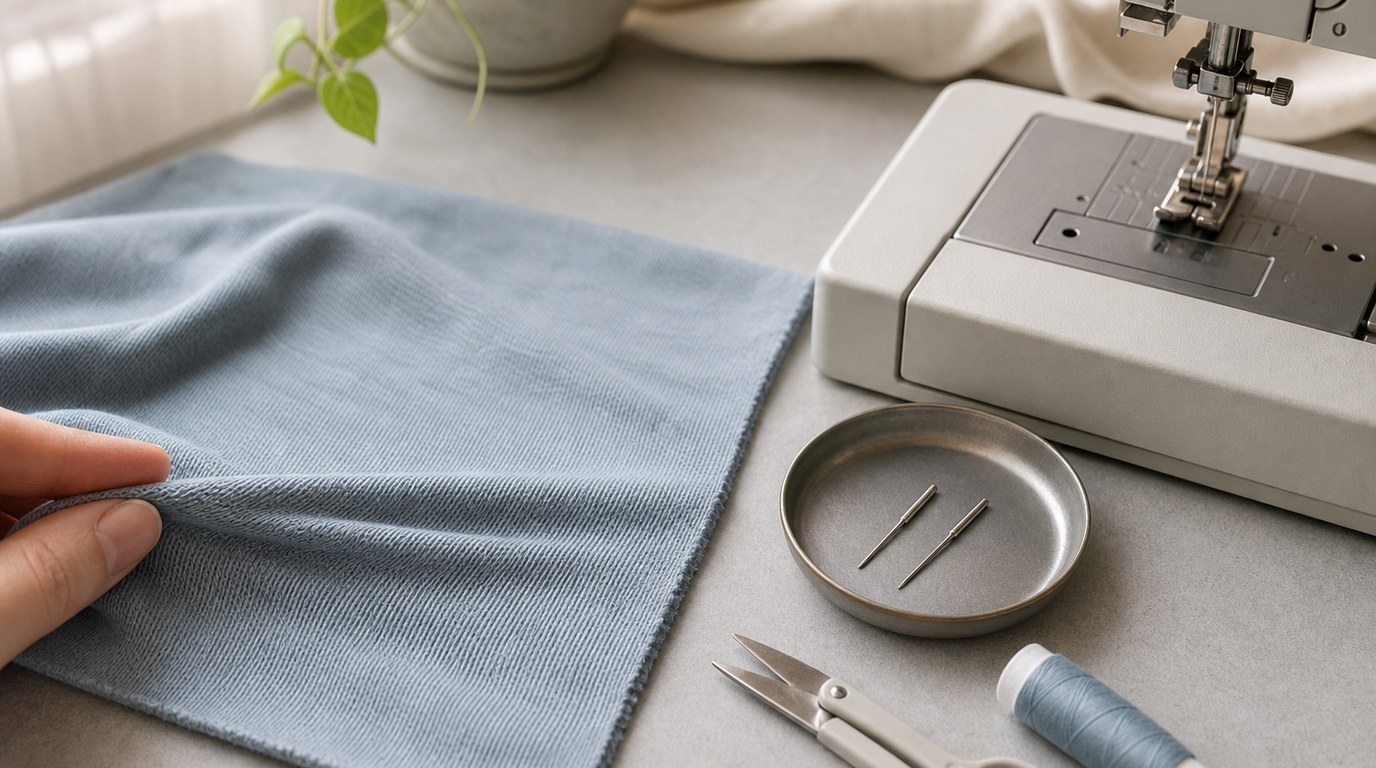
Skipped stitches and tiny fabric snags often come from using the wrong needle. For most knits, use a ballpoint or jersey needle. Its rounded tip slips between the fabric loops instead of piercing and damaging them.
For very stretchy fabrics with spandex or Lycra, try a stretch needle. It is designed to reduce skipped stitches on elastic materials. Use a finer needle for lightweight jersey and a larger one for ponte, sweatshirt fleece, or heavier knits.
4. Pick a Stitch That Can Stretch
A straight stitch usually does not stretch enough for knit seams, especially on fitted garments. When the fabric stretches, the thread can snap. Choose a narrow zigzag, lightning stitch, or your machine’s stretch stitch instead.
A narrow zigzag is a good all-purpose option: try a short length with a narrow width, then adjust from there. If you have a serger, it creates stretchy seams quickly, but it is not required. A regular sewing machine can sew knits well when the stitch has enough give.
5. Test Your Stitch Settings on Scraps First
Before sewing the project, test on scraps from the same fabric. Fold the scrap to match the number of layers you will sew, then stitch a short seam. Stretch it gently across the seam. If the thread pops, you need more stretch in the stitch.
Check the fabric surface, too. If stitches skip, change the needle. If the seam tunnels or puckers, adjust stitch length, tension, or presser foot pressure if your machine allows it. A two-minute test can save a whole seam from being unpicked.
6. Do Not Pull the Fabric While Sewing
One of the most common mistakes is pulling stretch fabric from the front or back of the presser foot. This stretches the seam as it is sewn, often creating a wavy, lettuce-like edge.
Let the feed dogs move the fabric. Your hands should guide, not drag. Support the fabric on the table so it does not hang and pull against the needle. If your machine still stretches the fabric, try reducing presser foot pressure or using a walking foot.
7. Stabilize Seams That Should Not Stretch Out
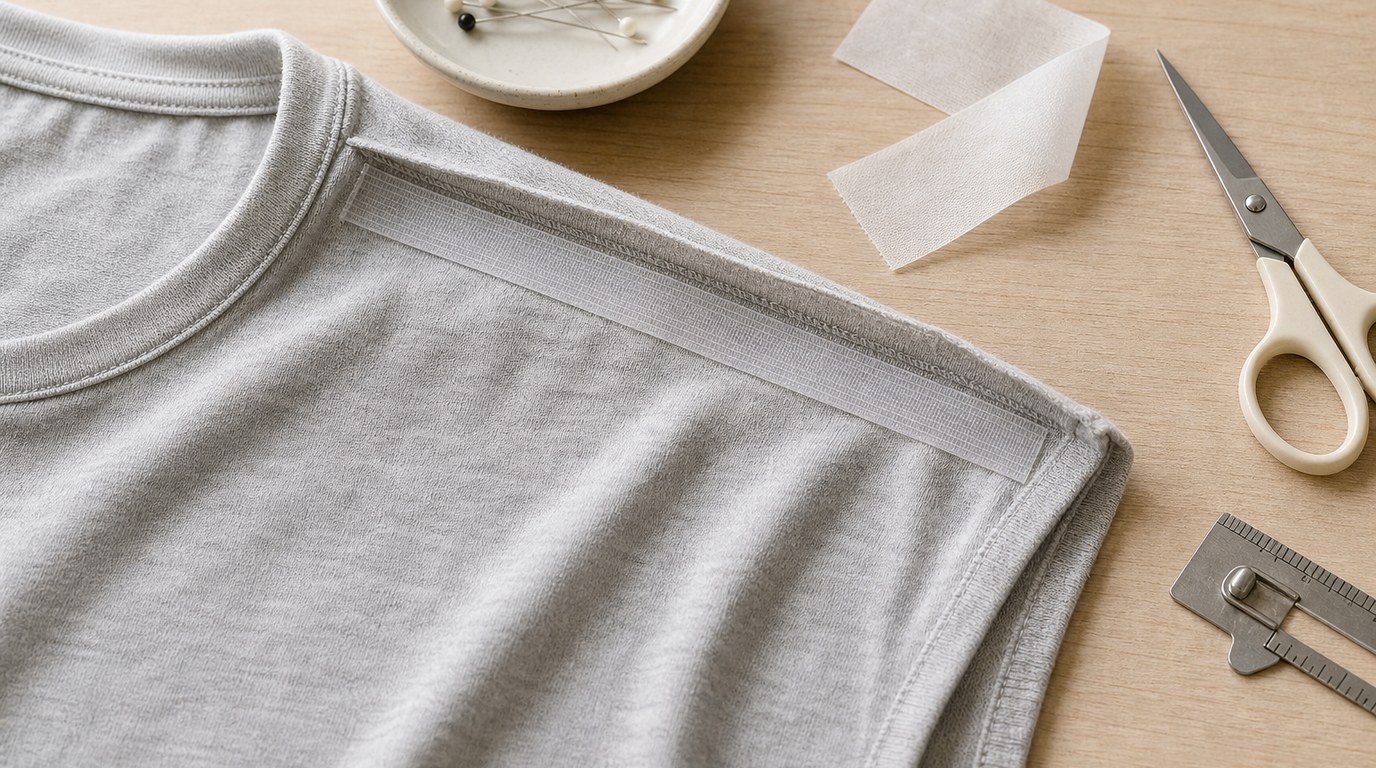
Some seams need stretch, but others need control. Shoulder seams, pocket openings, waist seams, and necklines can stretch out with wear if they are not stabilized. A narrow strip of clear elastic, stay tape, twill tape, or lightweight knit interfacing can help.
For example, a T-shirt shoulder seam should not keep growing every time you put it on. Sew a stabilizing strip into the seam allowance while stitching. Use enough support to hold the shape without making the seam stiff or bulky.
8. Hem Stretch Fabrics Without Wavy Edges
Hems are where stretch fabric often misbehaves. To avoid waves, do not pull the hem as you sew, and press the fold before stitching. A twin needle gives a ready-to-wear look on many knits, while a narrow zigzag works well for casual garments.
If the edge still ripples, stabilize the hem with washable hem tape, lightweight knit interfacing, or tissue paper under the fabric. Tear the tissue away after stitching. Also make sure the hem depth is even so the fabric feeds smoothly.
9. Press Gently and Troubleshoot as You Go
Pressing improves stretch-fabric projects, but heavy heat or pressure can leave marks or stretch the fabric out. Use a pressing cloth, lower heat when needed, and press up and down instead of dragging the iron.
Troubleshoot early. If one seam looks wavy, do not sew the whole garment the same way. Stop and adjust the needle, stitch, tension, pressure, or handling. Small corrections after the first seam are easier than fixing every seam later.
Beginner-friendly Stretch Fabric Project Ideas
Choose simple shapes while you build confidence. Good first projects include a boxy T-shirt, elastic-waist knit skirt, pajama pants, baby leggings, a simple sweatshirt, or a beanie. These projects usually have fewer tricky curves and closures.
Avoid very slippery, thin, or highly fitted projects at first. Swimwear, activewear, and delicate rayon jersey can be fun later, but they demand more control. A stable knit project lets you practice seams, hems, and gentle handling without fighting the fabric.
Final Checklist Before Sewing Stretch Fabric
Before you start, run through a quick setup check:
- Choose a stable stretch fabric for your skill level.
- Cut with the fabric fully supported and flat.
- Use a jersey, ballpoint, or stretch needle.
- Select a zigzag, lightning, stretch stitch, or serger seam.
- Test the stitch on scraps and stretch the sample.
- Guide the fabric gently without pulling.
- Stabilize shoulders, necklines, and other stress points.
- Hem slowly and support the edge.
- Press lightly and adjust problems as soon as they appear.
FAQ
Can I Sew Stretch Fabric with a Regular Sewing Machine?
Yes. You do not need a serger to sew stretch fabric. A regular sewing machine can work well if you use the right needle and a stitch that stretches, such as a narrow zigzag or lightning stitch. Testing on scraps is the best way to dial in the settings.
What Stitch Is Best for Sewing Stretch Fabric?
For most beginner projects, a narrow zigzag is a reliable choice because it stretches without special equipment. A lightning stitch is also excellent if your machine has one. For hems, a twin needle or narrow zigzag can work well, depending on the fabric and finish you want.
Why Are My Seams Wavy When I Sew Knits?
Wavy seams usually happen because the fabric is being stretched while sewing. Pulling the fabric, too much presser foot pressure, a heavy unsupported project, or the wrong stitch settings can all contribute. Support the fabric, guide it gently, and test reduced pressure or a walking foot if needed.
Do I Need Special Thread for Stretch Fabrics?
Usually, all-purpose polyester thread is a good choice for stretch fabrics because it has slight give and good strength. You do not normally need elastic thread for seams. The stretch should come mainly from the stitch type, not from pulling or relying on stretchy thread.