
Reusable dryer sheets are small fabric squares you use again and again in the dryer to lightly soften laundry, reduce some static, and add a mild scent if you choose. The easiest version is made from cotton or flannel scraps, finished around the edges, then dampened with a simple vinegar-based or unscented softening solution before each load.
You can sew them, serge them, or make a no-sew version with pinking shears. A batch of 6 to 12 sheets is enough for most households, because you can rotate them through laundry day, wash them when needed, and refresh the solution as they dry out.
What Reusable Dryer Sheets Do—and What They Don’t Do
Think of reusable dryer sheets as a fabric delivery system. The cloth carries a small amount of moisture or softening solution into the dryer, where it helps reduce stiffness and can lightly scent a load.
They are not identical to commercial disposable dryer sheets. They usually leave less coating on fabric, which many people prefer, but they may not eliminate heavy static in very dry conditions. They also will not fix overdrying, overloaded machines, or synthetic-heavy loads on their own.
For best results, pair them with good drying habits: avoid overloading, remove clothes promptly, and stop the dryer when items are dry rather than baking them longer.
Materials and Tools
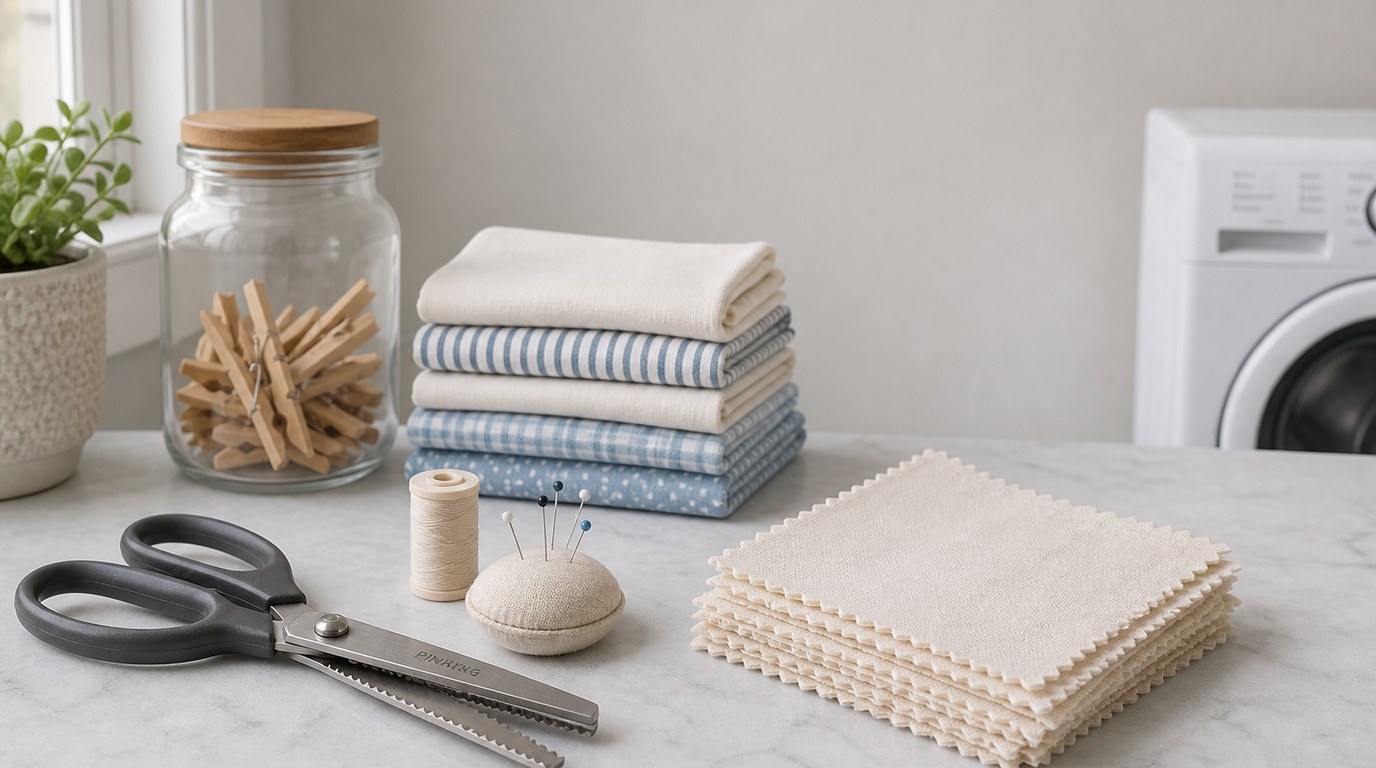
You need only basic sewing and laundry supplies:
- Cotton flannel, quilting cotton, old cotton T-shirts, or worn towels
- Fabric scissors, rotary cutter, or pinking shears
- Ruler or cutting mat
- Sewing machine, needle and thread, or serger, if sewing
- Pins or clips
- Glass jar, lidded container, or spray bottle
- White vinegar or unscented hair conditioner, depending on your preferred solution
- Optional: a few drops of essential oil
Beginner substitution: if you do not sew, use pinking shears on tightly woven cotton or flannel. The zigzag edge slows fraying well enough for many dryer-sheet batches.
Best Fabrics for Reusable Dryer Sheets
Choose fabric that can handle heat, tumbling, and repeated washing. Natural fibers are usually best because they absorb solution well and do not melt in the dryer.
| Fabric | Absorbency | Durability | Best Use |
|---|---|---|---|
| — | —: | —: | — |
| Cotton flannel | High | Good | Soft, beginner-friendly sheets |
| Quilting cotton | Medium | Good | Neat squares from fabric scraps |
| Old cotton T-shirts | Medium | Fair | No-cost, soft no-sew option |
| Thin cotton towel | High | Very good | Heavier sheets for large loads |
| Synthetic fleece | Low | Good | Not ideal; can hold static and heat |
Flannel is the easiest all-around choice. It absorbs well, feels soft, and is simple to sew. Avoid fabrics with glitter, plastic prints, heavy coatings, or anything that feels heat-sensitive.
Cut the Fabric Squares
Cut your fabric into squares about 6 by 6 inches or 7 by 7 inches. Smaller squares work for compact dryers and small loads; larger squares are easier to find when folding laundry.
For a useful starter batch, cut 8 to 12 squares. If you are using thin fabric, you can make double-layer sheets by cutting two matching squares for each dryer sheet. If you prefer faster drying and less sewing, use a single layer.
Press wrinkled fabric before cutting. Neat, flat fabric gives you straighter edges and makes finishing easier, especially if you are new to sewing.
Finish the Edges so They Last
Finishing the edges keeps your reusable dryer sheets from shedding threads in the dryer. Choose the method that matches your tools.
For the cleanest sewn version, fold each edge under about 1/4 inch, press, fold once more, and stitch around the square. This makes a narrow hem and works well for quilting cotton or flannel.
For a quicker sewn version, place two squares wrong sides together and stitch around the outside with a 1/4-inch seam allowance. Use a zigzag stitch near the raw edge to reduce fraying.
If you have a serger, serge all four sides. This is fast, sturdy, and ideal for making a batch.
For a no-sew option, cut the squares with pinking shears. They will fray more over time than sewn sheets, but they are perfectly usable, especially from flannel or T-shirt cotton.
Mix a Simple Dryer Sheet Solution
The simplest solution is vinegar and water. Mix 1/2 cup white vinegar with 1/2 cup water in a jar or spray bottle. Vinegar helps soften fabric lightly and its smell usually fades as laundry dries.
For a more traditional softening feel, mix 1 cup water, 1/4 cup white vinegar, and 1 tablespoon unscented hair conditioner. Shake well before using. Do not use too much conditioner; excess can leave residue on fabric or inside the dryer.
If you want scent, add 3 to 6 drops of essential oil to the container, not directly to dry fabric. Use oils sparingly and skip them for baby items, pet bedding, sensitive skin, or anyone with fragrance sensitivity.
Soak, Store, or Spray: Choose Your Method
There are three easy ways to prepare reusable dryer sheets.
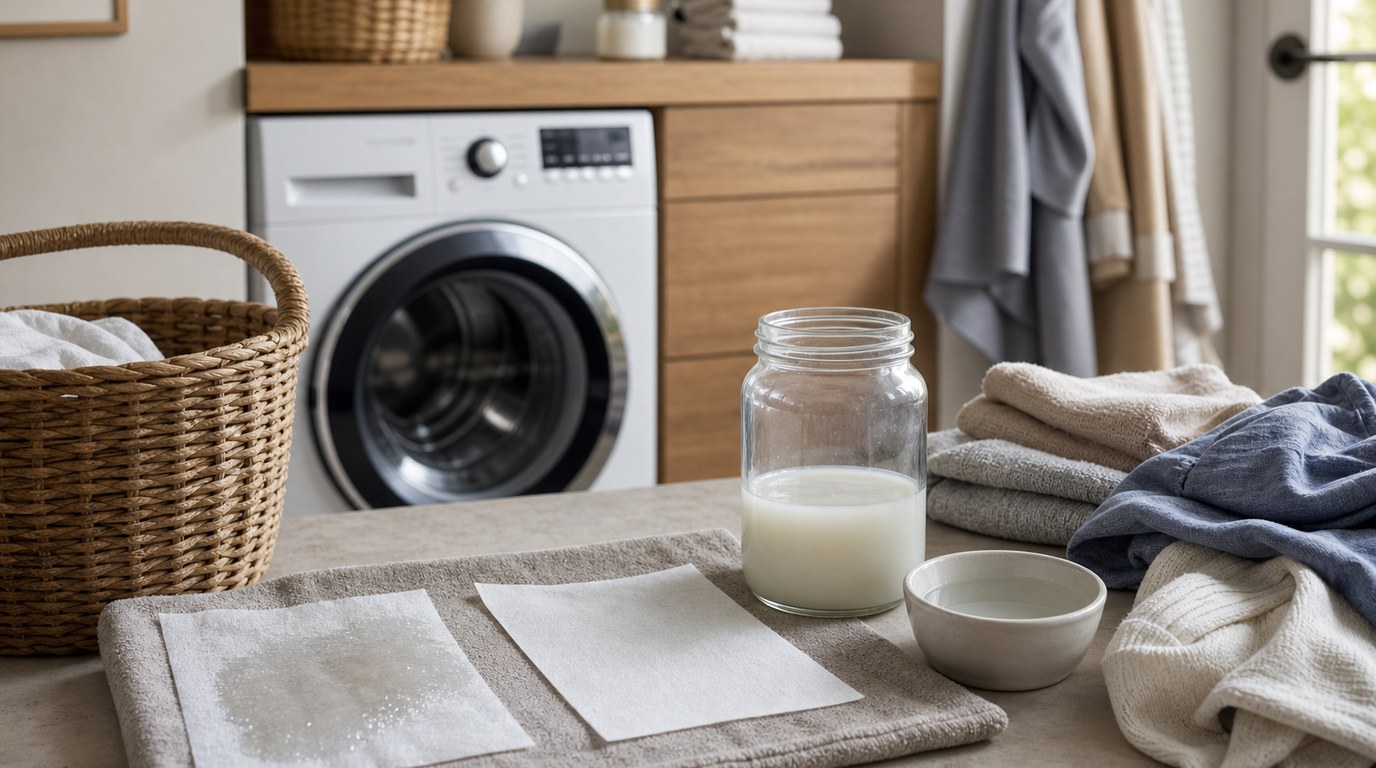
For the soak method, place finished fabric squares in a glass jar, pour in enough solution to dampen them, and seal the jar. Before drying a load, pull out one sheet and wring it until damp, not dripping.
For the dry storage method, keep clean sheets in a basket or drawer. Spray one lightly with solution before tossing it into the dryer. This is tidy and lets you control moisture.
For the dip method, keep solution in a small container, dip one sheet before use, wring well, and add it to the load. This works if you do not want fabric sitting in liquid between laundry days.
How to Use Reusable Dryer Sheets in the Dryer
Add one damp reusable dryer sheet to a small or medium load. Use two for large loads, towels, or bulky cotton items. The sheet should be damp enough to carry the solution but not wet enough to drip.
Dry the load as usual. When the cycle ends, remove the dryer sheet and set it aside to dry, return it to your storage jar, or place it in a small laundry basket for washing later.
For static-prone synthetic loads, dryer sheets may help only a little. Try lowering the heat, shortening the dry time, or adding wool dryer balls alongside your reusable sheet.
Washing, Refreshing, and Replacing the Sheets
Wash reusable dryer sheets every few uses, or sooner if they feel coated, smell stale, or pick up lint. Toss them in with towels or regular laundry, then dry completely before storing dry.
Refresh your solution weekly if it sits in a jar, especially if you use conditioner. Replace sheets when they become thin, misshapen, heavily frayed, or stop absorbing liquid well.
Troubleshooting Common Problems
If clothes feel stiff, use two sheets for larger loads or increase the dampness slightly. Do not soak the laundry; just wring the sheet less aggressively.
If you see residue, reduce or skip conditioner in the solution. Wash the sheets in hot water with detergent before using them again.
If static remains, avoid overdrying. Static often gets worse when clothes tumble after they are already dry.
If sheets fray badly, sew or serge the edges on your next batch. Pinking shears help, but they are not as durable as stitched edges.
If scent is too strong, wash the sheets and remake the solution without essential oil.
FAQ
What Should a Beginner Know First About Reusable Dryer Sheets?
Start simple: use cotton or flannel squares, finish the edges if you can, and dampen one sheet lightly before each dryer load. Reusable dryer sheets work best as a gentle softening aid, not as a perfect replacement for every commercial anti-static product.
What Matters Most When Evaluating Reusable Dryer Sheets?
Fabric choice, absorbency, and residue control matter most. A good reusable dryer sheet should absorb solution, survive repeated tumbling, and avoid leaving coatings on clothes. Cotton flannel is a strong beginner choice because it balances softness, durability, and easy sewing.
What Mistakes Should Readers Avoid with Reusable Dryer Sheets?
Avoid using too much conditioner, adding essential oil directly to dry fabric, or putting dripping-wet sheets into the dryer. Also avoid heat-sensitive synthetic fabrics. The safest approach is a lightly damp cotton sheet and a mild solution used in small amounts.
What Is the Next Logical Step After Learning About Reusable Dryer Sheets?
Make a small test batch of 6 to 8 sheets from fabric scraps and try them with everyday laundry. Once you know whether you prefer soaking, spraying, or dipping, you can sew a larger batch and adjust the solution to your household’s needs.