
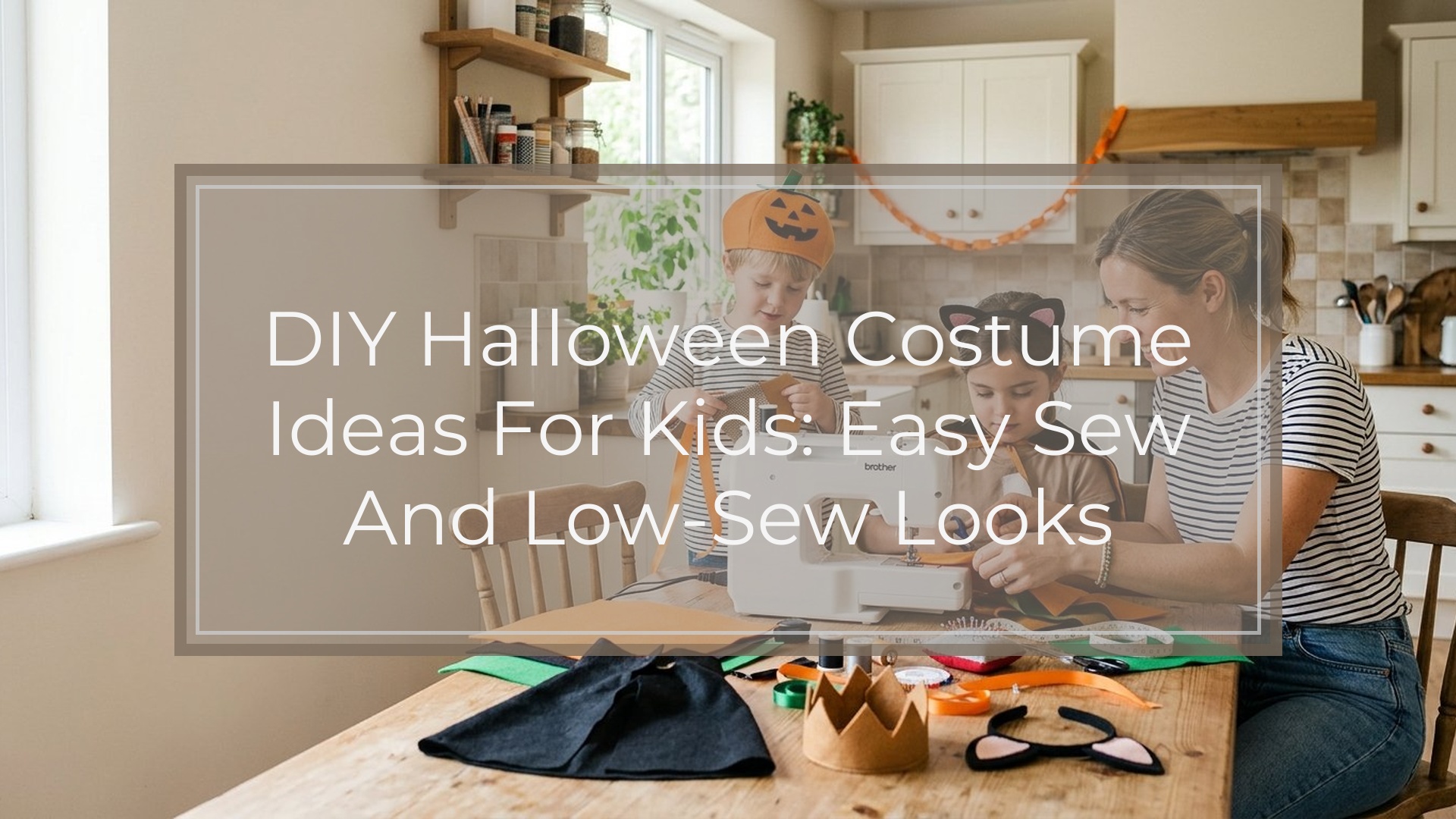
DIY Halloween costume ideas for kids do not have to mean complicated patterns, slippery fabric, or late-night sewing panic. The easiest costumes usually start with one strong visual piece: a cape, ears and a tail, felt shapes, a simple tunic, or decorated everyday clothing. From there, you can add handmade details that make the outfit feel special without sewing a full costume from scratch.
A good beginner plan is to choose a costume your child can move in, layer over warm clothes, and take on and off easily. Felt, fleece, cotton, knit fabric, ribbon, elastic, and hook-and-loop tape are especially helpful for kids costumes because they are forgiving and quick to work with.
| Costume style | Best for | Sewing level | Main materials |
|---|---|---|---|
| — | — | —: | — |
| Cape or cloak | Fast dramatic costumes | Beginner | Fleece, cotton, ribbon |
| Animal accessories | Toddlers and active kids | Beginner | Felt, headband, elastic |
| Felt food costume | Bold, funny looks | Beginner | Felt sheets, tunic, glue |
| Classic Halloween | Traditional themes | Beginner to easy | Black fabric, tulle, scraps |
| Storybook character | Imaginative play | Easy | Apron, vest, cape, trims |
How to Choose a Diy Halloween Costume Your Child Will Actually Wear
Before picking fabric, think about how the costume will feel after an hour of walking, sitting, eating, and playing. A costume that looks charming but itches, slips, or blocks movement may not last past the first doorstep.
Start with your child’s comfort level. Some kids love hats and masks; others pull them off immediately. If your child dislikes headpieces, make the costume recognizable with a vest, cape, appliqued shirt, or tail instead. For younger kids, avoid complicated closures and choose elastic waists, loose tunics, and hook-and-loop fasteners.
Consider the weather too. If Halloween is cold where you live, design the costume to fit over leggings, sweatpants, or a long-sleeve shirt. If it is warm, use breathable cotton or lightweight felt panels instead of bulky layers.
The best DIY kids costumes balance three things: a clear silhouette, comfortable materials, and one or two memorable details. You do not need every accessory. A black cape plus bat ears, a felt pizza slice, or a simple crown can be enough.
Easy Cape and Cloak Costume Ideas
A cape is one of the most useful costume pieces you can sew because it changes an ordinary outfit quickly. Fleece is ideal for beginners because it does not fray, so you can often skip hemming. Cotton works well too, but the edges look neater with a simple hem or bias tape.
Try a superhero cape made from a rectangle or half-circle of fabric with ribbon ties or hook-and-loop tape at the neck. Add a felt initial, lightning bolt, star, or shield shape to the back with a zigzag stitch or fabric glue.
For a magician costume, use a black cape lined with bright red, purple, or silver fabric. Pair it with black pants and a decorated cardboard wand. A wizard cloak can be made longer, with moon and star appliques stitched onto the fabric.
A little red cloak is perfect for a fairy tale look. Use red fleece, add a simple hood if you feel confident, or skip the hood and pair the cape with a basket.
For a vampire or bat, cut scallops along the bottom edge of a black fleece cape. Add felt bat ears to a headband for a complete costume with very little sewing.
Animal Costumes with Ears, Tails, and Simple Appliques
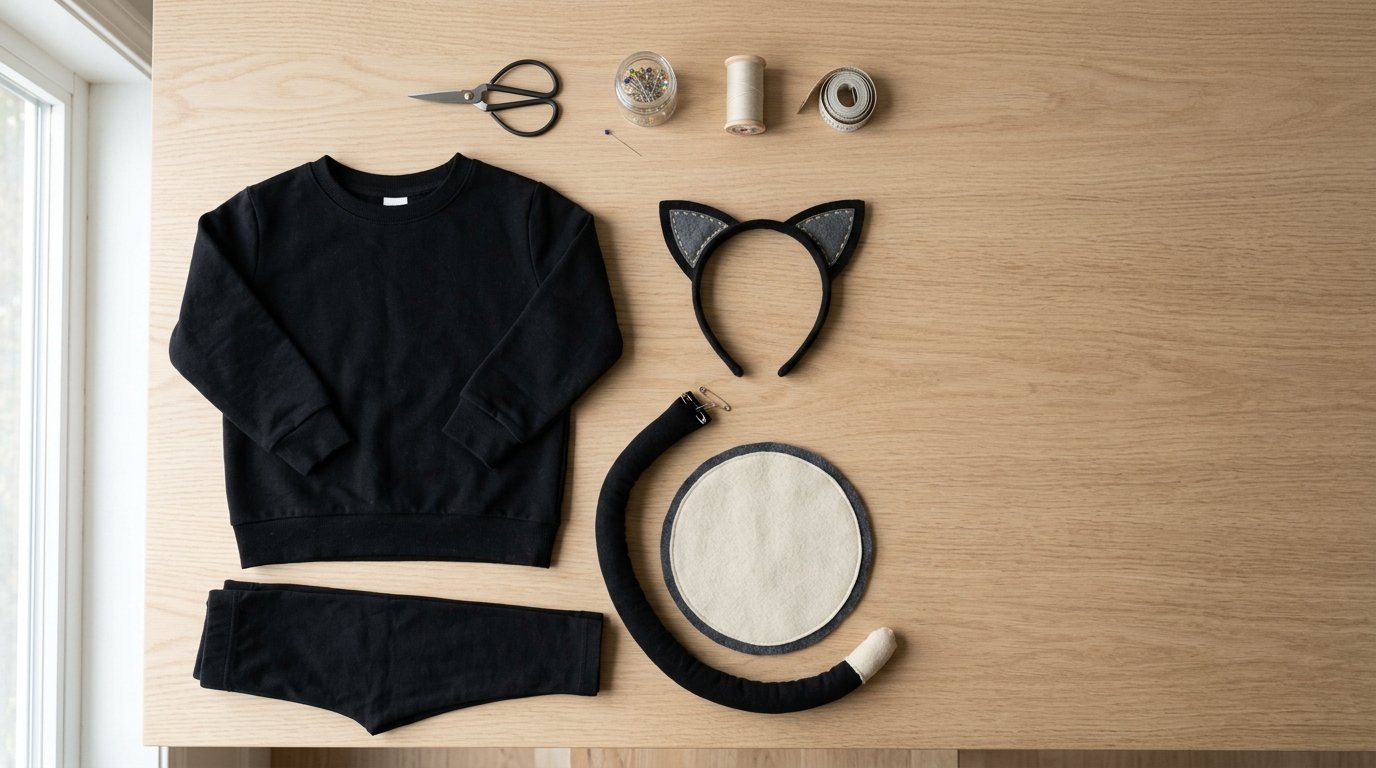
Animal costumes are excellent for beginners because you can build them from regular clothing. Start with a sweatshirt, leggings, pajamas, or a plain shirt in the animal’s main color, then add ears, a tail, and a belly patch.
For a cat, use black clothing, felt triangle ears on a headband, and a long fabric tail stuffed lightly with fiberfill. Stitch or pin the tail to the waistband, not the shirt, so it moves naturally. A small felt oval on the chest adds a softer kitten look.
A fox costume uses orange clothing, white felt for the chest, and a bushy orange tail with a white tip. Fleece works well because the tail can look full without needing complex shaping.
For a bunny, sew long felt or fleece ears to a headband and add a pom-pom or gathered fleece tail. Use pink felt inside the ears for contrast.
A dinosaur can be made with a hoodie and felt triangles. Sew or glue the spikes down the hood and back, then add a tail if your child will tolerate it.
For a ladybug, attach black felt dots to a red shirt or cape. Add pipe cleaner antennae to a headband, but keep the ends covered or curled for comfort.
Food and Treat Costumes Made from Felt
Felt is a favorite for food costumes because it holds its shape, comes in bright colors, and does not need finished edges. Most food costumes can be made as sandwich-board panels, tunics, or large appliques on a shirt.
A pizza slice costume starts with a tan or yellow felt triangle. Add red circles for pepperoni, green strips for peppers, and cream felt for cheese. Sew the triangle to the front of a shirt, or make front and back panels connected with shoulder straps.
For a strawberry, use a red dress, sweatshirt, or tunic and add small white or yellow felt seed shapes. Make a green felt leafy collar or headband to complete the look.
A donut costume can be made from two large felt circles with a center hole, lightly stuffed around the ring. Add pink or chocolate felt “icing” and small scrap sprinkles.
A candy corn costume is especially simple: stack white, orange, and yellow felt or fleece bands on a tunic shape. Keep the fit loose so your child can sit comfortably.
For a cupcake, use a gathered paper-like felt or fabric “wrapper” around the waist and a pastel shirt for frosting. Add felt sprinkles or a soft cherry headband.
Classic Halloween Costumes You Can Sew at Home
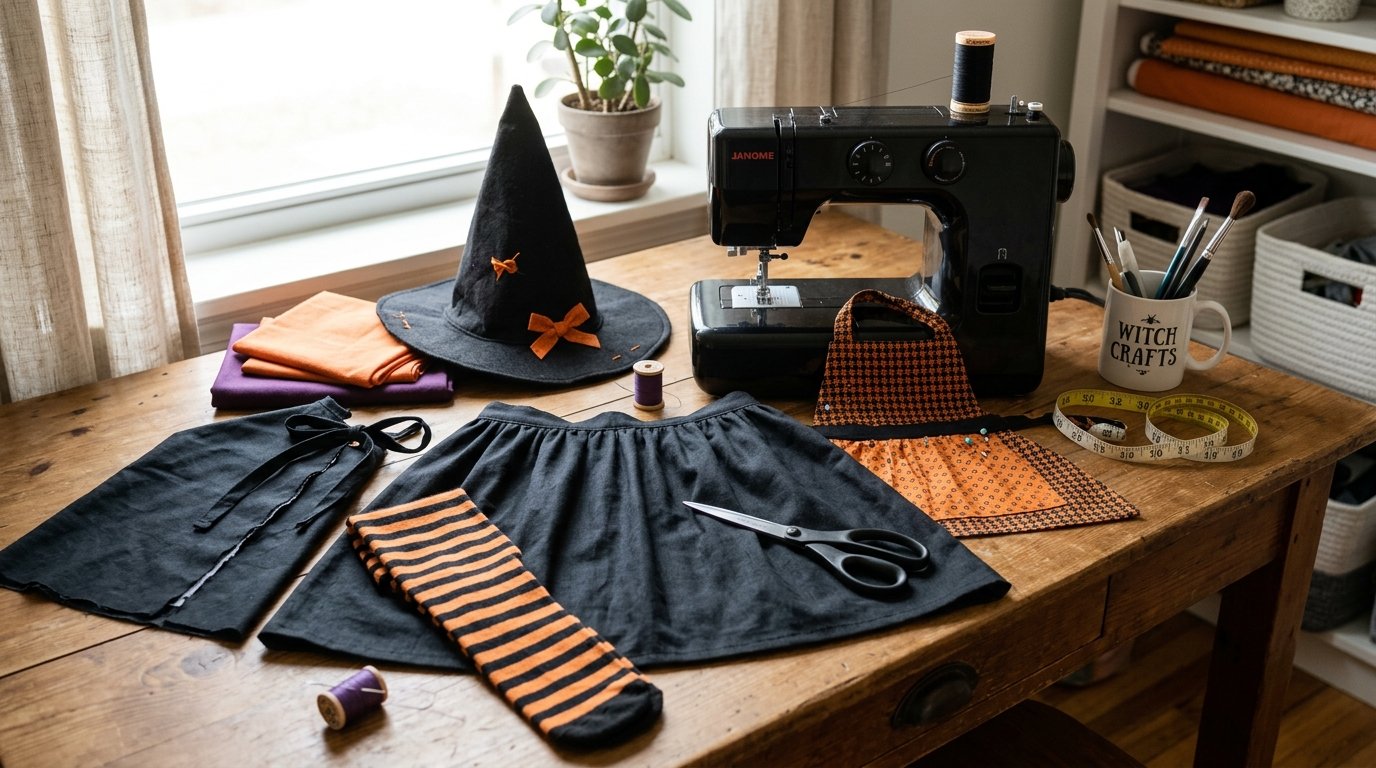
Classic Halloween costumes are reliable because they are easy to recognize with only a few handmade pieces. They also work well when you need to reuse black, white, orange, or purple fabric from your stash.
A witch costume can be as simple as a black skirt, striped tights, and a cape or apron-style overdress. Add tulle over the skirt for volume and stitch felt stars or moons around the hem. If a pointy hat feels annoying, use a headband with a small felt hat instead.
A ghost costume can be made safer and neater than the old sheet version. Sew a loose white poncho from lightweight cotton or fleece, then applique black felt eyes onto the front. Keep the face uncovered for visibility.
For a pumpkin, use an orange tunic or oversized shirt with black felt jack-o’-lantern shapes. Add elastic at the hem for a rounded look, but keep it loose enough for walking.
A skeleton costume can start with black pajamas. Cut bone shapes from white felt and stitch or glue them to the front. This is easier than painting and can be done with a basic straight stitch.
A mummy costume works best with strips of cream knit fabric sewn loosely onto a shirt and pants. Avoid dangling strips near feet or hands.
Storybook, Fairy Tale, and Imaginative Character Ideas
Storybook-inspired costumes are flexible because they rely on mood and recognizable details instead of exact copies. Think “brave knight,” “forest fairy,” “little baker,” or “adventurer” rather than trying to reproduce a specific commercial character.
For a knight, sew a simple gray or silver tunic and add a felt shield emblem to the chest. Layer it over a long-sleeve shirt and pants. A soft fabric belt finishes the look without uncomfortable armor.
A fairy costume can use a tulle skirt, felt flower crown, and simple wings made from stiff felt or fabric-covered wire. If wings get in the way, make a flower cape instead.
For a woodland explorer, decorate a vest with felt leaves, pockets, and fabric patches. Pair it with a small drawstring bag for treasures.
A royal costume can be made with a cape, sash, or simple elastic-waist skirt. Add a felt crown backed with interfacing so it stands up but stays soft.
A baker, gardener, artist, or inventor costume can start with a handmade apron and pockets full of safe pretend tools.
Low-sew and Last-minute Diy Costume Ideas
When time is short, focus on one handmade piece that carries the idea. A decorated shirt, felt headband, or quick cape can still look intentional.
Make a starry night costume by attaching felt stars and moons to a navy shirt or dress. Add a matching headband with one large star.
Create a robot with gray clothing and felt or fabric “buttons” sewn or glued to the front. Add shiny ribbon or metallic fabric scraps for panels, but avoid stiff boxes if your child needs to sit in a car.
For a scarecrow, sew felt patches onto overalls or jeans and add a flannel shirt. A soft fabric hat or raffia-colored yarn at the cuffs gives the look without scratchy straw.
A rainbow costume can be made by stitching curved felt strips onto a blue shirt. Add cloud shapes near the hem or shoulders.
If you have only 30 minutes, cut felt shapes and attach them to clothes with temporary fabric tape or safety pins placed where they will not poke.
Simple Sewing Supplies That Make Kids Costumes Easier
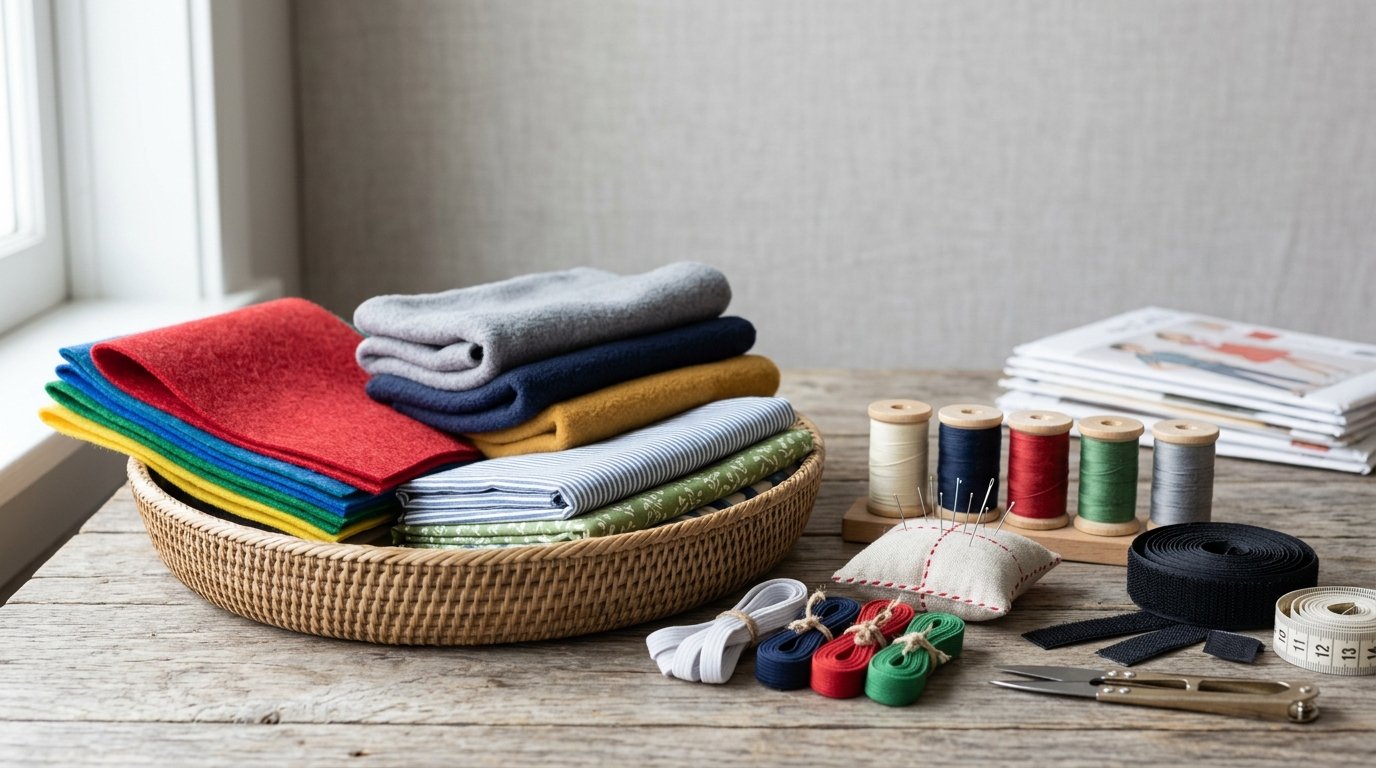
A small set of supplies can handle most beginner kids costumes. Keep felt sheets, fleece scraps, cotton fabric, elastic, ribbon, thread, and hook-and-loop tape on hand. Felt is best for appliques, ears, food shapes, and bold decorations. Fleece is useful for capes, tails, hats, and cozy accessories.
For tools, gather sharp fabric scissors, straight pins or clips, a measuring tape, hand-sewing needles, and a basic sewing machine if you have one. Fabric glue can help with quick details, but stitching is stronger for pieces that will be tugged or washed.
Interfacing is helpful for crowns, collars, and emblems that need stiffness. Safety pins are useful for fitting, but final costumes are usually more comfortable with sewn seams or soft closures.
Fit, Comfort, and Safety Tips Before Halloween Night
Have your child try on the full costume before Halloween, including shoes, coats, and any layers underneath. Ask them to walk, sit, climb stairs, and raise their arms. Shorten hems that drag, secure loose tails, and remove anything scratchy.
Keep masks, hats, and collars from blocking vision or breathing. Reflective tape can be added to capes, treat bags, or hems without ruining the costume. If the costume is dark, consider bright trim or a light-colored accessory.
Avoid long ties at the neck; use hook-and-loop tape, snaps, or short ribbons instead. Make sure accessories are soft, lightweight, and easy to remove. A comfortable costume is more likely to be worn all evening.
FAQ
What Should a Beginner Know First About Diy Halloween Costume Ideas for Kids?
Beginners should start with simple shapes, not full costume patterns. Capes, tunics, felt appliques, ears, tails, and decorated shirts are the easiest wins. Choose forgiving fabrics like felt and fleece, and focus on comfort before adding extra details.
What Matters Most When Evaluating Diy Halloween Costume Ideas for Kids?
The most important factors are comfort, safety, recognizability, and time. A good costume should be easy to move in, simple to put on, and clear at a glance. It should also fit your available sewing skill and materials.
What Mistakes Should Readers Avoid with Diy Halloween Costume Ideas for Kids?
Avoid costumes that are too tight, too long, itchy, heavy, or difficult to remove. Do not rely on face-covering masks for young children. Also avoid leaving long loose strips, tails, or ties where they can trip, catch, or tangle.
What Is the Next Logical Step After Learning About Diy Halloween Costume Ideas for Kids?
Pick one costume category, check your child’s clothing for a usable base, and gather fabric scraps or felt in the right colors. Then make the most important visible piece first, such as a cape, ears, tail, applique, or tunic.