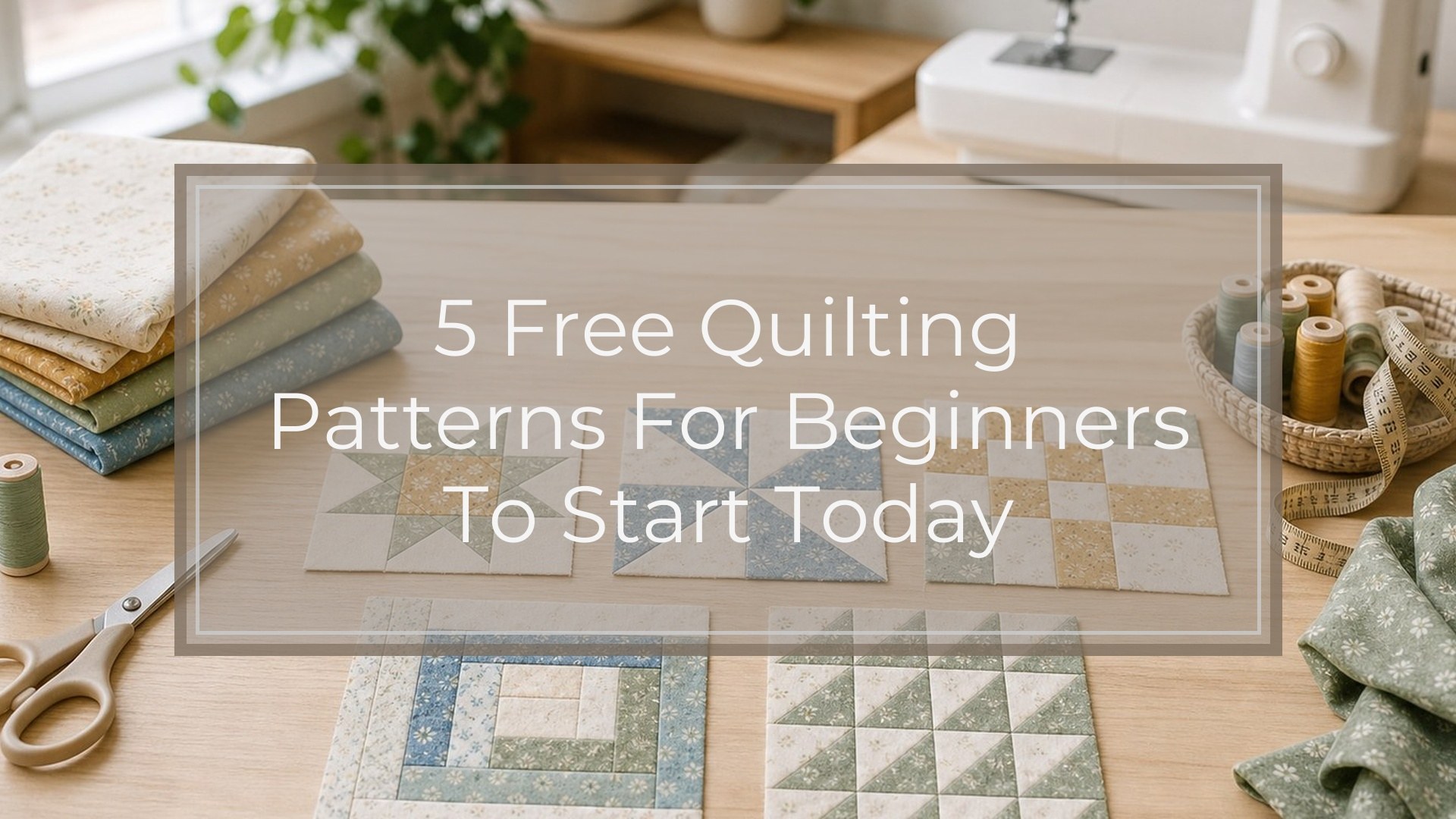
If you are new to quilting, the best first project is simple, forgiving, and easy to finish. These 5 free quilting patterns use beginner-friendly construction: squares, strips, basic blocks, or one classic triangle unit. You can make them as baby quilts, lap quilts, table toppers, or small throws.
Start with patchwork squares or a strip quilt if you want the easiest path. Choose rail fence or nine-patch if you want to practice block layout. Try half-square triangles when you are ready for a small skill stretch.
How to Choose the Right Free Quilting Pattern
Before choosing a pattern, think about your time, your comfort with accurate seams, and the fabric you already have. Large squares and strips are fastest because they have fewer seams to match. Block-based quilts take longer but teach useful habits.
For a first quilt, choose a small size, such as a baby quilt, wall hanging, or lap quilt. These are easier to manage during quilting and binding. If you have scraps, start with nine-patch, patchwork squares, or rail fence.
| Pattern | Best For | Main Skill |
|---|---|---|
| Patchwork Squares | Absolute beginners | Cutting and straight seams |
| Strip Quilt | Fast finish | Long seams |
| Rail Fence | Layout practice | Simple block assembly |
| Half-Square Triangle Quilt | Skill building | Triangle units |
| Nine-Patch Quilt | Scraps | Accurate blocks |
1. Simple Patchwork Squares Quilt
A simple patchwork squares quilt is usually the easiest free quilting pattern for a true beginner. The quilt top is made from equal-sized fabric squares sewn into rows, then joined together. There are no triangles, curves, or complicated templates.
This pattern helps you practice the basics: cutting accurately, sewing a consistent quarter-inch seam, pressing seams flat, and matching corners. It works well for baby quilts, picnic quilts, memory quilts, and charm pack projects.
Use cotton quilting fabric in coordinating prints, or mix solids with small-scale patterns. Precut charm squares are helpful because much of the cutting is already done. Tip: lay out all your squares before sewing and take a quick photo so you can remember the arrangement.
2. Strip Quilt
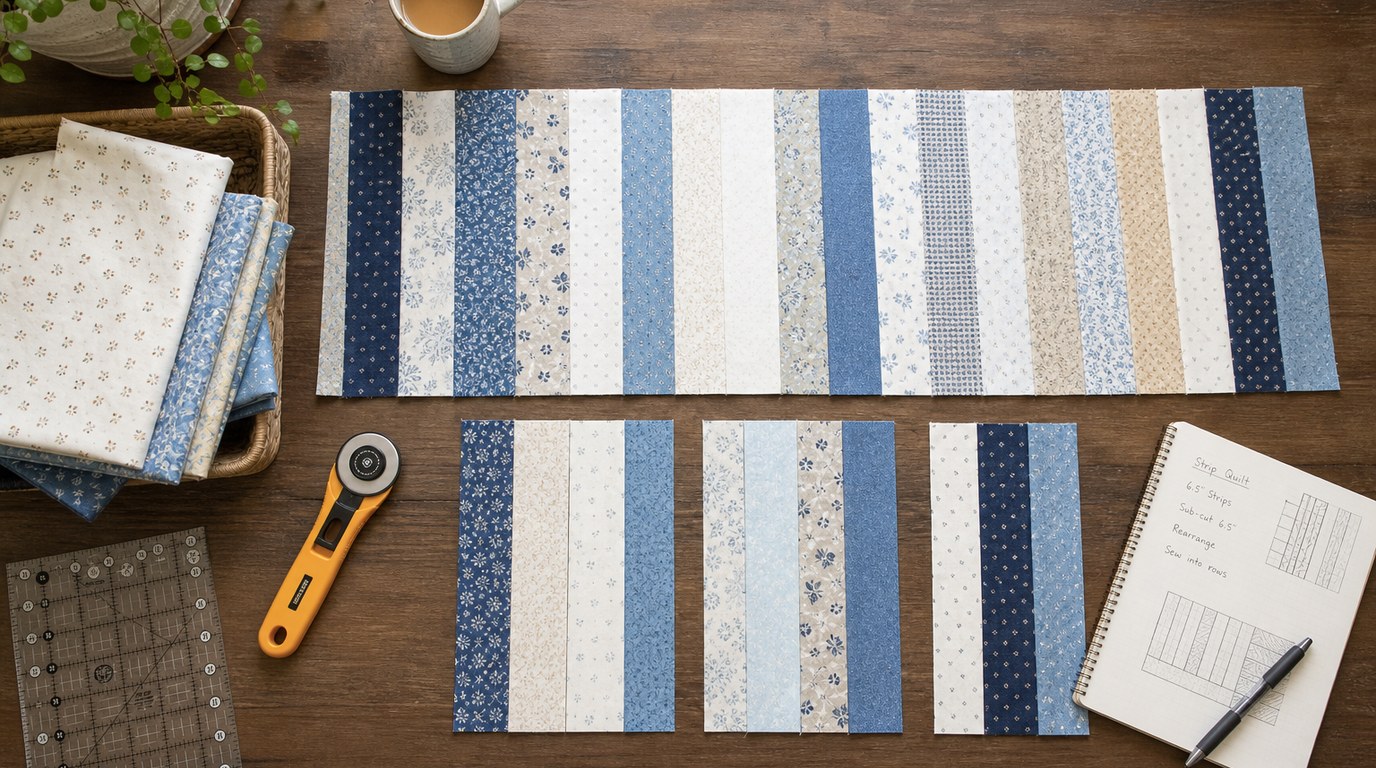
A strip quilt is a fast free quilting pattern made from long fabric strips sewn side by side. Some versions use full-width strips, while others use strip sets that are cut into sections and rearranged.
This is a good beginner project because it builds confidence with long straight seams and grows quickly. Strip quilts are great for jelly rolls, leftover binding strips, bold prints, or modern color palettes.
The main skill is keeping strips straight and avoiding wavy seams. Press carefully after each seam, and alternate the direction you sew long strips when possible. Tip: use a walking foot if your fabric layers begin to shift, especially when quilting the finished top.
3. Rail Fence Quilt
A rail fence quilt is made from blocks that contain several narrow strips, often three or four “rails” per block. After sewing the strips together, you cut them into blocks and rotate the blocks to create a woven or zigzag effect.
This pattern adds more structure than a basic strip quilt without becoming difficult. You learn how individual blocks can change the look of a whole quilt depending on how they are turned. It is a great choice for lap quilts, donation quilts, and minimalist designs.
Choose fabrics with good contrast so the layout is visible. Solids, tone-on-tone prints, and small geometrics work especially well. Tip: square up your blocks before joining rows. Even a small trim can make the final layout look cleaner.
4. Half-square Triangle Baby Quilt
A half-square triangle baby quilt is a good next step after squares and strips. Half-square triangles, often called HSTs, are square units made from two triangles. They can be arranged into chevrons, pinwheels, diamonds, or simple diagonal patterns.
This pattern is beginner-friendly with a challenge: you will learn to sew on a marked diagonal line, trim units to size, and handle bias edges carefully. A baby quilt is the best size because it gives you practice without becoming overwhelming.
Use two-color combinations for a crisp design, such as white with blue, gray with yellow, or cream with florals. Tip: make your HSTs slightly oversized, then trim them to the exact size the pattern requires. This improves point matching and assembly.
5. Scrappy Nine-patch Quilt
A scrappy nine-patch quilt is a classic free quilting pattern made from blocks with nine equal squares arranged in a three-by-three grid. It is simple, traditional, and excellent for using small fabric pieces.
This pattern helps beginners practice accuracy because each block has several seams that need to line up. It is not difficult, but it rewards careful cutting, steady seam allowance, and good pressing. Nine-patch quilts work beautifully as baby quilts, lap quilts, bed runners, or stash-busting projects.
Use a mix of light, medium, and dark fabrics so the blocks have definition. You can make every block scrappy or repeat one background fabric for a calmer look. Tip: chain piece your squares in batches to save time and keep blocks consistent.
Beginner Supplies for These Free Quilt Patterns
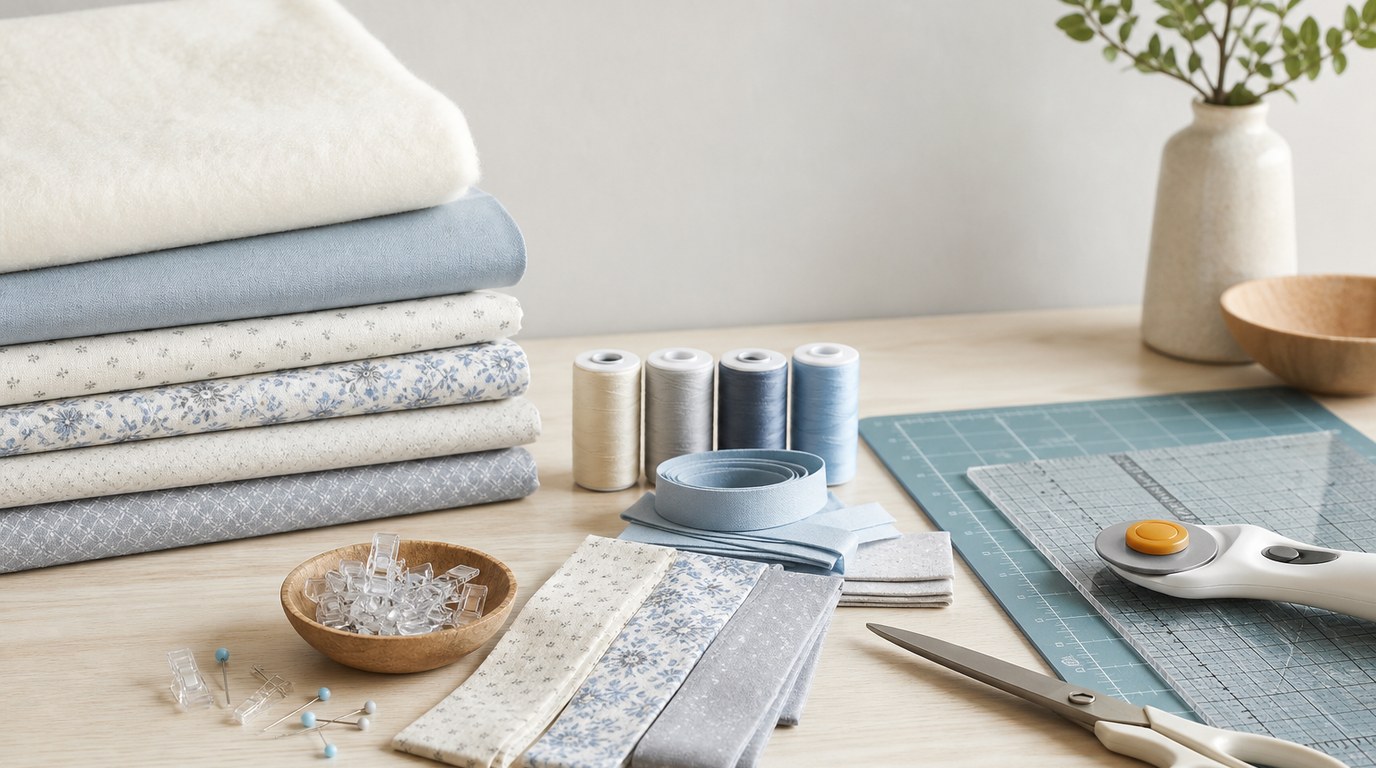
You do not need a huge sewing room to make these free quilt patterns, but a few basic tools will make the process easier. Start with quilting cotton, coordinating thread, batting, backing fabric, and binding fabric.
For tools, use a rotary cutter, cutting mat, acrylic ruler, pins or clips, scissors, seam ripper, iron, and sewing machine. A quarter-inch presser foot is helpful but not required if you can guide your seam allowance accurately. For quilting, beginners can use straight-line quilting, hand tying, or simple hand quilting on a small project.
Tips for Getting Better Results from Free Quilting Patterns
Read the full pattern before cutting any fabric. Press fabric before measuring, and use the same ruler whenever possible for consistent cuts.
Sew with a steady quarter-inch seam, then test it on scrap fabric before starting the quilt top. Press seams instead of dragging the iron, which can stretch blocks out of shape. Keep your first quilting design simple: straight lines, diagonal lines, or gentle grids are enough. Most importantly, finish the project before judging it too harshly.
Which Pattern Should You Start with?
If this is your first quilt, start with the simple patchwork squares quilt. It teaches the foundation skills with the least frustration. If you want a faster modern project, choose the strip quilt. If you already sew and want to learn quilt blocks, try rail fence or nine-patch. Choose the half-square triangle baby quilt when you are ready to practice points and layout design.
FAQ
What Is the Easiest Free Quilting Pattern for a Beginner?
The easiest free quilting pattern is usually a simple patchwork squares quilt. It uses equal-sized squares, straight seams, and a basic row layout. Beginners can focus on cutting, sewing, pressing, and assembling without worrying about triangles, curves, or complicated block placement.
Can I Make These Quilting Patterns with Fabric Scraps?
Yes. Patchwork squares, rail fence blocks, and nine-patch quilts are especially good for scraps. Try to use similar fabric weights, preferably quilting cotton, so the quilt top behaves evenly. Sort scraps by color value or theme before sewing for a more intentional finished design.
Do I Need a Special Sewing Machine for Beginner Quilt Patterns?
No. A regular sewing machine that can sew a straight stitch is enough for beginner quilt patterns. A quarter-inch foot and walking foot are helpful accessories, but they are not mandatory. Start with simple piecing and straight-line quilting so your machine can handle the project comfortably.
What Size Quilt Should a Beginner Make First?
A baby quilt, small throw, or lap quilt is the best first size. It is large enough to teach the full quilting process but small enough to cut, sew, baste, quilt, and bind without becoming hard to manage. Avoid starting with a bed-size quilt unless you have sewing experience.