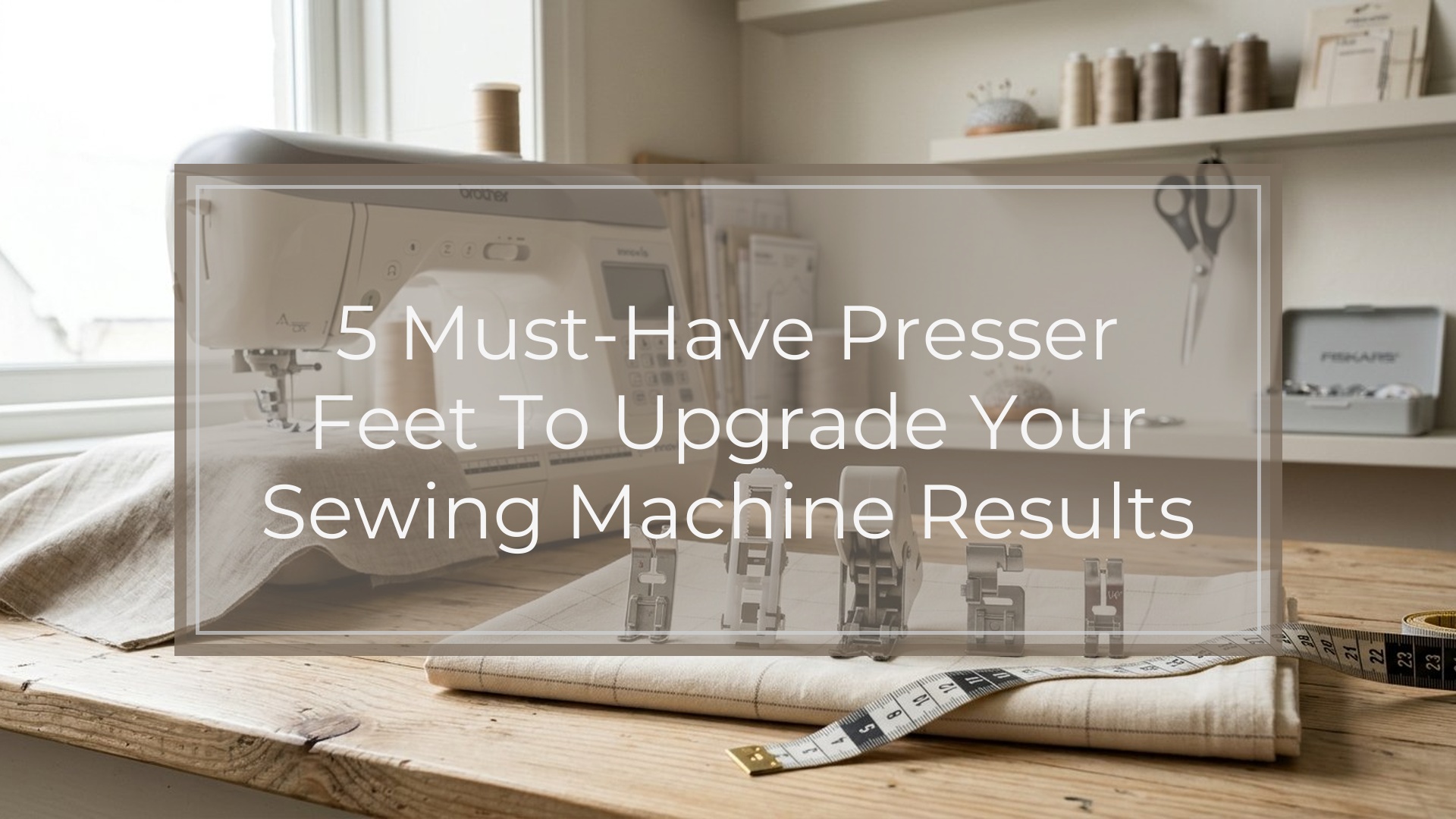
If you want the shortest useful list, start with these five presser feet: a walking foot, zipper foot, overcasting foot, blind hem foot, and buttonhole foot. Together, they solve some of the most common sewing frustrations: shifting layers, messy zipper stitching, raw seam edges, uneven hems, and inconsistent buttonholes.
These are not specialty add-ons you use once a year. They improve everyday projects like quilts, tote bags, curtains, simple garments, and mending. If you are building your accessory kit slowly, buy the feet that match the fabrics and projects you sew most. The right foot does not replace practice, but it makes good results easier and more repeatable.
How to Choose Presser Feet That Actually Upgrade Your Sewing
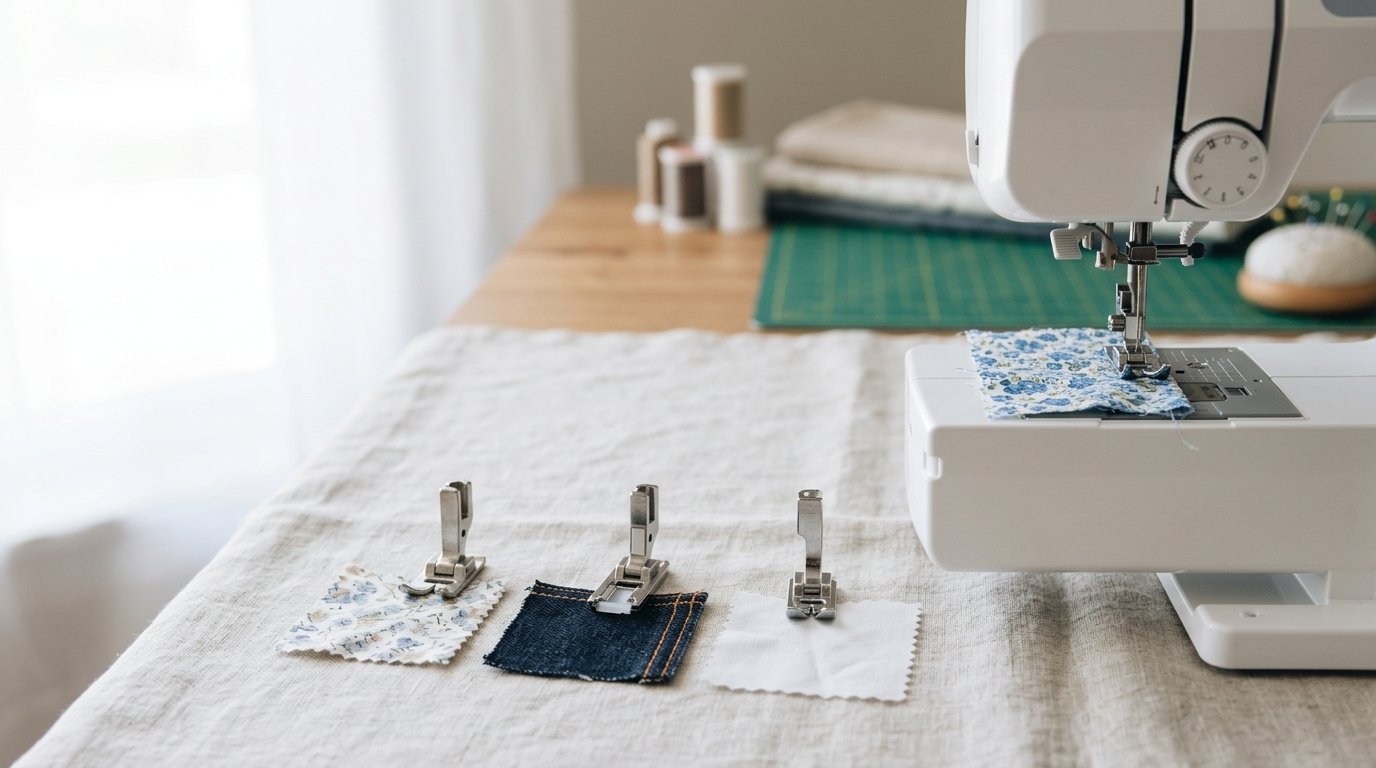
A good presser foot upgrade should do one of three things: feed fabric more evenly, guide your stitching more accurately, or help create a cleaner finish. That is the easiest way to judge whether a foot is worth buying.
For beginners, the best feet are not the most complicated ones. They are the ones that fix repeated problems on normal projects. If your layers creep out of alignment, that points to a walking foot. If zippers and close edge stitching feel awkward, you need a zipper foot. If your seams fray, look at an overcasting foot.
Before buying, check two things only: whether your machine uses low shank, high shank, or snap-on feet, and whether the foot works with the stitches your machine offers. Keep the decision practical: buy for the problems you actually face at the machine, not for rare techniques you may try later.
1. Walking Foot: the Best Upgrade for Slippery, Thick, or Layered Fabrics
A walking foot is often the first add-on that makes sewing feel noticeably easier. Unlike a standard foot, it helps feed the top layer of fabric along with the bottom layer, reducing shifting, stretching, and bunching.
This matters whenever you sew multiple layers. Quilting, matching stripes, hemming knits, sewing flannel pajamas, topstitching bag straps, and working with slippery linings all become more controlled. It is especially helpful on fabrics that tend to stick or slide differently against each other.
The biggest advantage is consistency. Seams stay straighter, layers finish closer to even, and puckering is less likely. It will not fix every setup problem, but it often solves the “why did these layers move?” issue that frustrates beginners.
If you sew quilts, bags, outerwear, or any project with batting, fleece, denim, or plaid matching, a walking foot is usually the best first upgrade.
2. Zipper Foot: the Essential Foot for Clean Closures and Edge Stitching
Many beginners think a zipper foot is only for installing zippers, but it earns its place because it lets you stitch very close to raised edges. That makes it useful far beyond garment closures.
Yes, it helps sew regular zippers, invisible-style applications that need close control, and zippered pouches. But it is also handy for piping, cording, and narrow edge stitching near bulky seams or hardware where a regular foot feels too wide. Because the needle can sew close to one side of the foot, you get better access and a neater line.
A zipper foot can make projects look sharper fast. The stitching beside a zipper tape sits closer and straighter. Topstitching beside bag edges or welt-like seams becomes easier to control. It is a small, inexpensive foot, but it handles several finish details that make handmade items look more polished.
If you sew pouches, cushion covers, skirts, or bags, this foot pays off quickly.
3. Overcasting Foot: a Simple Way to Make Seams Look Cleaner Without a Serger
If you do not own a serger, an overcasting foot is one of the simplest ways to get cleaner seam finishes on a regular sewing machine. It is designed to support stitches that wrap thread over the raw edge while helping prevent the fabric from pulling tight or tunneling.
That matters most on garments, aprons, home decor, and utility projects where the inside will be visible or washed often. Instead of leaving raw edges to fray, you can finish them with an overcast or edge-finishing stitch and get a more durable result.
This foot will not turn your machine into a serger, so expectations should stay realistic. The finish is usually slower and less industrial-looking. Still, it is a very practical upgrade for anyone who wants seams to look tidier and last longer without buying a second machine.
For beginners sewing cotton garments, children’s clothes, or simple household linens, an overcasting foot adds a lot of value for a modest cost.
4. Blind Hem Foot: the Fastest Way to Sew Nearly Invisible Hems
A blind hem foot is useful because it gives you a guide for stitching hems that barely show from the right side of the fabric. That makes it a strong time-saver on pants, skirts, curtains, and dressier garments where visible hem stitching is not the look you want.
Without this foot, blind hems can feel fussy and inconsistent. The guide helps you keep the folded edge in the correct position so the stitch catches just a tiny bit of fabric. When the setup is right, the hem looks much cleaner than an ordinary visible line of stitching.
It is most valuable if you hem often. For quick casual projects, a regular hem may be enough. But if you alter trousers, sew window treatments, or want a more tailored finish, a blind hem foot can make the process faster and more repeatable.
5. Buttonhole Foot: the Small Foot That Makes Garments Look More Finished
A dedicated buttonhole foot matters because buttonholes are one of the easiest places for a homemade garment to look uneven. This foot helps control the size, spacing, and stitching path so the result looks more balanced and intentional.
Many machines pair the buttonhole foot with a one-step or four-step buttonhole setting. Either way, the foot improves stability while the machine forms the buttonhole. Some versions also let you size the hole based on the button, which is especially helpful for shirts, dresses, cuffs, and pillow closures.
The real benefit is confidence. Instead of measuring each side manually and hoping they match, you get a more repeatable process. On beginner garments, that can be the difference between a polished finish and a project that looks slightly off at the very end.
If you plan to sew wearable clothing, this foot is more than a convenience. It is a finishing tool that helps your garments look complete.
Which Presser Foot Should You Buy First?
Buy based on the problem you hit most often.
If fabric layers shift, start with a walking foot. If you sew bags, pouches, or anything with zippers or piping, buy a zipper foot. If your seams fray and you do not own a serger, choose an overcasting foot. If you hem pants or curtains regularly, a blind hem foot is a smart pick. If garments are your main focus, prioritize a buttonhole foot.
For many beginners, the best first order is walking foot, zipper foot, then overcasting foot. The last two depend more on whether you sew clothes and hemming-heavy projects.
Tips for Using Any New Presser Foot Successfully
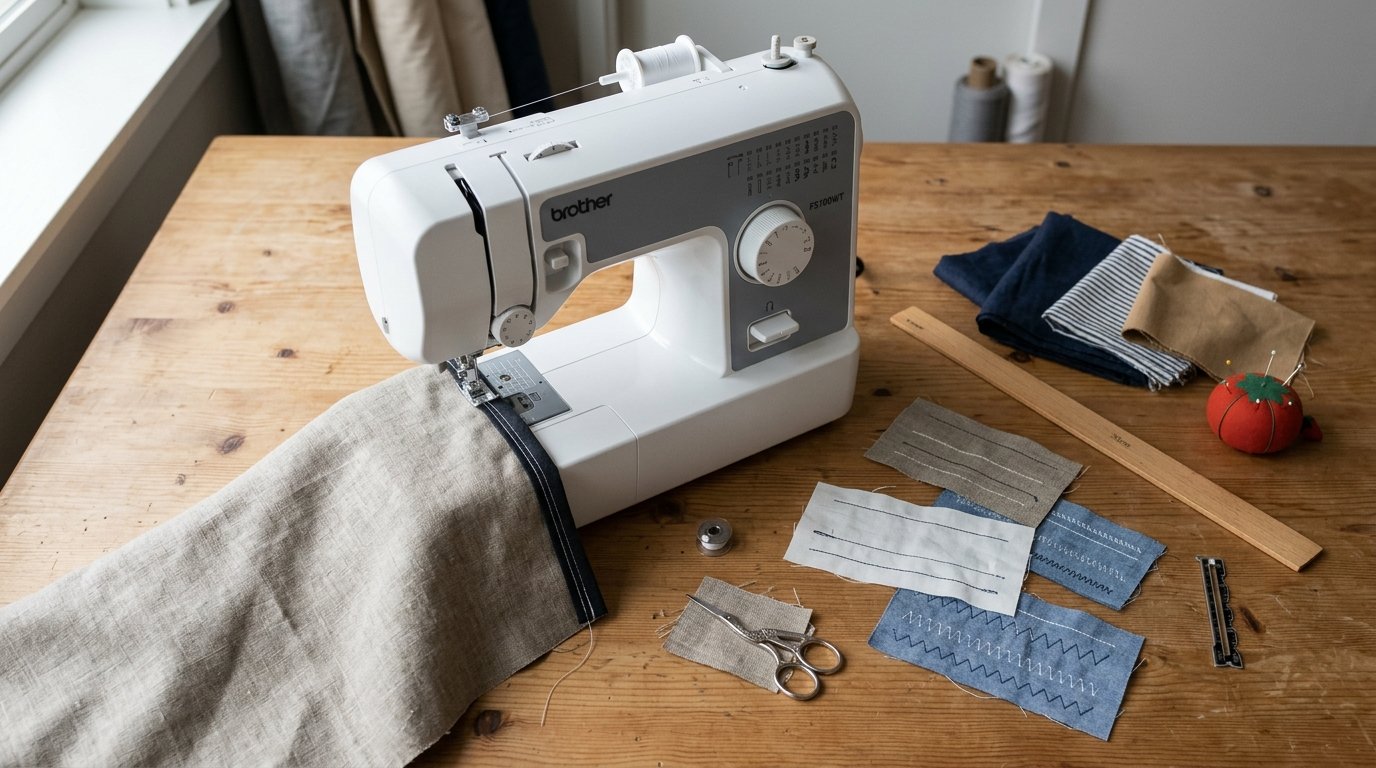
Always test a new foot on scrap fabric that matches your project. That is the fastest way to check stitch width, needle position, and fabric feeding before you sew the real piece.
Change only one variable at a time. If the stitch looks wrong, adjust either stitch type, width, length, or tension first instead of changing everything at once.
Use the manual. Presser foot setup varies by machine, and the correct stitch is not always obvious from the foot alone. Also make sure the needle clears the foot opening before you start sewing. A slow hand-turn test can prevent broken needles and damaged feet.
FAQ
What Should a Beginner Know First About 5 Must Have Presser Feet to Upgrade Your Sewing?
The most important thing is that the best presser feet solve common sewing problems, not rare ones. Start with feet that improve feeding, guidance, or finishing on your usual projects. You do not need a large collection to see better results.
What Matters Most When Evaluating 5 Must Have Presser Feet to Upgrade Your Sewing?
Focus on compatibility, the kinds of fabric you sew, and whether the foot fixes a repeated frustration. A cheap foot you use often is more valuable than a specialized one that stays in a drawer. Buy for your habits, not just for possibility.
What Mistakes Should Readers Avoid with 5 Must Have Presser Feet to Upgrade Your Sewing?
Do not assume every foot fits every machine, and do not try a new foot directly on your real project. Skipping the manual, using the wrong stitch, or sewing too fast at first can lead to poor results even with a good foot.
What Is the Next Logical Step After Learning About 5 Must Have Presser Feet to Upgrade Your Sewing?
Choose the one foot that matches your most common project, then practice with scrap fabric until it feels routine. After that, add the next foot that solves your next biggest problem. A small, useful kit beats a large random collection.