
A flowered zipper pouch is a practical beginner project because it lets you try decorative stitching on a small, flat piece before sewing a full bag. The flower stitch foot helps create rounded flower motifs by guiding the stitch while the fabric rotates or follows the machine’s decorative pattern. The basic workflow is simple: stabilize the outer fabric, stitch the flowers first, sew the zipper into flat panels, then assemble and turn the pouch. Keeping the steps in that order prevents bulky handling and protects your decorative work. If you test the flower stitch on scraps first, this is a very manageable way to learn both the foot and a useful zipper pouch construction method.
What You’ll Make and Why the Flower Stitch Foot Matters
You’ll make a lined zipper pouch about 9 inches wide by 6 inches tall, handy for pens, clips, makeup, or small sewing tools. One outer panel will feature stitched flowers as the focal detail.
The flower stitch foot matters because it lets you add decoration directly to the pouch fabric instead of sewing on trims later. That keeps the project neat and flat while you work. Think of the tutorial in two stages: first you make a decorative outer panel, then you turn that panel into a pouch. Keeping those stages separate makes the whole project easier to understand.
Materials, Tools, and Fabric Cuts
Here’s everything you need for one pouch:
| Item | Amount |
|---|---|
| Outer fabric | 2 pieces, 10 x 7 inches |
| Lining fabric | 2 pieces, 10 x 7 inches |
| Fusible interfacing | 2 pieces, 10 x 7 inches |
| Zipper | 1 zipper, 9 inches |
| Flower stitch foot | 1 |
| Regular zipper foot | 1 |
| Polyester thread | For construction |
| Decorative or embroidery thread | Optional for flowers |
| Needle | 80/12 universal or embroidery |
| Marker or chalk, clips, iron, scissors | As needed |
Quilting cotton is the easiest fabric for this project because it presses well and behaves nicely with decorative stitching. Light or medium interfacing is strongly recommended, especially on the outer pieces, so the flowers stay crisp and the pouch keeps its shape.
How to Set up Your Machine for Flower Stitches
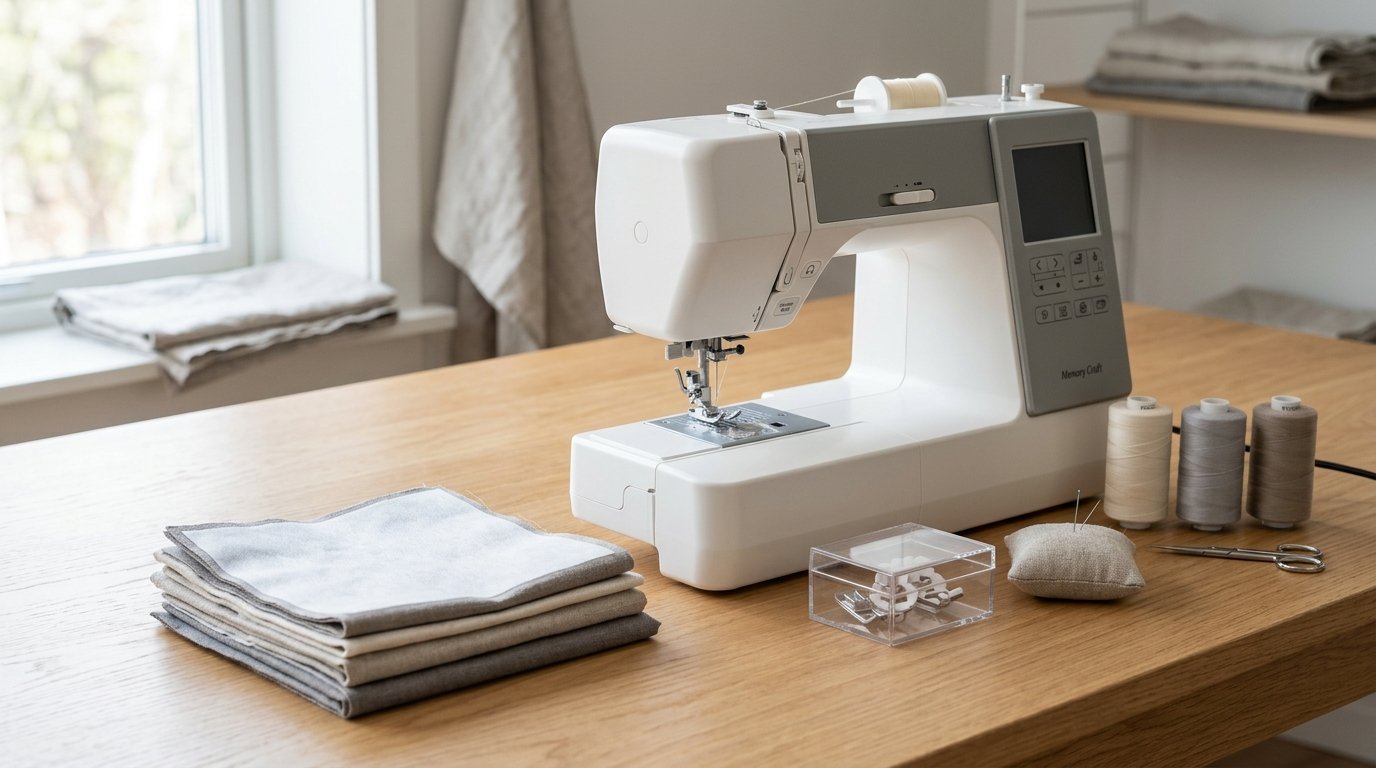
Fuse interfacing to the wrong side of both outer pieces before doing anything else. That stabilization helps prevent puckering, tunneling, and distorted flowers.
Next, attach the flower stitch foot according to your machine manual. Insert a fresh 80/12 needle, thread the machine carefully, and prepare a scrap layered exactly like your pouch outer fabric. Use that scrap to test the stitch, thread, and speed.
Choose a decorative stitch your machine recommends for circular or flower effects. Sew slowly. Most messy flower stitching comes from too much speed or not enough stabilization. If your sample shows loops or bunching, rethread first, then adjust tension only if needed.
Your goal is simple: get one clean flower on scrap before touching the real panel. Once that works, repeat the same setup on the pouch fabric.
Plan and Stitch the Flower Design on the Outer Panel
Use one outer panel as your decorative front. Lightly mark a design area, keeping flowers at least 1 inch away from all edges so later seams and zipper stitching do not cut into them.
A beginner-friendly layout is:
- three flowers across the center, or
- five smaller flowers clustered in one corner.
Start near the middle of the marked area. Stitch one flower at a time, then stop and reposition for the next motif. If your machine has a built-in flower sequence, let the stitch pattern form while you guide smoothly. If your setup requires more manual rotation, move evenly so the petals stay balanced.
Do not crowd the flowers. A little space between motifs usually looks cleaner than trying to fill the panel. If you want extra detail, add simple stems or leaves afterward with a regular foot and a short zigzag or satin stitch.
When the panel is finished, trim thread tails and press from the wrong side with a pressing cloth. Avoid crushing the texture from the front.
Prepare the Pouch Pieces Before Installing the Zipper
Set the decorated outer panel next to the plain outer panel and check that both are still the same size. If the flower stitching created slight distortion, square the pieces gently without trimming into the design.
Press both lining pieces flat. Mark the top edge of each panel so you do not accidentally sew the zipper to a side edge.
If you like, you can add zipper tabs, but for a first pouch it is easier to skip them and sew the zipper directly into the fabric sandwich.
Sew the Zipper to the Outer and Lining Pieces
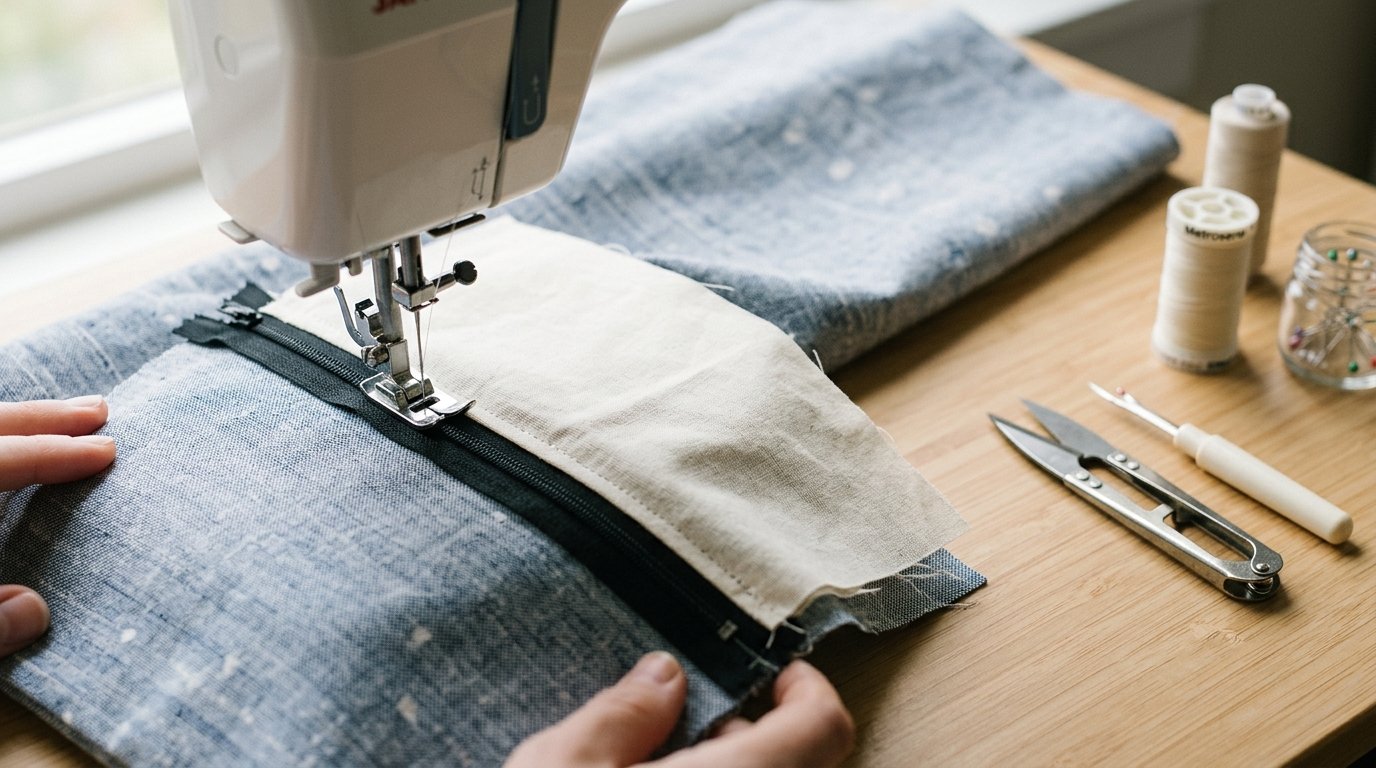
This is the most important construction step, so work in order:
- Place the zipper right side down on the top edge of the decorated outer panel.
- Put one lining piece right side down on top, sandwiching the zipper between the fabrics.
- Sew along that edge with a 1/4-inch seam using the zipper foot.
- Flip the fabrics away from the zipper and press.
- Topstitch near the folded edge if you want a crisp finish and less chance of fabric catching.
Now repeat for the second side. Place the remaining outer piece right side up, set the free zipper tape face up along its top edge, and place the last lining piece right side down on top. Sew, flip, and press.
When opened flat, the zipper should sit in the center, with both outer pieces on one side and both lining pieces on the other. Before moving on, unzip the zipper halfway. That opening is what allows you to turn the pouch later.
Assemble the Pouch Body
Fold the project so the outer pieces are right sides together and the lining pieces are right sides together. At the zipper ends, push the zipper teeth toward the lining side to reduce bulk.
Clip around the edges. Sew all the way around with a 3/8-inch seam allowance, but leave a 3-inch opening in the bottom of the lining for turning. Sew slowly across the zipper ends and backstitch there for strength.
To box the corners, flatten each bottom corner so the side seam lines up with the bottom seam and forms a triangle. Measure 1 inch across the tip, draw a line, and sew across it. Repeat on both outer and lining corners, then trim away the excess fabric.
Turn, Finish, and Shape the Flowered Zipper Pouch
Turn the pouch right side out through the opening in the lining. Gently push out the corners, especially near the zipper ends, using a blunt tool.
Close the lining opening by machine or hand. Tuck the lining inside the pouch and give the finished pouch a light press. Finally, test the zipper to make sure the fabric is not catching.
You should now have a small boxed zipper pouch with the stitched flower panel as the main feature.
Common Problems and Easy Fixes
If the flowers look uneven, slow down and test again on scraps with interfacing.
If the fabric puckers, the outer panel likely needed more stabilization or slightly lighter tension.
If the zipper waves, it was probably stretched while sewing. Press it flat and avoid pulling the tape next time.
If the lining seems twisted, one piece was flipped during zipper assembly. Lay the unit flat and check the layer order before resewing.
If the boxed corners are uneven, remeasure from the seam intersection before stitching across each corner.
FAQ
Can I Make This Pouch If I’ve Never Used a Flower Stitch Foot Before?
Yes. It’s a good first project because you do the flower stitching on a flat panel before assembling the pouch. Practice on scraps first, then keep the design simple on your first try.
What Fabric Works Best for Flower Stitching on a Zipper Pouch?
Quilting cotton is usually best. It feeds evenly, presses well, and works nicely with interfacing. Very stretchy, slippery, or thick fabrics are harder to control.
Do I Need Interfacing for This Project?
Yes, it is highly recommended. Interfacing supports the flower stitching, reduces puckering, and helps the pouch hold its shape.
What If My Sewing Machine Makes Messy Flower Stitches?
Rethread the machine, slow the speed, check the foot attachment, and test on a scrap layered with the same fabric and interfacing. Most problems come from skipping that test.
Can I Use This Method on a Larger Bag or Pouch?
Yes. The same approach works on larger pouches, bag pockets, and tote panels. Just keep the flowers clear of seam allowances and always stitch the design before assembly.