Finishing your edges means treating raw fabric edges so they do not fray, stretch out, feel scratchy, or look unfinished. The best method depends on three things: the fabric, where the edge sits, and how much wear the project will get. A seam allowance hidden inside a lined jacket needs a different finish than the hem of a tea towel or the inside seam of linen pants. Beginners do not need every technique at once. Start with a few reliable finishes—zigzag, pinked, French seam, bias binding, and serged edges—then choose based on fabric weight, visibility, and durability.
Quick Answer
The main takeaway: choose the simplest edge finish that protects the fabric, suits the project, and does not add unwanted bulk.
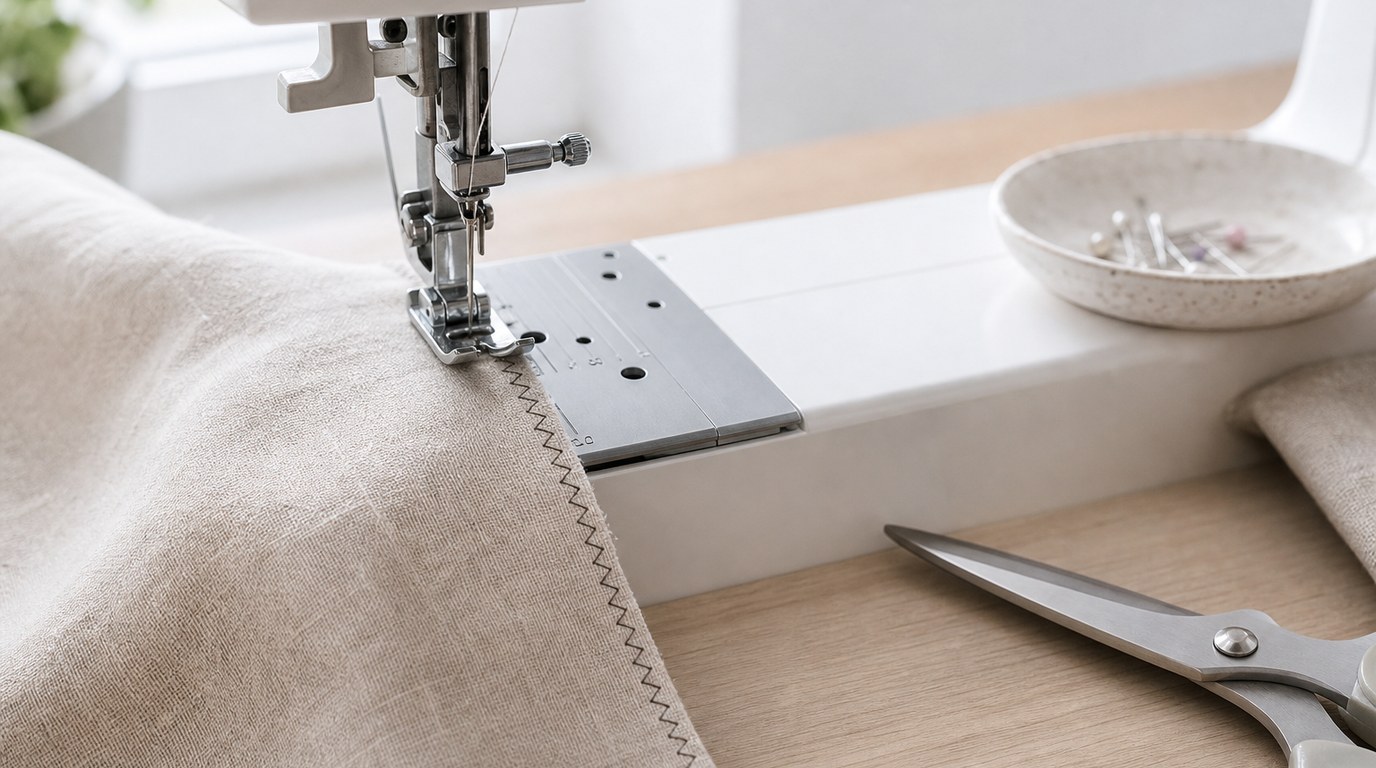
For everyday sewing, a zigzag stitch is the easiest all-purpose option. It works on many woven fabrics and only requires a regular sewing machine. Sew close to the raw edge, or stitch first and trim beside it. This keeps the fabric from unraveling without needing special equipment.
If you own a serger, a serged edge is fast, neat, and strong. It trims and wraps the edge in thread at the same time, which is why it is common in ready-to-wear clothing. It is excellent for knits, casual garments, and projects that will be washed often.
For lightweight woven fabrics, French seams are a clean choice because the raw edge is fully enclosed. They are especially useful for sheer fabrics, blouses, pillowcases, and children’s clothing where scratchy seams are uncomfortable.
For thick fabrics, avoid finishes that fold too many layers into one seam. A pinked edge, overcast stitch, bound edge, or carefully graded seam allowance may work better. “Grading” means trimming seam allowances to different widths so the seam lies flatter.
For outer edges, such as hems, necklines, armholes, and quilted items, consider bias binding, turned hems, facings, or narrow hems. These finishes are visible, so neatness matters as much as fray control.
A helpful beginner rule is this: if the edge will be hidden, choose a practical finish; if the edge will show, choose a finish that looks intentional; if the fabric frays badly, enclose or wrap the edge rather than simply trimming it.
How to Think About This Topic
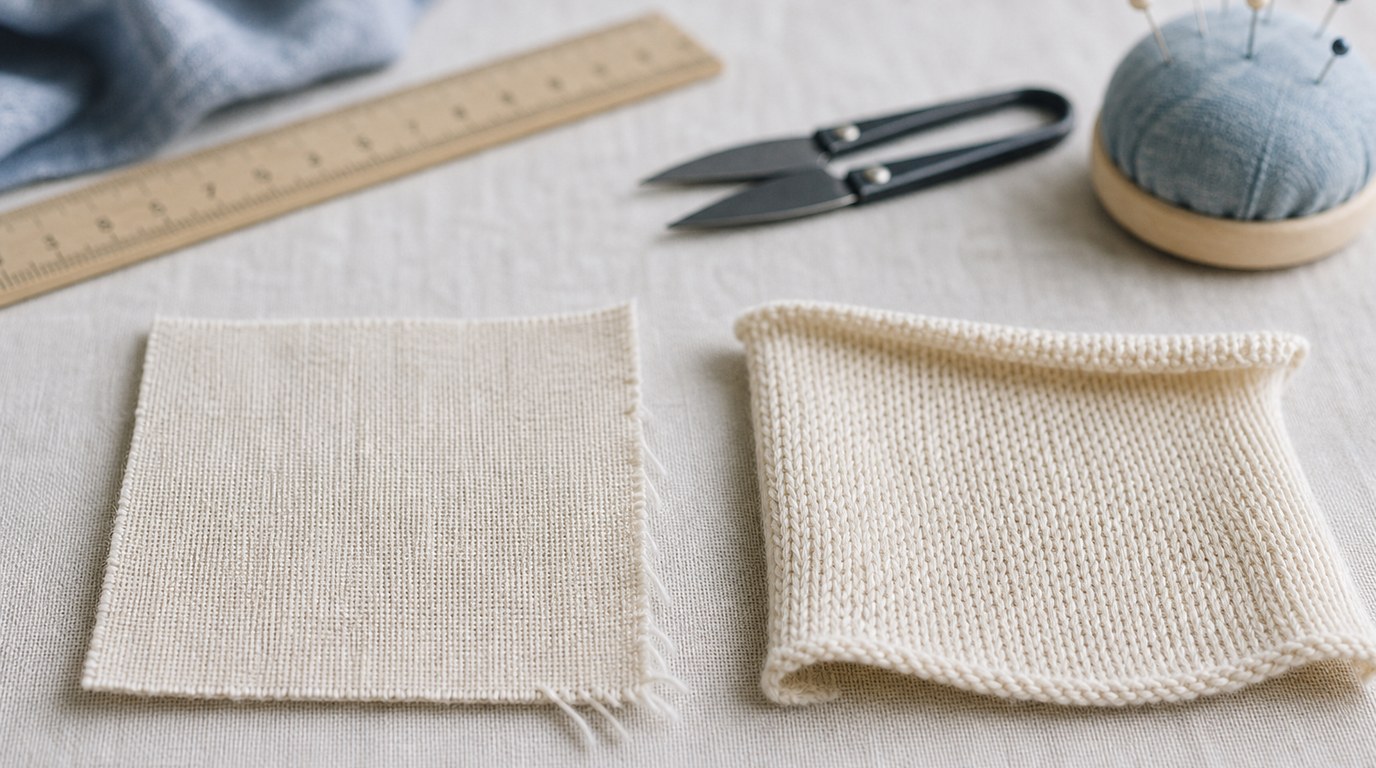
A raw fabric edge is unstable because cutting breaks the woven or knitted structure. On woven fabric, individual threads can slip out, causing fraying. On knit fabric, the edge may curl, stretch, or ladder. Finishing your edges is simply the way you control that cut edge before it becomes messy or weak.
Think of edge finishes in three groups.
First are quick protective finishes. These include zigzag stitching, overcast stitching, serging, and pinking shears. They are used mainly inside seams where the finish does not need to be decorative. They are practical for skirts, shirts, bags, cushion covers, and repairs. The goal is to stop fraying with minimal extra bulk.
Second are enclosed finishes. These hide the raw edge completely. French seams, flat-felled seams, bound seams, and some lined seams fall into this group. They take more time but look cleaner and feel smoother. Use them when the inside of the project may be seen, when fabric frays easily, or when comfort matters.
Third are visible edge finishes. These are used on edges people can see or touch: hems, necklines, sleeve openings, blankets, napkins, quilts, and unlined jackets. Examples include bias binding, rolled hems, narrow hems, facings, and decorative overlocking. Here, the finish becomes part of the design.
To choose well, ask four questions.
What fabric am I using? Cotton poplin is easy to finish with zigzag, serging, or French seams. Linen frays more, so it often needs a stronger finish. Sheer fabric looks best with narrow, enclosed finishes. Denim and canvas need durable but low-bulk finishes. Knit fabric usually needs a stretchy finish, such as serging, zigzag, or a stretch stitch.
Where is the edge located? A seam allowance inside a tote bag can be simple. A neckline on a blouse must look smooth. A side seam in unlined pants should be comfortable and durable. A napkin edge needs to survive repeated washing and still look tidy.
Will the edge be visible? Hidden edges can be functional. Visible edges should look deliberate. A pinked seam inside a skirt may be fine, but pinked edges on a table runner may look unfinished unless that is the style you want.
How much wear will it get? Pajama seams, children’s clothes, bags, towels, and kitchen linens need finishes that can handle washing and friction. A decorative costume or lightly used home project may not need the strongest finish.
This mental model keeps the focus practical. You are not trying to memorize every sewing edge finish. You are matching the finish to the fabric’s behavior and the project’s needs. The best finish is the one that keeps the edge secure without making the project bulky, stiff, or harder to sew.
Practical Guidance
Use this comparison as a quick starting point when selecting a finish.
| Edge finish | Best for | Tools needed | Beginner difficulty | Watch out for |
|---|---|---|---|---|
| — | — | —: | —: | — |
| Zigzag stitch | General woven seams, simple projects | Sewing machine | Easy | Can pucker very light fabric |
| Pinking shears | Stable woven fabrics, low-fray projects | Pinking shears | Easy | Not enough for heavy fraying |
| Serged edge | Knits, washable garments, fast finishing | Serger | Easy to medium | Thread tails need securing |
| French seam | Lightweight wovens, sheers, neat interiors | Sewing machine | Medium | Adds steps; not ideal for bulky fabric |
| Bias binding | Visible raw edges, quilts, armholes, unlined seams | Bias tape, machine or hand needle | Medium | Can look bulky if too wide |
| Flat-felled seam | Denim, shirts, workwear | Sewing machine | Medium | Needs accurate trimming and pressing |
| Narrow hem | Lightweight outer hems | Sewing machine | Medium | Slippery fabrics need patience |
For most beginners, the zigzag stitch is the best first method. Set your machine to a medium-width zigzag and test on a scrap. The stitch should catch the fabric without tunneling or pulling the edge into a ridge. If the fabric puckers, shorten the stitch slightly, reduce tension if needed, or move the stitching a little farther from the edge and trim after sewing.
Pinking shears are useful when you want speed and low bulk. They cut a zigzag edge that slows fraying. This works best on stable cotton, quilting cotton, and some medium-weight fabrics. It is not the strongest option for loose linen, ravelly tweed, or garments that will be washed constantly.
A serged edge is excellent if you have access to a serger. It is common for knit T-shirts, sweatshirts, leggings, casual dresses, and many home projects. Because a serger cuts as it stitches, practice on scraps first so you do not accidentally trim too much. After serging, secure the thread tail by weaving it back into the stitches or tying it off.
French seams are ideal when you want the inside to look clean. They are sewn in two passes: first with wrong sides together, then trimmed, pressed, and sewn again with right sides together. The raw edge is trapped inside the second seam. Use this for lightweight cotton, voile, lawn, chiffon, pillowcases, and delicate garments. Avoid it on thick seams because the enclosed fold can become bulky.
Bias binding is one of the best finishes for visible or exposed edges. Bias tape is a strip cut on the diagonal grain, which lets it curve around necklines, armholes, scallops, and quilt edges. You can buy it or make it from matching fabric. Use narrow binding for garments and wider binding for quilts, bags, and home sewing. Press carefully; binding looks best when it wraps evenly around the edge.
Flat-felled seams are strong and tidy. You see them on jeans and many button-up shirts. One seam allowance is trimmed, the other is folded around it, and the fold is stitched down. This encloses the raw edge and reinforces the seam. It is a good choice for denim, chambray, workwear, and unlined casual garments.
For outer hems, choose the method by fabric weight. A simple double-fold hem works for cotton skirts, curtains, and napkins. A narrow hem suits lightweight blouses and scarves. A blind hem gives trousers and skirts a discreet finish. Heavy fabric may need a single-fold hem with the raw edge serged or bound first, so the hem does not become too thick.
Pressing matters with every method. Pressing is not the same as ironing back and forth. Press the seam flat, then press it open or to one side as the method requires. A well-pressed edge is easier to stitch and looks more professional.
Common mistakes are easy to avoid. Do not choose a bulky enclosed finish for thick fabric. Do not rely on pinking alone for fabric that sheds threads as soon as you touch it. Do not skip testing; a five-inch scrap can reveal puckering, stretching, or thread problems before you sew the real project. Finally, do not assume the most decorative finish is the best. A neat, sturdy, quiet finish is often exactly what the project needs.
FAQ
What Should a Beginner Know First About Finishing Your Edges?
Start with why the edge needs finishing. Raw fabric can fray, curl, scratch, or weaken over time. Learn one simple method first, such as zigzag stitching, then add French seams, serging, or binding as your projects become more varied.
What Matters Most When Evaluating Finishing Your Edges?
Fabric type matters most. A finish that works beautifully on cotton may be bulky on denim or too weak for loose linen. Also consider whether the edge is hidden or visible, how often the item will be washed, and how much comfort matters.
What Mistakes Should Readers Avoid with Finishing Your Edges?
Avoid using the same finish for every fabric. Also avoid skipping test scraps, trimming too close before you know the method, and adding too many folded layers to heavy seams. A finish should control the edge without distorting the fabric.
What Is the Next Logical Step After Learning About Finishing Your Edges?
Choose one current project and test two finishes on scraps from the same fabric. Compare fraying, bulk, stretch, and appearance after pressing. Then use the better option on the project. This builds practical judgment faster than memorizing many techniques.