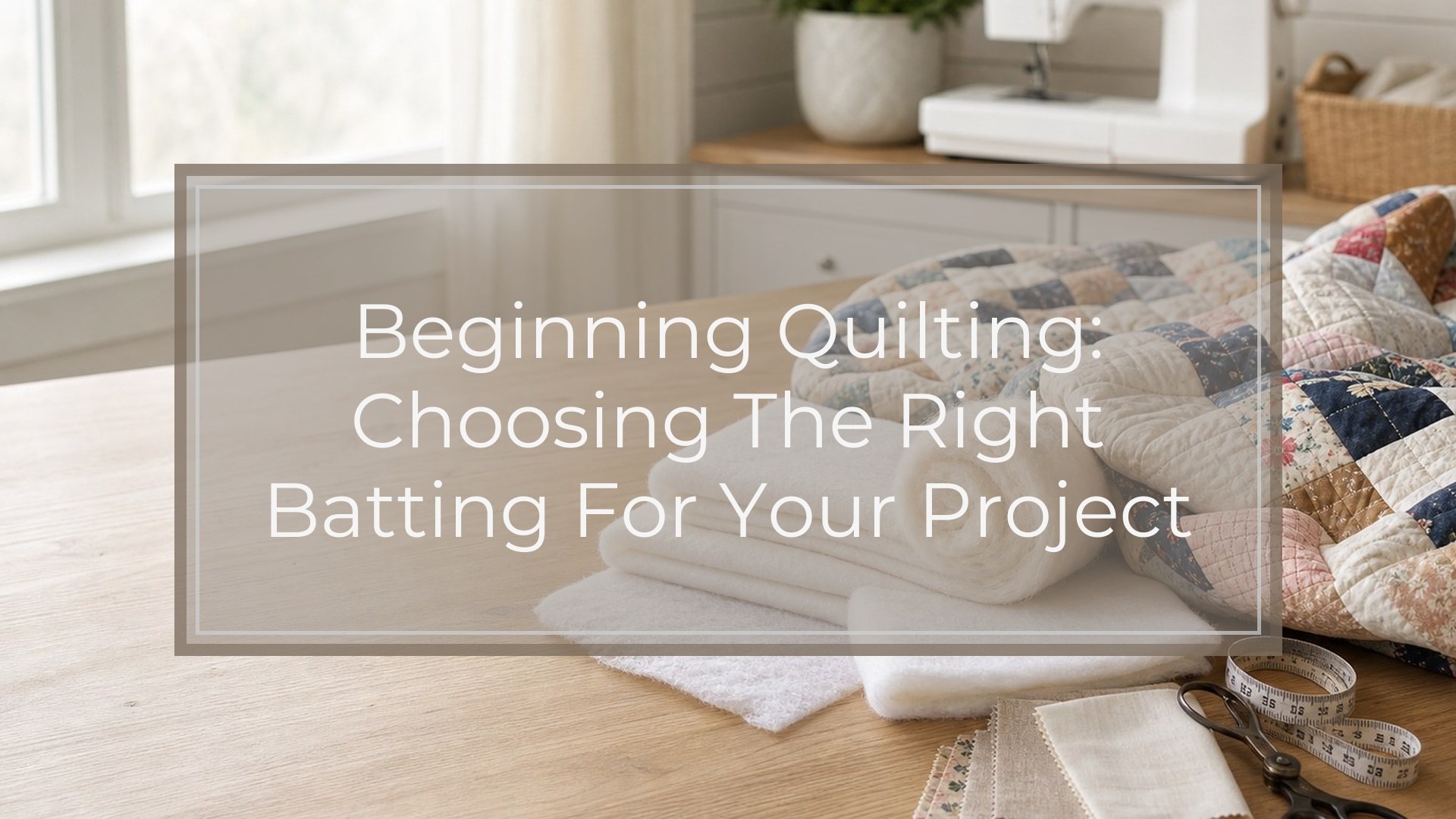
For most beginning quilters, the safest batting choice is a low-loft cotton or cotton-blend batting that can be machine washed and quilted at a comfortable distance. It gives a soft, traditional quilt feel without being too puffy, slippery, or hard to manage. Choose polyester if you want more puff, less weight, or lower cost. Choose wool if you want warmth and lightness. Before buying, check three things on the package: fiber content, maximum quilting distance, and care instructions. Then match the batting to the project: a baby quilt needs washable durability, a wall hanging needs stability, and a bed quilt needs comfort, drape, and the right warmth.
What Batting Does in a Quilt
Batting is the middle layer of a quilt, between the quilt top and backing. It affects how the quilt feels, looks, washes, and wears over time. The same quilt top can feel flat and old-fashioned with thin cotton batting, puffy and light with polyester, or warm and springy with wool.
Think of batting as the “body” of the quilt. It adds thickness, insulation, and texture. When you quilt through the layers, the batting helps create the raised and recessed pattern you see on the finished surface. Choosing batting is not only about warmth; it is also about drape, stitch definition, care, and how easy the quilt will be to handle.
Start with the Project: What Are You Making?
The best batting choice starts with the quilt’s purpose. A baby quilt or picnic quilt should be washable, durable, and not too delicate. Cotton, polyester, or cotton-poly blends are practical choices. For a bed quilt, think about the climate and the sleeper: cotton is breathable and classic, while wool is warmer but still light.
For a wall hanging, table runner, or decorative piece, stability may matter more than softness. A thinner cotton or blend can help the project hang flatter. For a throw quilt used on the couch, comfort and washability usually matter most. If you are unsure, choose a medium-weight cotton blend with low loft; it works well for many first quilts and is forgiving for machine quilting.
Choose the Fiber: Cotton, Polyester, Wool, Bamboo, and Blends
Batting fiber is the biggest factor in how a quilt behaves. Beginners do not need to memorize every specialty product, but it helps to know the common options.
| Batting type | Best for | Feel and look | Beginner notes |
|---|---|---|---|
| Cotton | Everyday quilts, traditional bed quilts | Soft, breathable, flatter, crinkly after washing | Easy to find; may shrink more than polyester |
| Polyester | Puffy quilts, budget projects, lightweight warmth | Lofty, light, less crinkled | Can be slippery or beard if low quality |
| Wool | Warm bed quilts, lightweight cozy quilts | Springy, warm, excellent drape | Costs more; check wash instructions |
| Bamboo | Soft quilts, breathable lightweight projects | Drapey, smooth, often blended | Usually sold as a blend; check shrinkage |
| Cotton-poly blend | First quilts, gifts, washable projects | Balanced softness, strength, and ease | Often the easiest all-purpose choice |
Cotton batting gives a classic quilt look. It tends to shrink slightly, which creates the soft crinkled texture many quilters love. It is breathable and comfortable but can feel heavier than polyester.
Polyester batting is lighter and puffier. It usually shrinks less and dries quickly. It can be useful for tied quilts or projects where you want visible loft, but very high-loft polyester may be harder to machine quilt smoothly.
Wool batting is warm without being heavy. It has a lovely spring and often shows quilting texture beautifully. The tradeoff is price and care: some wool battings are washable, while others need more caution.
Bamboo batting is soft and drapey, often blended with cotton. It can be a nice choice for lightweight quilts, but beginners should read the label carefully because blends vary. Cotton-poly blends are often the most practical beginner option because they combine softness, durability, and easier care.
Understand Loft, Drape, and Warmth
Loft means thickness. Low-loft batting makes a flatter quilt and is easier for many beginners to machine quilt. High-loft batting creates a puffier look but can be harder to control, especially in a domestic sewing machine.
Drape means how the quilt hangs and bends. A quilt with good drape feels soft around the body instead of stiff. Cotton and bamboo blends often drape nicely after washing, while some dense battings can feel firmer.
Warmth depends on fiber and thickness. Wool is warm and light, polyester can be warm for its weight, and cotton is breathable rather than highly insulating. For a first quilt, avoid choosing only by warmth; also consider handling and care.
Check Quilting Distance Before You Buy
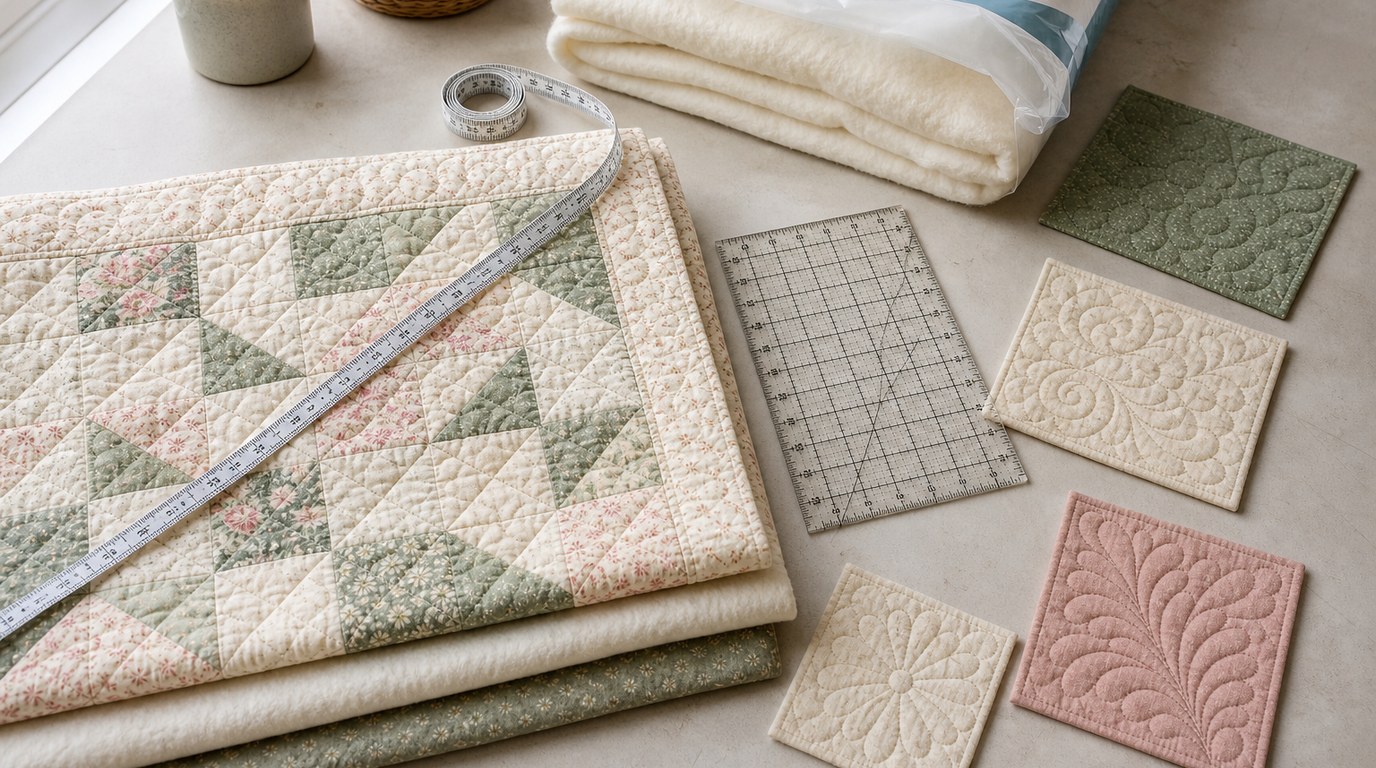
Every batting package lists a maximum quilting distance, such as “quilt up to 4 inches apart” or “quilt up to 8 inches apart.” This tells you how far apart your quilting lines or ties can be while still keeping the batting stable inside the quilt.
This is a common beginner mistake. If you plan simple straight lines spaced 6 inches apart, do not buy batting that requires quilting every 2 to 4 inches. The batting may shift, bunch, or wear unevenly. Choose a product that matches your actual quilting plan, not an ideal plan you may not finish.
Consider Shrinkage, Washing, and the Finished Look
Batting changes after washing. Cotton often shrinks more than polyester, giving the quilt a soft, puckered look. Many quilters like this traditional crinkle, but if you want a flatter, smoother finish, look for low-shrink batting or prewash if the manufacturer allows it.
For baby quilts, pet quilts, and everyday throws, choose batting that is clearly machine washable. Read whether it can go in the dryer, needs cool water, or requires gentle care. Some battings may be prewashed, while others should not be because they can stretch or come apart before quilting. Always follow the specific label, especially with wool, bamboo blends, and fusible battings.
Match Batting to Your Quilting Method
Your quilting method affects which batting will be easiest to use. For machine quilting on a home sewing machine, low- or medium-loft batting is usually simpler to roll, fold, and move under the needle. Cotton or cotton-blend batting is a dependable choice.
For hand quilting, look for batting labeled suitable for hand quilting. Some battings needle more easily than others, and dense batting can make hand stitching tiring. For tied quilts, choose batting with a quilting distance that allows ties spaced as far apart as you want. Polyester and some blends can work well for tied quilts, but the label still matters.
Pick the Right Size and Avoid Piecing Problems
Buy batting larger than your quilt top. A common rule is to allow at least 3 to 4 extra inches on each side, though longarm quilting may require more. For example, a 60-by-70-inch quilt top needs batting at least about 66 by 76 inches.
Precut packages are convenient, but check the actual measurements before buying. If you must piece batting scraps, use the same type and loft, butt the edges together, and join them smoothly so you do not create a ridge in the quilt.
A Simple Beginner Decision Path
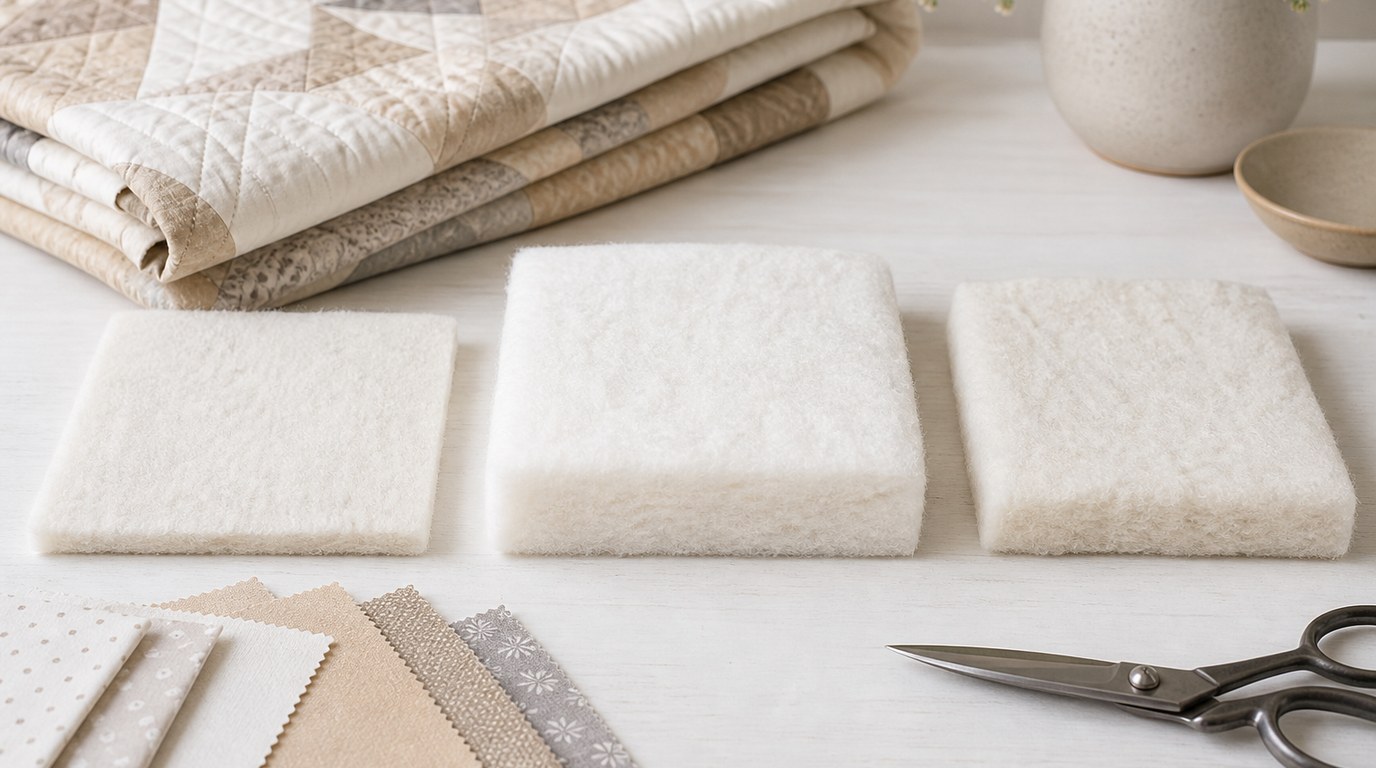
If you feel overwhelmed, use this quick path:
- Decide how the quilt will be used: baby, bed, throw, wall, or gift.
- Choose washable batting for anything that will get regular use.
- Pick low-loft cotton or cotton-blend for the easiest first-quilt choice.
- Choose polyester for puff or budget, wool for light warmth, bamboo blend for soft drape.
- Check the maximum quilting distance before paying.
- Buy the correct size with extra all around.
- Read the washing instructions and make sure they fit real life.
When in doubt, a low-loft cotton-poly blend is a practical, beginner-friendly batting for many quilts.
FAQ
What Should a Beginner Know First About Beginning Quilting Choosing the Right Batting?
A beginner should know that batting affects the quilt’s feel, warmth, thickness, washing, and finished texture. Do not choose only by price or package size. Start with the quilt’s use, then check fiber content, loft, quilting distance, and care instructions.
What Matters Most When Evaluating Beginning Quilting Choosing the Right Batting?
The most important factors are project use, fiber type, loft, maximum quilting distance, and washability. For a first everyday quilt, choose a batting that is easy to quilt, machine washable, and not too thick. Cotton blends are often the simplest starting point.
What Mistakes Should Readers Avoid with Beginning Quilting Choosing the Right Batting?
Avoid buying batting without checking the quilting distance, choosing high loft when you want easy machine quilting, or using delicate batting for a quilt that needs frequent washing. Also avoid buying batting that is too small; you need extra around all edges.
What Is the Next Logical Step After Learning About Beginning Quilting Choosing the Right Batting?
Next, compare a few batting packages in the size you need. Read the labels for fiber, loft, quilting distance, shrinkage, and care. Once you choose, make a small quilt sandwich sample if possible so you can test the feel before quilting the full project.