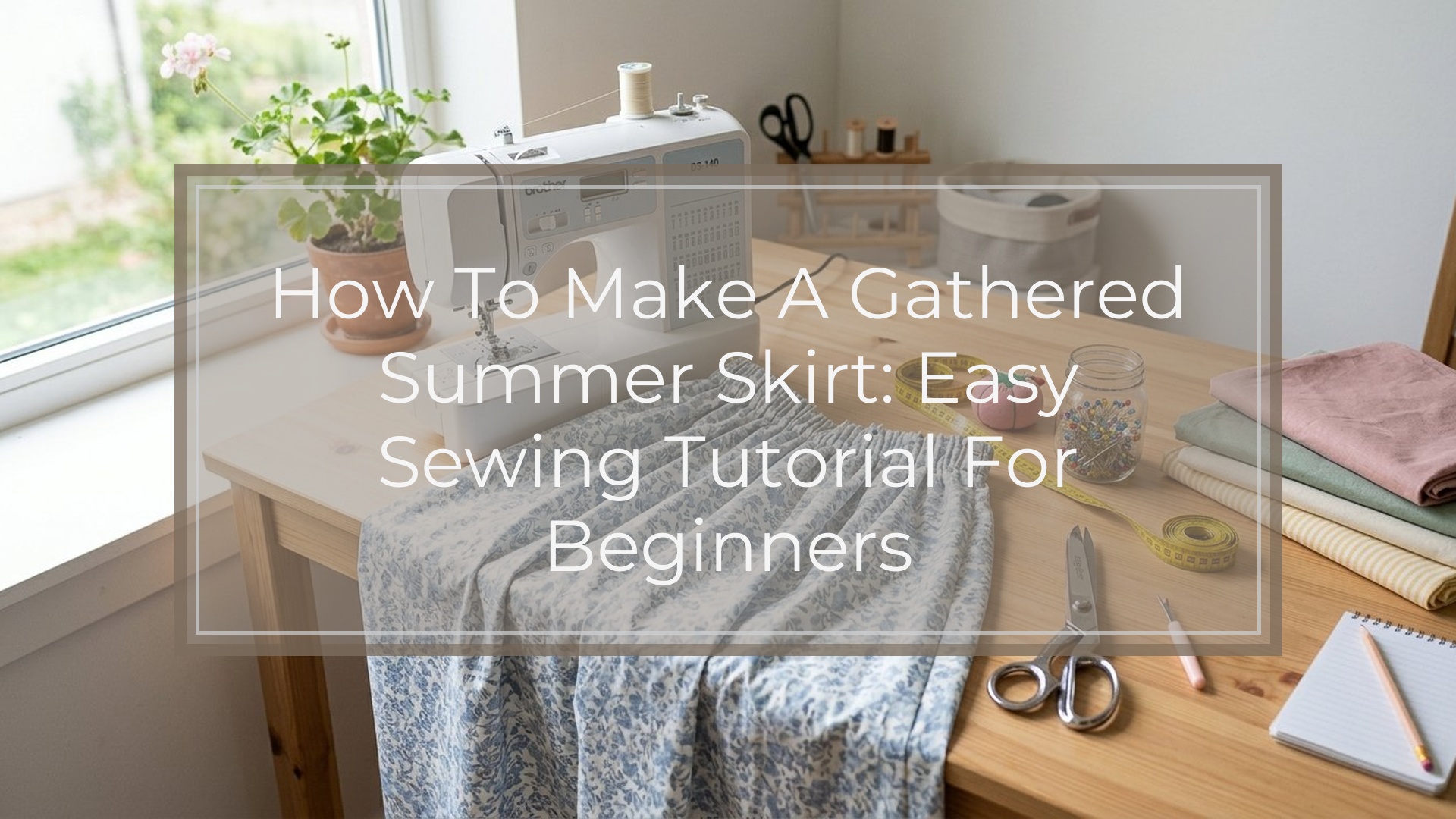
A simple gathered summer skirt is one of the easiest wearable sewing projects for beginners. The basic version uses lightweight woven fabric, one or two side seams, a casing at the top for elastic, and a hem at the bottom. In practice, you measure your waist and desired skirt length, cut one or two rectangles with extra width for fullness, sew the side seam or seams, make the elastic casing, insert elastic, then hem. The key decisions are fabric choice, how full you want the skirt, and how much length to add for the waistband casing and hem. If you keep the project to an elastic-waist skirt in cotton lawn, poplin, rayon challis, or gauze, you can finish it in an afternoon and get a comfortable skirt that is easy to customize.
Quick Answer
To make a gathered summer skirt, cut a rectangle or two rectangles of woven fabric, sew them into a tube, gather the top edge by fitting the fabric into an elastic waistband casing, then hem the bottom.
For a beginner-friendly version, use this formula:
- Skirt width: 1.5 to 2.5 times your waist measurement
- Cut length: finished skirt length + casing allowance + hem allowance
A reliable starting point is:
- Total width: 2 times your waist for a nicely full skirt
- Casing allowance: 1 1/2 inches
- Hem allowance: 1 inch
So if your waist is 30 inches and you want a 24-inch finished skirt:
- Total skirt width: about 60 inches
- Cut length: 24 + 1 1/2 + 1 = 26 1/2 inches
If your fabric is wide enough, cut one large rectangle. If not, cut two panels that add up to the total width. Then:
- Sew side seam or seams.
- Finish raw edges if your fabric frays.
- Fold and sew the top edge to make an elastic casing.
- Thread elastic through the casing.
- Join the elastic ends.
- Close the casing opening.
- Hem the skirt.
The main takeaway: the project is mostly accurate measuring and straight seams. If your fabric choice, width formula, and casing size are right, the skirt is straightforward to sew.
How to Think About This Topic
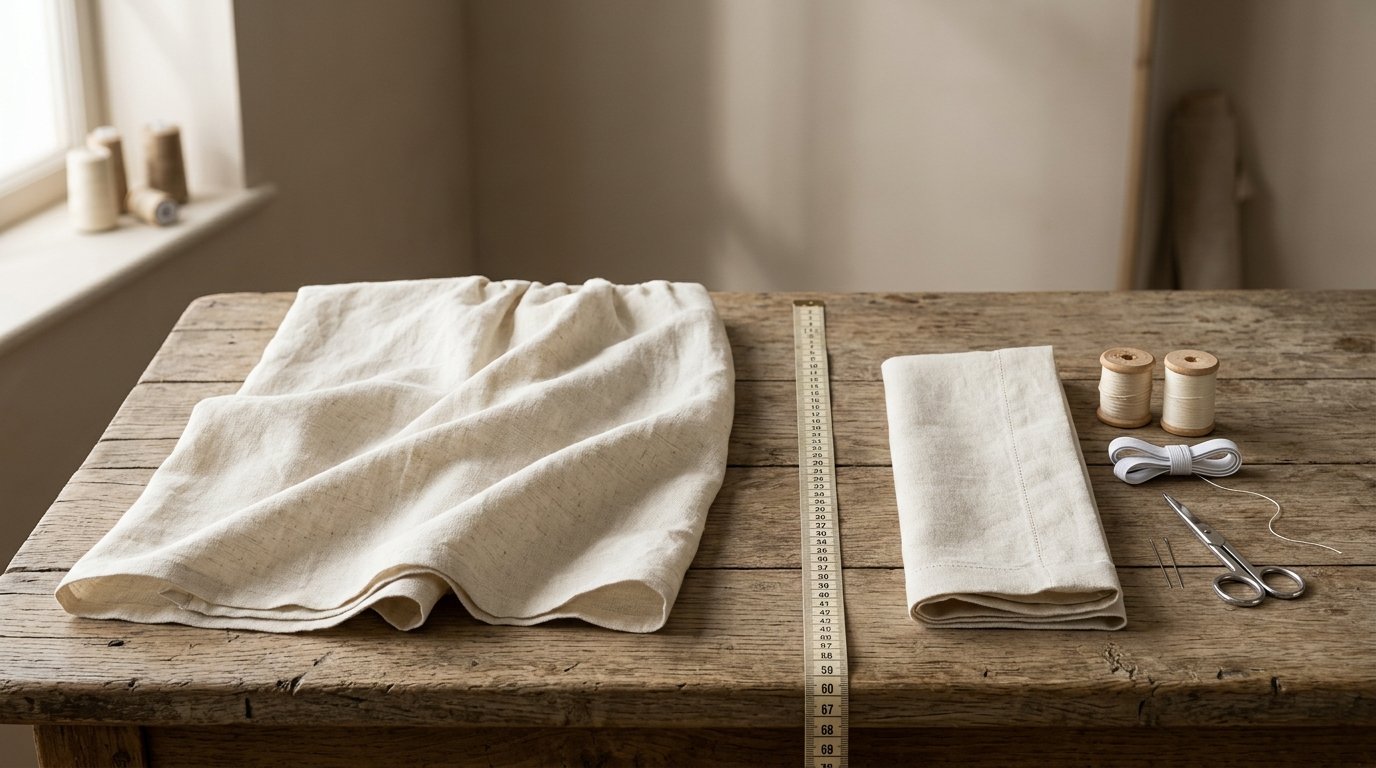
The easiest way to think about how to make a gathered summer skirt is to break it into three simple parts: volume, length, and finish. Once you control those three, the whole project makes sense.
1. Volume: How Full the Skirt Looks
A gathered skirt starts as a rectangle because the extra width creates fullness when it is drawn into the waistband. More width means more gathers.
For most summer skirts, these fullness levels work well:
- 1.5 times waist: softer, less bulky, good for slightly heavier cottons
- 2 times waist: balanced and beginner-friendly
- 2.5 times waist: fuller and floatier, best in light fabrics
This matters because not every fabric gathers the same way. A crisp poplin with 2.5 times fullness can feel bulky at the waist, while rayon challis or double gauze may still drape softly.
2. Length: the Finished Skirt Plus Sewing Allowances
Your desired skirt length is only part of the measurement. You also need extra fabric at the top and bottom.
A basic elastic-waist skirt usually needs:
- Top casing allowance: enough to fold over the elastic with a little ease
- Bottom hem allowance: enough to turn the hem neatly
If you use 1-inch elastic, a 1 1/2-inch casing allowance usually works well. For the hem, 1 inch is enough for a simple double-fold hem on lightweight fabric.
That means your cut length is not “how long I want the skirt.” It is “how long I want the skirt, plus what I need to build the top and finish the bottom.”
3. Finish: How the Skirt Is Constructed
This project is simple because the skirt body does not need shaping, darts, or a zipper. The elastic waistband does the fitting work for you.
The construction order is practical:
- Cut the panels
- Sew the side seam or seams
- Form the waistband casing
- Insert elastic
- Hem
That order helps you stay accurate. If you hem too early or guess the waistband size, you can lose length or end up with twisted elastic.
Fabric Choice Shapes the Whole Result
For a gathered summer skirt, use a lightweight woven fabric. Good beginner choices include:
- cotton lawn
- cotton poplin
- double gauze
- rayon challis
- lightweight linen blends
Avoid very slippery satin, thick denim, or stiff upholstery-weight fabric for your first version. Those either fight the gathers or make the waistband bulky.
A useful test is this: gather a small handful of the fabric in your fist. If it bunches softly and springs back without feeling thick, it is probably suitable.
One or Two Panels?
If your total width fits across the fabric width, you can cut one panel and sew one side seam. If not, cut two panels and sew two side seams.
For example:
- Waist 28 inches
- Fullness 2 times
- Total width needed: 56 inches
If your fabric is 60 inches wide, one panel may work.
If your fabric is 44 inches wide, cut two panels about 29 inches wide each, including seam allowances.
This mental model ties directly to the project: you are not “drafting a skirt pattern” so much as building a rectangle with enough width for gathers, enough length for finishing, and a waistband that comfortably cinches to your waist.
Practical Guidance
Supplies and Measurements
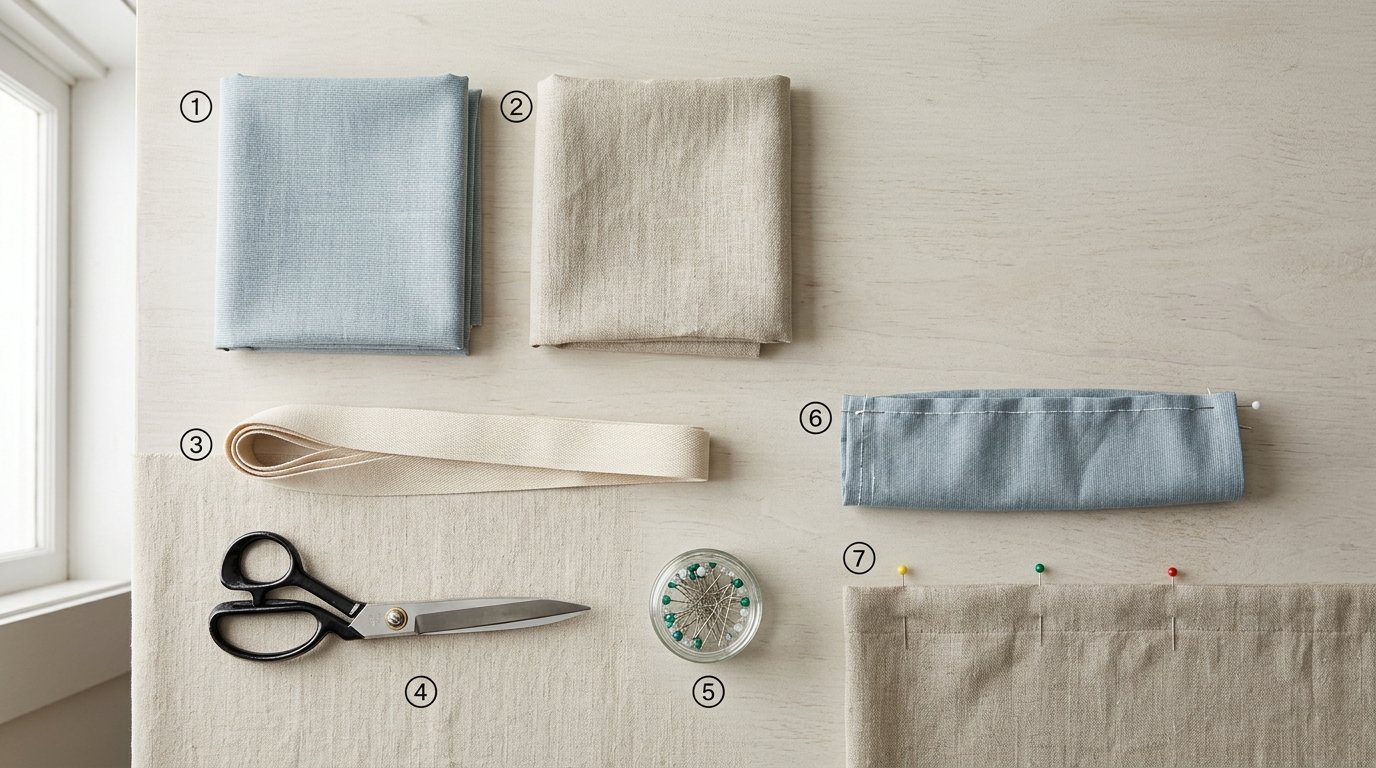
You will need:
- lightweight woven fabric
- elastic, usually 3/4 inch to 1 inch wide
- matching thread
- scissors or rotary cutter
- pins or clips
- safety pin or bodkin for threading elastic
- sewing machine
- iron
Measure:
- Waist: where you want the skirt to sit
- Finished length: from waistband position to where you want the hem
If you prefer a less snug waistband, cut elastic to your waist measurement minus 1 to 2 inches. Test it around your body before sewing the ends together.
Planning Table
| Choice | Recommended starting point | Why it works |
|---|---|---|
| — | —: | — |
| Fabric | Cotton lawn, poplin, double gauze, rayon challis | Light enough to gather well |
| Fullness | 2 x waist | Balanced look, easy for beginners |
| Casing allowance | 1 1/2 in | Fits 1 in elastic comfortably |
| Hem allowance | 1 in | Simple clean finish |
| Seam allowance | 1/2 in | Easy to sew and trim |
| Elastic length | Waist minus 1 to 2 in | Holds skirt up without strain |
Calculate and Cut
Use these formulas:
- Total cut width = waist x fullness ratio
- Cut length = finished length + casing allowance + hem allowance
Example 1:
Waist 30 inches, fullness 2 times, finished length 25 inches
- Total width = 60 inches
- Cut length = 25 + 1 1/2 + 1 = 27 1/2 inches
Example 2:
Waist 36 inches, fullness 1.5 times, finished length 28 inches
- Total width = 54 inches
- Cut length = 28 + 1 1/2 + 1 = 30 1/2 inches
If cutting two panels, divide the total width by two, then add seam allowance to each panel edge as needed.
Before cutting, square the fabric and check the grain. A crooked cut can make the hem wave or twist.
Sew the Skirt Body
- Place panels right sides together.
- Sew the side seam or seams using a 1/2-inch seam allowance.
- Finish raw edges with a zigzag stitch, serger, or pinking shears if the fabric frays.
- Press the seams.
If your skirt has two side seams, this is a good time to decide whether you want one seam at each side or one centered in back. For beginners, symmetry usually looks cleaner, so two side seams are often the easiest choice.
Make the Waistband Casing
- Press the top raw edge to the wrong side by 1/4 inch.
- Fold again by 1 1/4 inches, or enough to fully enclose your elastic.
- Pin and stitch close to the lower folded edge.
- Leave a 2-inch opening so you can insert the elastic.
This casing method is simpler than separately gathering the top edge with long basting rows. The elastic draws the fullness in for you.
A common mistake here is making the casing too narrow. Always check that your elastic can slide through easily before stitching all the way around.
Insert and Secure the Elastic
Attach a safety pin to one end of the elastic and feed it through the casing. Keep hold of the other end so it does not disappear inside.
Then:
- Overlap the ends by about 1 inch.
- Stitch the overlap securely with a box or several zigzag rows.
- Stretch and distribute the gathers evenly around the waist.
- Sew the casing opening closed.
Before closing the opening, try the skirt on. If the waistband feels too loose or tight, adjust the elastic length now.
Hem the Skirt
Let the skirt hang for a little while if you are using a fabric that can drop, such as rayon challis. Then check the length again.
For a basic hem:
- Press the bottom edge up 1/2 inch.
- Fold up another 1/2 inch.
- Stitch close to the inner fold.
Pressing before sewing gives a much cleaner hem than trying to fold as you stitch.
Customization That Still Keeps the Project Simple
Once the basic skirt works, you can change the look without changing the method much.
- More fullness: use 2.5 times your waist in soft fabric
- Less fullness: use 1.5 times your waist for a flatter silhouette
- Midi length: increase only the finished length measurement
- Tiered effect: add a second gathered rectangle below the first
- Pockets: insert simple side-seam pockets before closing side seams
A practical example: if you want a breezy beach skirt in double gauze, 2 times fullness is usually enough because the fabric already feels soft and airy. If you want a slightly dressier skirt in rayon challis, a longer length with 2 to 2.5 times fullness gives more movement.
Troubleshooting Common Problems
The waistband feels bulky.
Use lighter fabric, reduce fullness, or choose narrower elastic.
The skirt looks limp instead of gathered.
Increase the width ratio, or switch to a fabric with more body.
The elastic twists inside the casing.
Make the casing only slightly wider than the elastic, and stitch the elastic overlap securely. You can also stitch in the ditch at the side seams through the elastic to anchor it.
The hem ripples.
Press carefully, avoid stretching while sewing, and check that the skirt was cut on grain.
The skirt feels too short after sewing.
This usually means the casing and hem allowances were not added to the cut length. Always calculate those before cutting.
The next time you make one, keep notes on width, fabric, and finished look. A gathered skirt is easy to repeat, and small changes in fullness or fabric can make the second version fit your style even better.
FAQ
What Should a Beginner Know First About How to Make a Gathered Summer Skirt?
Start with a lightweight woven fabric and a simple elastic waistband. You do not need a zipper or fitted pattern pieces. The most important beginner skills are measuring accurately, sewing straight seams, and adding enough extra length and width before cutting.
What Matters Most When Evaluating How to Make a Gathered Summer Skirt?
Fabric, fullness ratio, and waistband comfort matter most. A good fabric gathers softly, the width gives enough volume without bulk, and the elastic feels secure but comfortable. If those three choices are right, the rest of the project is usually manageable.
What Mistakes Should Readers Avoid with How to Make a Gathered Summer Skirt?
Avoid using stiff or heavy fabric, forgetting seam and hem allowances, making the casing too narrow, and cutting the elastic without testing it on your body. Another common mistake is skipping pressing, which makes the waistband and hem look less clean.
What Is the Next Logical Step After Learning About How to Make a Gathered Summer Skirt?
Make a first basic version, then refine one variable at a time. Try different fullness levels, add pockets, change the length, or sew a tiered variation. That approach builds skill faster than jumping straight to zippers, lining, or more fitted skirt patterns.