
A rotary cutter can make fabric cutting faster, cleaner, and more accurate, but only when the tool, mat, ruler, fabric, and hand position work together. The safest habit is simple: expose the blade only while cutting, cut away from your body, keep your non-cutting hand out of the blade path, and close the guard immediately after every cut. For accuracy, use a sharp blade, a stable ruler, a self-healing mat, and smooth fabric that is not stretched or bunched. Think of rotary cutting as controlled pressure plus steady alignment, not force. If the cutter skips, drags, or needs repeated passes, fix the setup before continuing.
Quick Answer
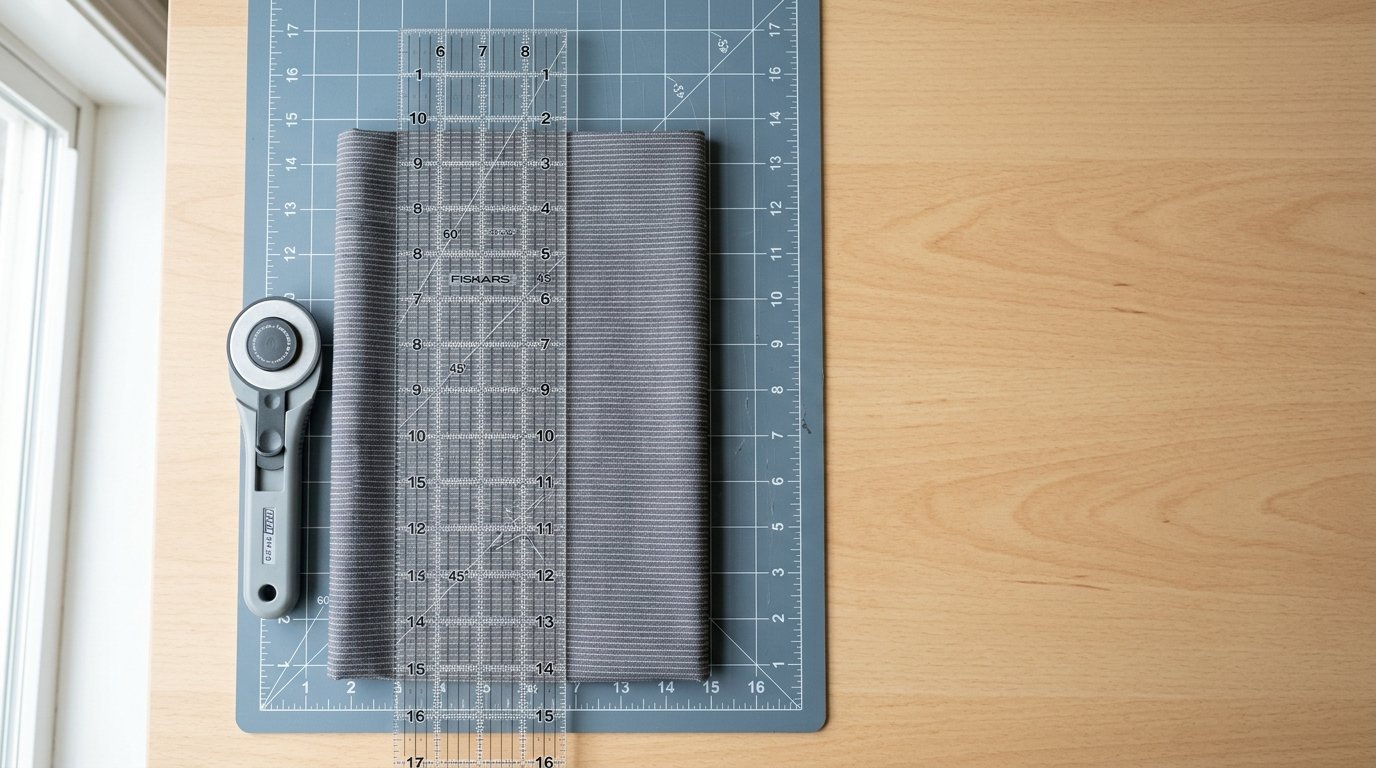
The most important rotary cutter tips for safe accurate fabric cutting are to use a sharp blade, cut on a proper self-healing mat, hold the ruler firmly, keep fingers away from the cutting edge, and close the blade guard every single time you set the cutter down. Accuracy comes from preparing the fabric flat, aligning the ruler carefully, and making one smooth cut with even pressure.
Start by matching the tool to the job. A 45 mm rotary cutter is the best all-purpose size for quilting cotton, apparel fabric, and most craft projects. A 28 mm cutter is useful for curves and small pieces. A 60 mm cutter helps with thicker layers, but it requires extra care because the larger blade can feel less controlled for beginners.
Before cutting, press the fabric if wrinkles could distort the measurement. Fold fabric with selvages aligned when cutting strips, and avoid stretching knits or bias edges. Place the ruler line directly on the measurement you want, not beside it, and check that the ruler has not shifted before the blade touches the fabric.
For safety, keep your non-cutting hand on top of the ruler, with fingertips well back from the edge. Stand so your shoulder, wrist, and blade move in a straight line. Cut away from your body whenever possible. Do not saw back and forth; use one steady pass. If threads remain attached, replace or clean the blade instead of pressing harder.
A good basic routine is: prepare fabric, align ruler, plant hand safely, cut smoothly, close blade, then move the pieces.
How to Think About This Topic
Safe, accurate rotary cutting is not one single trick. It is a system with five parts: blade, mat, ruler, fabric, and body position. When one part is off, the cut becomes less safe or less accurate. For example, a dull blade makes you press harder, which increases the chance of slipping. A warped mat can make the blade wobble. A ruler without enough grip can shift just as you start cutting.
The mental model is “stability before speed.” Beginners often try to cut quickly because rotary cutters look effortless. In reality, clean cuts come from slowing down at the setup stage. Once the ruler is aligned, the fabric is flat, and your hand is safely placed, the actual cut can be smooth and confident.
Fabric prep matters because fabric moves. Quilting cotton may seem stable, but a wrinkle can shorten a strip or create a wavy edge. Knits can stretch if pulled. Slippery fabrics may shift under the ruler. Before cutting, smooth the fabric without dragging it out of shape. If needed, press it and let it cool before measuring.
Hand safety is part of accuracy, not separate from it. When your hand is tense or too close to the blade, you are more likely to lift the ruler, twist the cutter, or hesitate mid-cut. Spread your non-cutting hand on the ruler like a stable anchor, but keep fingers at least an inch away from the cutting edge. For longer cuts, pause with the blade closed or safely stopped, then reposition your hand before continuing.
The blade should roll beside the ruler, not lean into it. If you tilt the cutter inward, you may shave the ruler or cut a slightly angled edge. If you tilt outward, the fabric measurement can grow. Hold the handle comfortably upright and let the wheel do the work.
Use this quick setup guide when choosing tools:
| Cutting task | Helpful setup | Why it helps |
|---|---|---|
| General fabric strips | 45 mm cutter, acrylic ruler, self-healing mat | Best balance of control and speed |
| Curves or small templates | 28 mm cutter | Easier to steer around tight shapes |
| Thick layers | 60 mm cutter, sharp blade, fewer layers if needed | Larger blade cuts bulk more easily |
| Slippery fabric | Grippy ruler, pattern weights, slower pressure | Reduces shifting |
| Repeated quilting cuts | Fresh blade, square ruler, clear mat lines | Improves consistency |
Practical Guidance
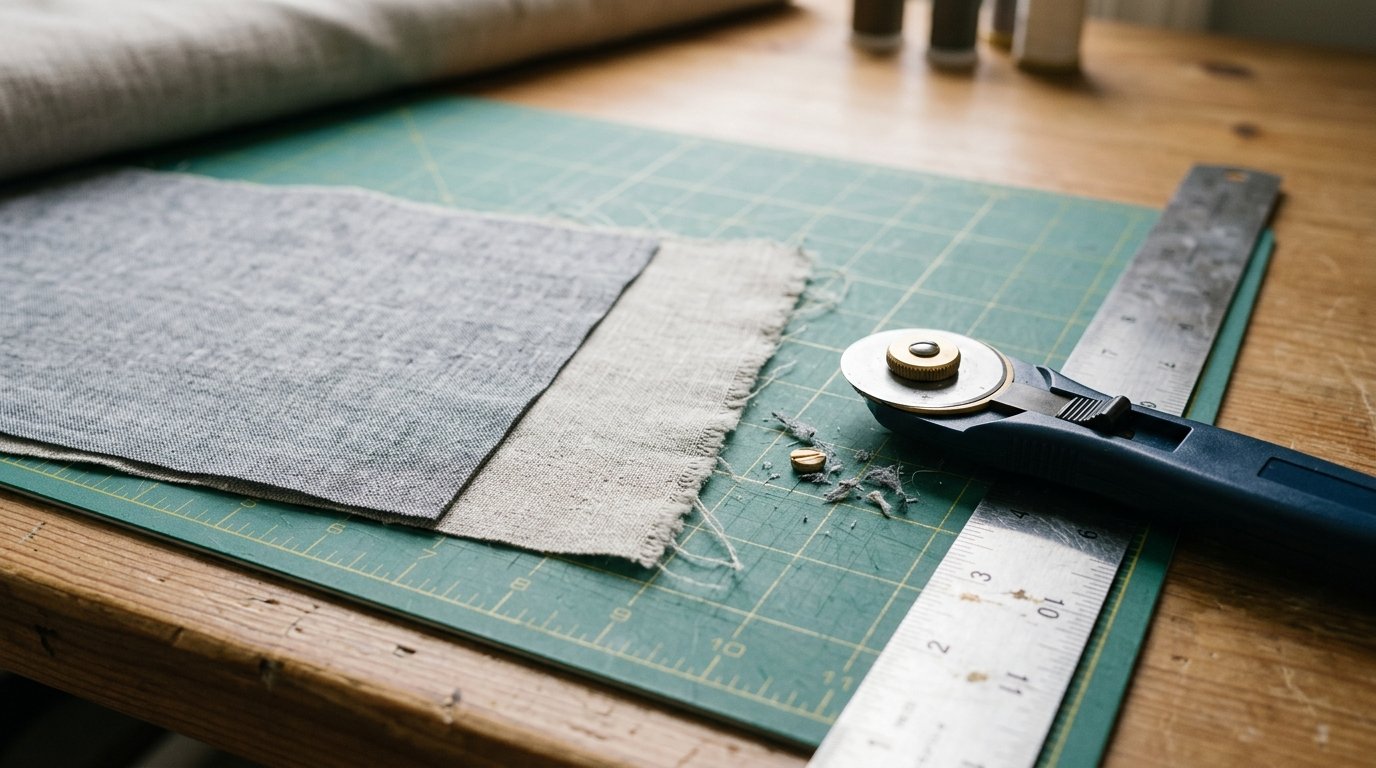
Begin with the blade. A sharp blade should cut cleanly through the fabric with one steady pass. If you see skipped threads, fuzzy edges, or places where layers remain connected, change the blade or check for lint around the screw. Do not compensate by pushing harder. Extra force is one of the most common causes of slipping.
Set up the mat correctly. Use a self-healing cutting mat large enough for the piece you are cutting. Keep the mat flat and avoid cutting repeatedly in the exact same groove. If the blade falls into old cuts, your line can drift. Rotate the mat or use a different area when cutting many strips.
Prepare the fabric before measuring. Press out folds and square the edge if you are cutting strips for quilting or straight pattern pieces. To square fabric, align the fold with a horizontal mat line, then trim a clean edge at a right angle. After that, measure from the freshly cut edge rather than from a ragged store-cut edge.
Use the ruler as the real guide, not the mat alone. Mat lines are helpful, but they can be less precise than ruler markings because your view changes with angle and placement. For a 2½-inch strip, align the 2½-inch ruler mark with the clean fabric edge, then cut along the ruler’s edge. Check both the top and bottom of the ruler before cutting to make sure the strip is even.
Control your hand placement. Place your non-cutting hand flat on the ruler, fingers spread, but never curled over the edge. If the cut is longer than your hand can safely control, cut partway, stop, close or hold the blade still, move your hand farther up the ruler, then continue. Do not reach across the blade path.
Cut with steady body mechanics. Stand if possible, especially for long cuts. Your cutting hand should move from the shoulder and elbow more than from a cramped wrist. Keep the blade close against the ruler without pushing the ruler sideways. A smooth forward motion is safer and more accurate than short, choppy strokes.
Be careful with layers. Rotary cutters can cut multiple layers, but more layers also mean more shifting and more resistance. Beginners should start with one or two layers until the motion feels controlled. For thick fabrics, test on a scrap and reduce layers if the cutter drags.
For tricky materials, add stability. Slippery fabric may need pattern weights, a grippy ruler, or a light stabilizer depending on the project. Knits should be smoothed, not stretched. Bias edges should be handled gently because they distort easily. If a fabric moves under the ruler, slow down and use fewer layers.
Build a closing habit. The blade guard should close whenever the cutter leaves the fabric, even if you plan to cut again in a moment. Many accidents happen between cuts, not during the cut itself. Store the cutter closed, away from table edges, children, and pets.
Maintain the tool. Replace blades before they become dangerous, wipe lint from the blade area, and check that the screw is snug but not overly tight. The blade should rotate freely without wobbling. A well-maintained cutter feels smooth, predictable, and controlled.
FAQ
What Should a Beginner Know First About Rotary Cutter Tips for Safe Accurate Fabric Cutting?
A beginner should know that safety and accuracy come from setup, not speed. Use a sharp blade, a cutting mat, and a stable ruler. Keep fingers away from the blade path, cut away from your body, and close the blade guard after every cut.
What Matters Most When Evaluating Rotary Cutter Tips for Safe Accurate Fabric Cutting?
The most important factors are blade sharpness, ruler stability, fabric preparation, and hand position. A dull blade or shifting ruler can ruin accuracy and increase risk. Good tips should help you cut smoothly with less force, clearer alignment, and safer habits.
What Mistakes Should Readers Avoid with Rotary Cutter Tips for Safe Accurate Fabric Cutting?
Avoid pressing harder with a dull blade, leaving the blade open, cutting toward your hand, and relying only on mat lines for measurement. Also avoid cutting too many layers before you have control. These mistakes often cause slipping, uneven pieces, or small injuries.
What Is the Next Logical Step After Learning About Rotary Cutter Tips for Safe Accurate Fabric Cutting?
Practice on scrap fabric before cutting project pieces. Try straight strips first, then curves or smaller shapes. Notice how the blade feels when sharp, how the ruler stays steady, and how fabric behaves. Once your cuts are consistent, move on to your real sewing project.