
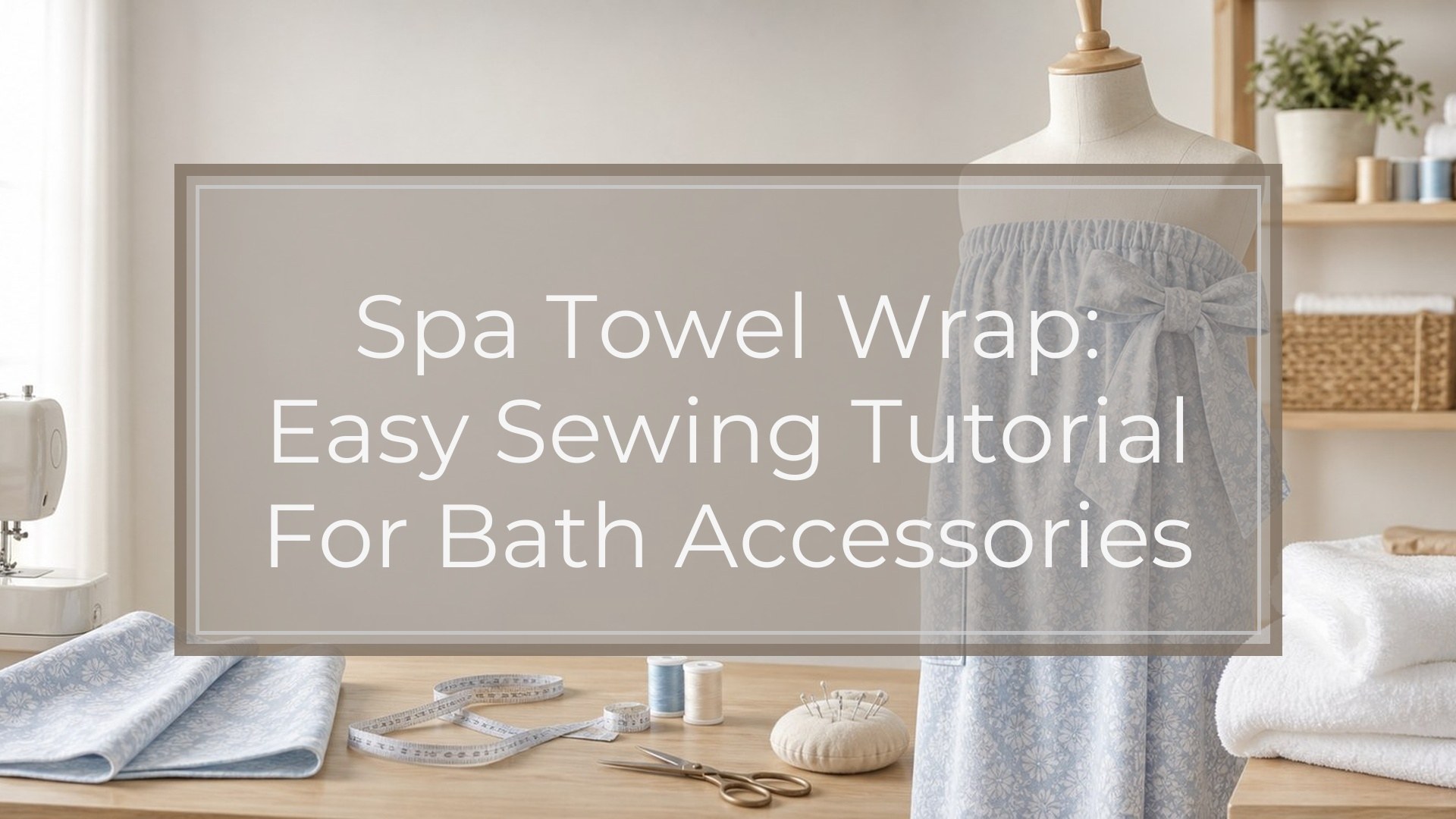
A spa towel wrap is a bath towel with elastic along the top edge and a simple closure so it stays in place without being held. To make one, choose a towel that wraps around the body with comfortable overlap, sew a casing along the top edge, insert elastic, and add hook-and-loop tape where the towel overlaps. This beginner-friendly project works well after showers, swimming, sauna time, or while getting ready, and you can customize it with a pocket, straps, or trim.
Introduction: What You’ll Make
In this tutorial, you’ll sew a wearable spa towel wrap that fastens around the chest or waist. The elastic top edge gives gentle grip, while the front overlap closes securely. This is a good beginner sewing project because it uses straight seams, common supplies, and forgiving materials. Follow the project path in order: choose your towel, measure for fit, sew the casing, insert elastic, add the closure, then check the final fit.
Supplies and Tools
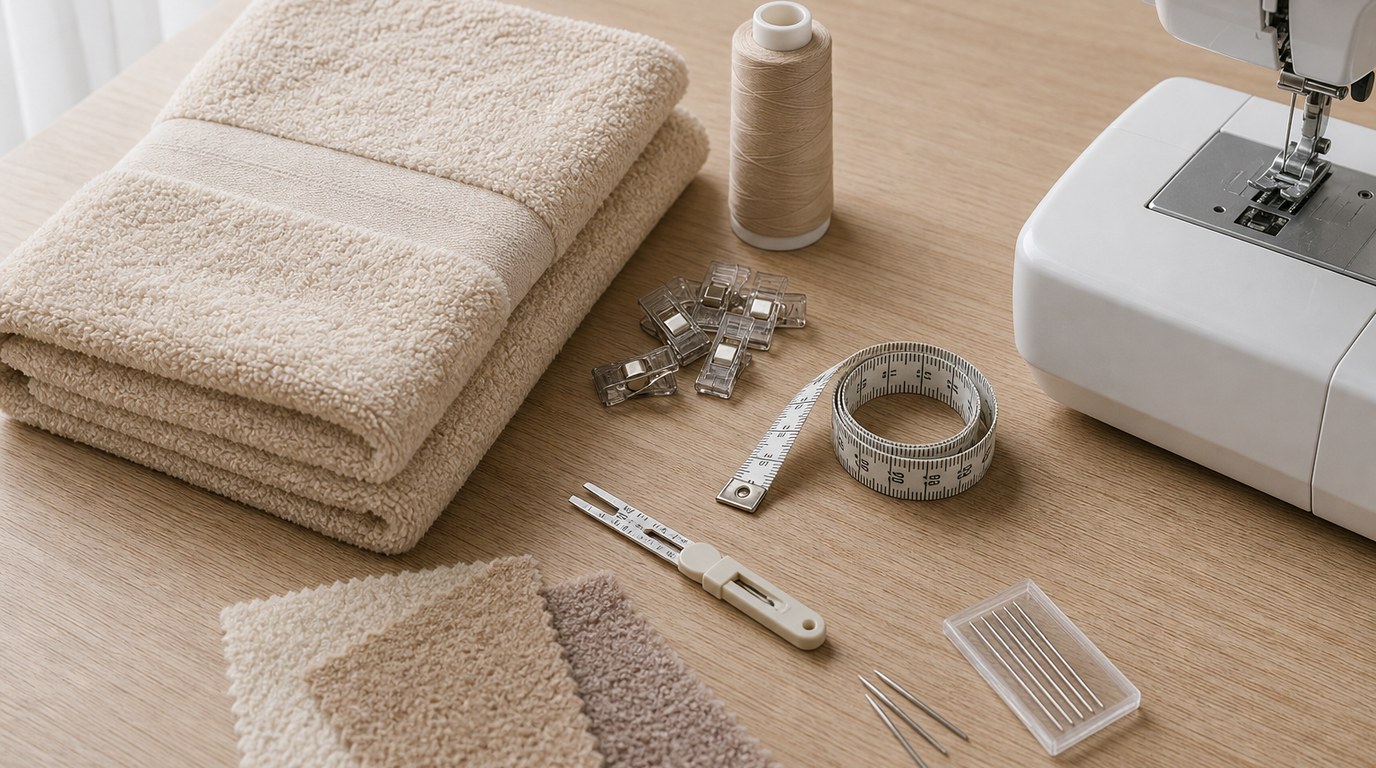
You will need:
- One bath towel, bath sheet, or beach towel
- 1-inch wide elastic
- Sew-on hook-and-loop tape
- Matching or coordinating polyester thread
- Measuring tape
- Fabric marker, pins, or sewing clips
- Safety pin or bodkin for threading elastic
- Scissors
- Sewing machine
- Universal, denim, or heavy-duty needle
Polyester thread is a good choice because it handles moisture and repeated washing. Sewing clips are easier than pins for thick terry cloth. If your towel is plush, use a size 90/14 or 100/16 needle and sew slowly over bulky areas.
Spa Towel Wrap Size Guide
Measure around the body where the top of the wrap will sit. For a chest wrap, measure around the upper chest. For a waist wrap, measure the waist or high hip. The towel width should be larger than this measurement so the front can overlap and fasten securely.
| Wearer size | Suggested towel width | Elastic length | Closure overlap |
|---|---|---|---|
| — | —: | —: | —: |
| Child or small teen | 44–50 in | Body measurement minus 4–6 in | 4–6 in |
| Adult small/medium | 52–60 in | Body measurement minus 5–7 in | 6–8 in |
| Adult large/XL | 60–70 in | Body measurement minus 6–8 in | 7–10 in |
| Plus size or roomy fit | 70+ in | Body measurement minus 6–10 in | 8–12 in |
The elastic should feel snug, not tight. If you are unsure, cut it slightly longer and shorten it during the fit check.
Choose the Right Towel
A medium-weight terry towel is usually easiest to sew. Choose one that is wide enough to overlap comfortably and long enough for the coverage you want. For many adults, a bath sheet works better than a standard bath towel.
Avoid towels that are extremely thick, because the folded edge and closure area can become bulky. Very thin towels may not feel secure, and loose-loop towels can snag while sewing. If the towel has a decorative border, decide whether you want it at the top, bottom, or front edge before cutting or folding.
Step 1: Measure and Mark the Top Edge
Wrap the towel around the wearer with the wrong side facing the body, if the towel has a noticeable wrong side. Decide where the front overlap should sit. Mark where the towel begins to overlap and where the outer edge will fasten.
Fold the top edge toward the wrong side by about 1 1/2 inches for 1-inch elastic. This creates a casing with enough room for the elastic to slide through without twisting too much. Clip or pin the fold across the full towel width. If the top border is very thick, fold just below it instead of through it.
Step 2: Sew the Elastic Casing
Sew a straight seam close to the lower folded edge to form the elastic channel. For 1-inch elastic, stitch about 1 1/4 inches from the folded top edge. Backstitch at the beginning and end.
Keep the towel flat as you sew, but do not stretch it. If the layers shift, stop with the needle down, lift the presser foot, smooth the towel, and continue. Leave both short ends of the casing open so you can insert and adjust the elastic. If your machine struggles, lengthen the stitch slightly and reduce speed.
Step 3: Cut and Insert the Elastic
Cut the elastic using your body measurement and the size guide. For most adults, a good starting point is the top body measurement minus 5 to 7 inches. Firmer elastic may need less reduction; softer elastic may need more.
Attach a safety pin or bodkin to one end of the elastic. Pin the other end to the towel so it does not disappear into the casing. Thread the elastic through, gently bunching the towel as you go.
When the elastic reaches the other side, hold both ends and try the wrap on. Adjust until the top edge feels supportive but comfortable. Stitch each elastic end firmly to the casing end with several rows of backstitching.
Step 4: Sew the Side Edge and Close the Casing Ends
Once the elastic is secured, close the casing ends. Fold in any raw towel edges if needed, then stitch across each casing end to trap the elastic and neaten the finish.
Most towels already have finished side edges, so you may only need to reinforce the top corners where the elastic and closure will pull. If a side edge looks loose or bulky, sew a straight or zigzag stitch down that edge to flatten it. Trim loose threads before adding the closure.
Step 5: Add the Hook-and-loop Closure
Put the wrap on again and overlap the front edges comfortably. The elastic should hold the wrap up, while the closure keeps the front from opening. Mark where the outer flap meets the underlap.
Cut two pieces of sew-on hook-and-loop tape. A 4- to 6-inch strip works for many adults; a longer strip gives more adjustability. Place the scratchy hook side on the inside of the outer flap. Place the soft loop side on the outside of the underlap so the two pieces meet when wrapped.
Clip the tape in place and test the fit before sewing. Make sure it does not rub the skin. Sew around each piece in a rectangle, then sew an X through the center for strength. Avoid adhesive-only hook-and-loop tape because the glue can gum up the needle and may not hold through washing.
Optional Add-ons: Pocket, Straps, or Decorative Trim
After the basic spa towel wrap is finished, you can add extras. For a pocket, cut a rectangle from cotton fabric or towel scrap, hem the top edge, then stitch the sides and bottom to the wrap.
For extra security, add shoulder straps from cotton webbing or folded fabric. Try on the wrap first so the strap length feels comfortable. You can also sew ribbon or trim near the hem, but choose washable trim that will not scratch the skin.
Finishing, Fit Check, and Care
Try on the finished wrap and move around: sit, bend, reach, and walk. The top should stay secure without digging in. If it is too loose, open one casing end and shorten the elastic. If it is too tight, replace the elastic with a longer piece.
Check that the hook-and-loop tape meets smoothly and does not twist the towel. Wash the wrap with towels in warm water and tumble dry as the towel label recommends. Fasten the closure before washing so it does not snag terry loops.
Troubleshooting Common Problems
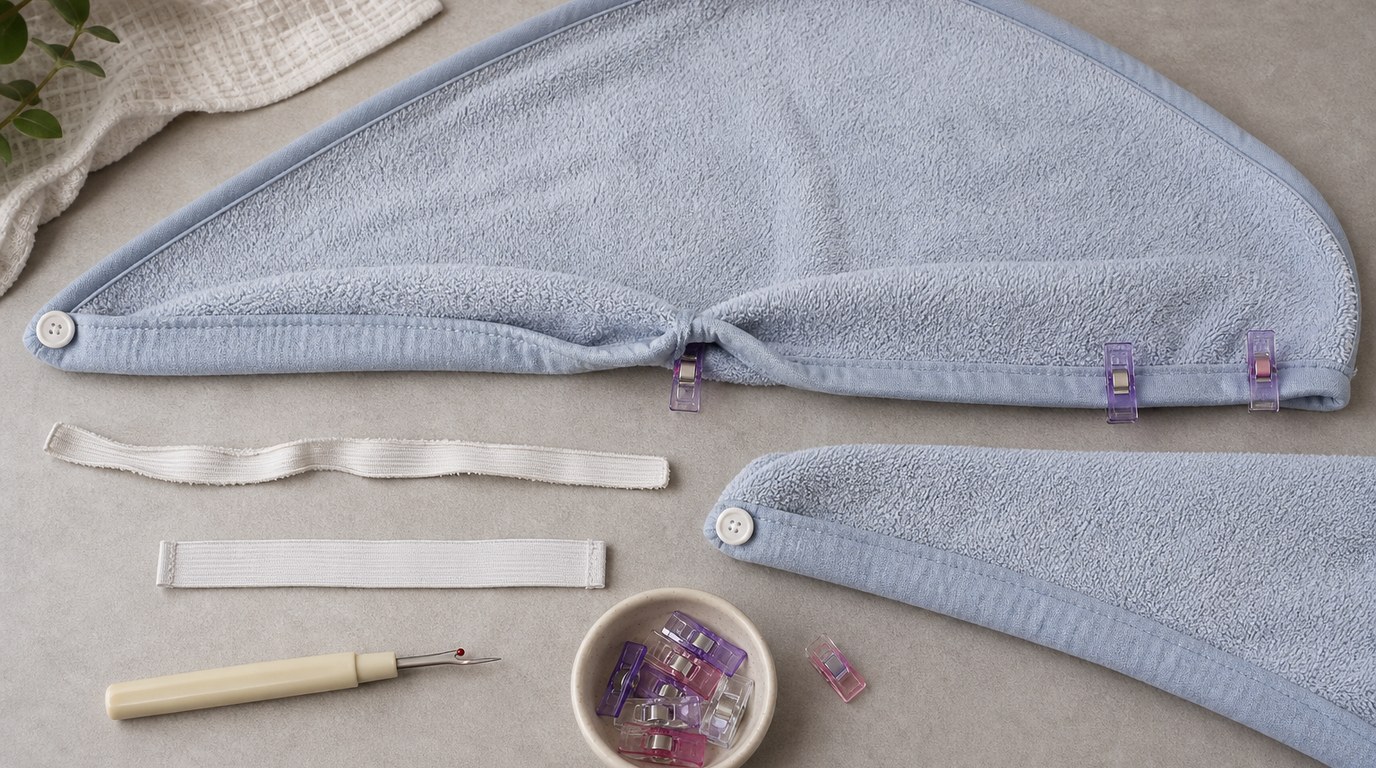
If the wrap slides down, the elastic is probably too long or too soft. Shorten it or replace it with firmer elastic. If the top edge twists, the casing may be too wide or the elastic may have turned inside the channel; flatten it and secure the ends again.
If the closure pops open, use a longer strip of hook-and-loop tape or add a second strip below the first. If the towel is hard to sew, switch to a heavier needle, lengthen the stitch, and sew slowly over thick areas.
FAQ
How Much Elastic Do I Need for a Spa Towel Wrap?
Measure around the body where the top of the wrap will sit, then subtract about 5 to 7 inches for most adults. Buy at least one yard so you have room to test and adjust the fit.
Can I Make a Spa Towel Wrap Without Velcro?
Yes. You can use snaps, buttons, ties, or a side-release buckle instead of hook-and-loop tape. For beginners, hook-and-loop tape is usually easiest because it is adjustable and quick to sew. If using snaps or buttons, reinforce the towel first.
What Size Towel Is Best for an Adult Spa Wrap?
A bath sheet is usually best for an adult spa towel wrap because it gives more coverage and overlap than a standard bath towel. Look for a towel about 52 to 70 inches wide, depending on body size and desired fit.
Can I Sew a Spa Towel Wrap by Hand?
Yes, but it will take longer. Use strong polyester thread, small backstitches, and extra reinforcement at the elastic ends and closure. Hand sewing works best with a medium or lightweight towel.
How Do I Keep the Towel Wrap from Falling Down?
Use snug elastic, allow enough front overlap, and place the closure where it holds the wrap firmly. The elastic provides grip, while the hook-and-loop tape keeps the front closed. A longer closure strip adds adjustability and security.