
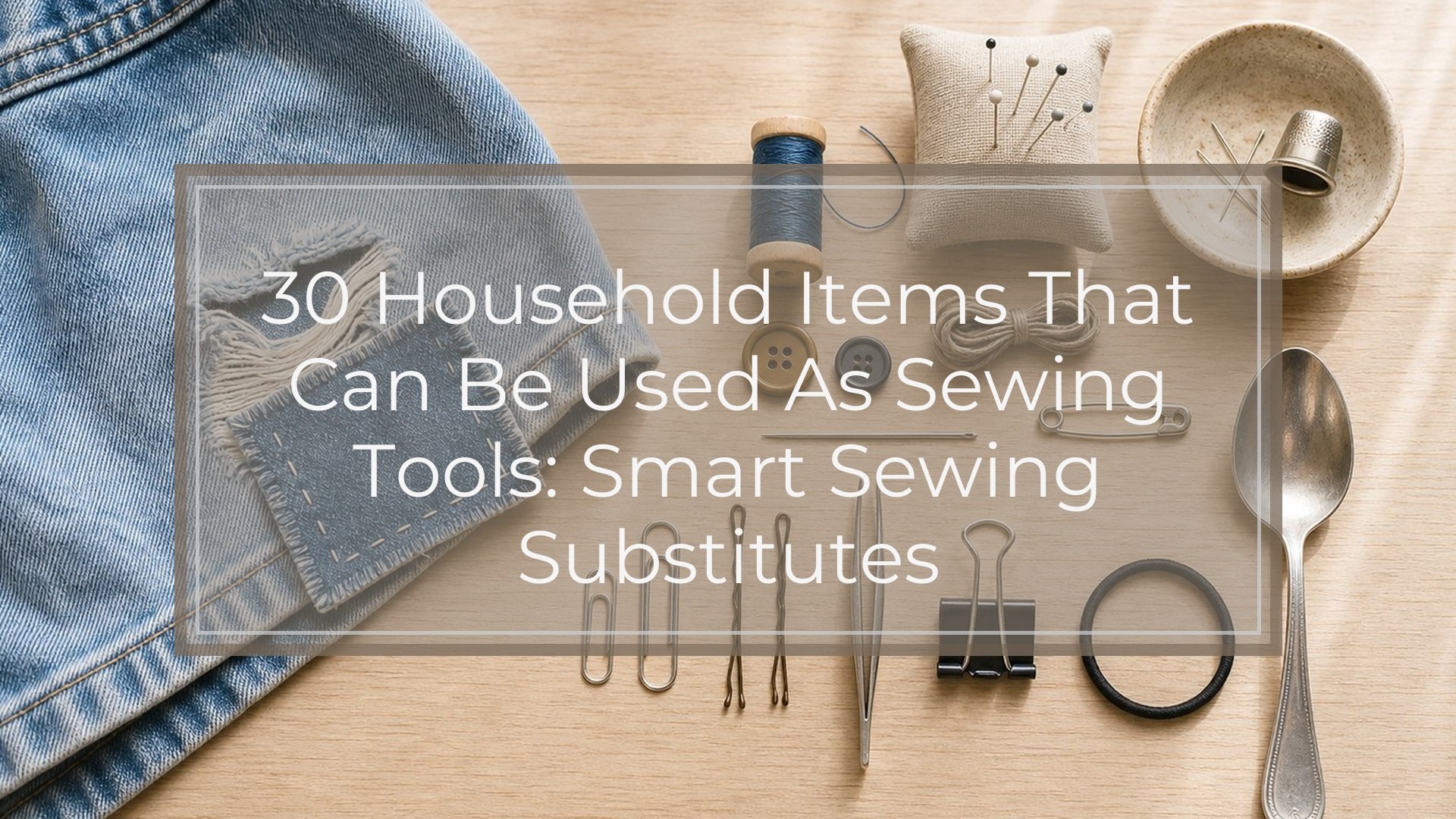
You do not need a fully stocked sewing room to start sewing neatly. Many everyday household items can stand in for sewing tools when you need to measure, mark, press, clip, turn, stuff, organize, or guide fabric. The key is choosing substitutes that are smooth, clean, sturdy, and suitable for your fabric.
Household items work best for simple jobs: marking temporary lines, holding bulky layers, pressing seams, making templates, or keeping tiny supplies under control. They are not perfect replacements for sharp shears, quality needles, or a reliable iron, but they can save money and keep a beginner project moving.
| Sewing task | Household items to try |
|---|---|
| Measuring and marking | Ruler, masking tape, washable marker, cardboard, coins, printer paper, paper clips |
| Holding fabric | Binder clips, clothespins, hair clips, magnets, sticky notes |
| Pressing and shaping | Wooden spoon, towel, parchment paper, chopstick, butter knife |
| Turning and detail work | Safety pin, straw, tweezers, toothbrush, cotton swab, nail file, sponge |
| Cleaning and organizing | Pill bottle, ice cube tray, lint roller, jar lid, rubber band, coffee mug |
Before You Raid the Junk Drawer: What Makes a Good Sewing Substitute?
A good sewing substitute should help without damaging fabric, dulling tools, or making the project harder. Look for smooth edges, clean surfaces, and enough strength for the job. Avoid anything rusty, greasy, sticky, splintered, or sharp in the wrong way.
Think in tasks rather than labels. A sewing tool might measure, hold, press, mark, guide, turn, clean, or store. If a household item can do one of those jobs safely, it may be useful.
Always test first on a scrap of the same fabric, especially with light colors, silk, knits, vinyl, leather, and anything that cannot be washed easily.
Measuring, Marking, and Pattern-making Helpers
- School ruler
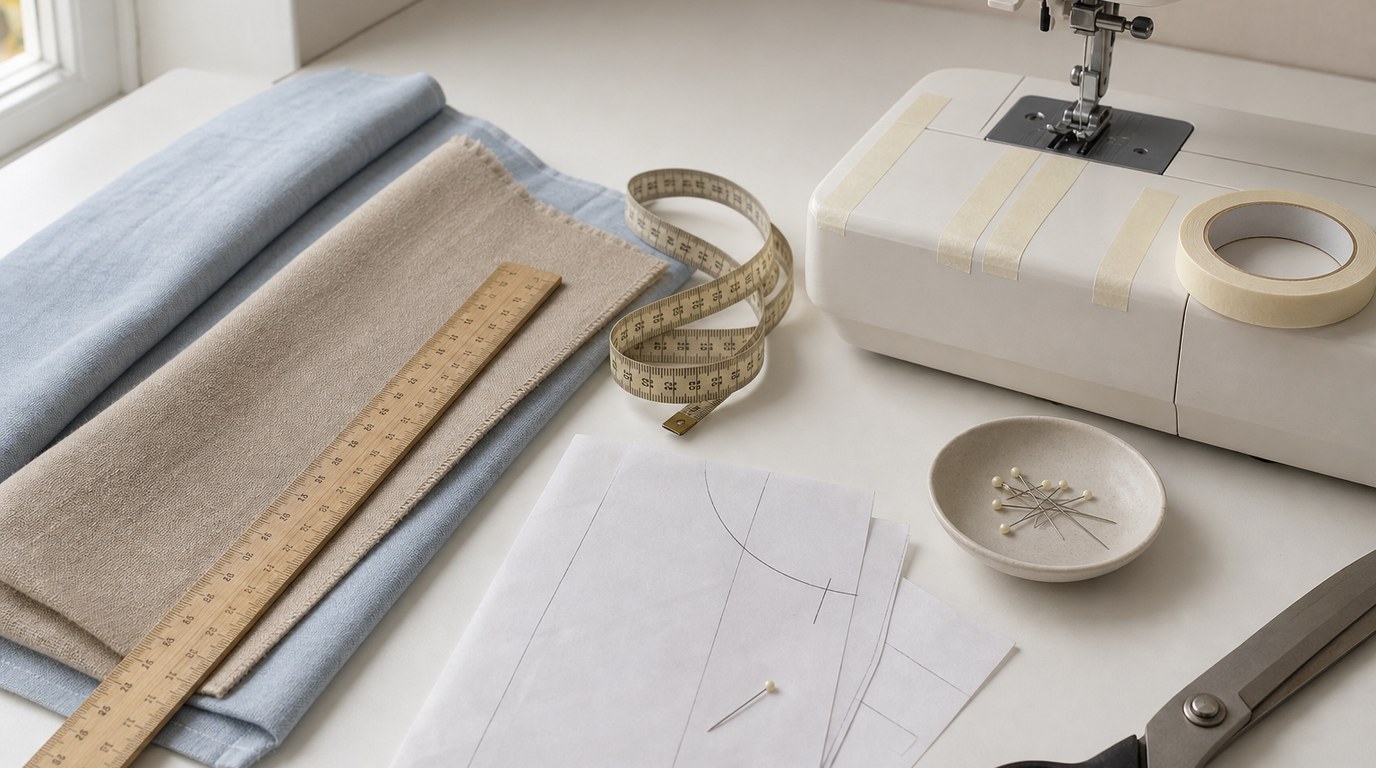
A school ruler can replace a sewing gauge for checking hems, seam allowances, pleats, and button spacing. Use it for straight measurements and quick adjustments. For long cuts, a flexible tape measure is still easier.
- Masking tape or painter’s tape
Tape can mark seam guides on your sewing machine, label fabric pieces, or create straight references on a table. Painter’s tape is useful because it removes cleanly from many surfaces. Test before placing it on delicate fabric.
- Washable children’s marker
A washable marker can stand in for a fabric marker on many cottons and practice fabrics. Mark lightly and only where the line will be hidden or washed out. “Washable” on paper does not guarantee washable on every textile.
- Cardboard from a cereal box
Thin cardboard makes excellent templates for pockets, appliqué shapes, quilt pieces, and repeated curves. Trace once, cut neatly, then reuse it. Keep the edges smooth so they do not snag fabric.
- Coins
Coins are handy circle templates for rounded corners, small appliqué shapes, scallops, and button spacing. Trace around them with chalk or a washable marker. Wash the coin first if you are using pale fabric.
- Printer paper
Printer paper can replace pattern paper for small projects, pocket patterns, doll clothes, appliqué, or test shapes. Tape sheets together for larger pieces. It is stiffer than pattern paper, so pin or weight it carefully.
- Paper clips
Paper clips can hold paper patterns together, mark pattern notches, or keep instruction pages organized. They are best for paper, not fabric, because they can dent or snag threads. Use coated clips if possible.
Holding Fabric in Place Without Extra Pins
- Binder clips
Binder clips are excellent for thick fabric, felt, vinyl, leather, cork, or quilt layers where pins may bend or leave holes. Clip near the edge and remove each clip before it reaches the presser foot. They are bulky for tight curves but great for straight seams.
- Clothespins
Clothespins can hold hems, bias tape, quilt binding, and bulky edges before sewing. They are easy to grab and less sharp than pins, which helps beginners. Choose smooth clothespins without rough wood or strong ridges.
- Hair clips
Flat hair clips or small claw clips can work like sewing clips for lightweight projects. Use them for folded elastic, ribbon, lining edges, or small slippery pieces. Avoid clips with teeth on fragile fabric.
- Magnets
A magnet can hold pins, needles, or metal bobbins in one place while you work. It also keeps pins from rolling away. Keep strong magnets away from computerized sewing machines and electronics.
- Sticky notes
Sticky notes can mark fabric pieces, label right and wrong sides, or remind you of seam allowance changes. They help with projects that have many similar pieces. Remove them before pressing or washing.
Pressing, Creasing, and Shaping Tools from the Kitchen Drawer
- Wooden spoon
The handle of a wooden spoon can press open seams, flatten points, or crease fabric without heat. It is useful for finger-pressing when you do not want to get up to the iron. Make sure the wood is smooth and clean.
- Clean towel
A towel can become a pressing surface, sleeve roll, or padded support for curved seams. Roll it tightly to press sleeves, bags, stuffed toys, and awkward shapes. Use a white or colorfast towel with steam.
- Parchment paper
Parchment paper protects your iron and ironing board from fusible web, glue, or interfacing residue. Place it between the sticky surface and the iron. Do not use wax paper, which can melt.
- Chopstick
A chopstick works as a point turner, seam pusher, and shaping tool. Use the blunt end to define corners after turning a project right side out. Do not stab the corner or you may poke through the seam.
- Butter knife
A dull butter knife can help crease hems, open seams, or guide a fold before pressing. Use the rounded edge and light pressure. It is best for sturdy woven fabrics, not delicate silks or loose weaves.
Turning, Stuffing, Threading, and Detail Work
- Safety pin
A safety pin is a classic substitute for a bodkin. Attach it to elastic, ribbon, or drawstring, then feed it through a casing. Close the pin securely so it does not open inside the channel.
- Drinking straw
A straw can help turn narrow fabric tubes, spaghetti straps, or small ties. Slide the tube over the straw and use a blunt stick or chopstick to push the fabric through. A sturdy reusable straw works better than a paper one.
- Tweezers
Tweezers are useful for pulling loose threads, grabbing elastic ends, removing tiny basting bits, or turning small corners. They can replace specialty turning tweezers for many jobs. Choose smooth tips for delicate fabric.
- Toothbrush
A clean toothbrush can brush lint from seams, clean feed dogs gently, or fluff pile fabrics after stitching. Use a soft brush and keep it only for sewing. Do not scrub hard enough to distort threads.
- Cotton swab
Cotton swabs help clean tiny areas around the bobbin case, remove dust from a machine surface, or apply a little water to test a marking line. Use them gently so fibers do not shed. Avoid poking deep into mechanical parts.
- Nail file or emery board
A nail file can smooth a rough plastic template edge, lightly roughen a slippery button before marking, or help grip a needle through thick fabric. It is not a machine maintenance tool. Keep it away from good scissors and blades.
- Sponge
A clean, dry sponge can hold hand-sewing needles temporarily, keep pins from rolling, or dampen fabric lightly for pressing. A barely damp sponge can help tame creases. Do not store needles long-term in a wet sponge because they may rust.
Cleaning and Organizing Sewing Supplies with Household Items
- Pill bottle
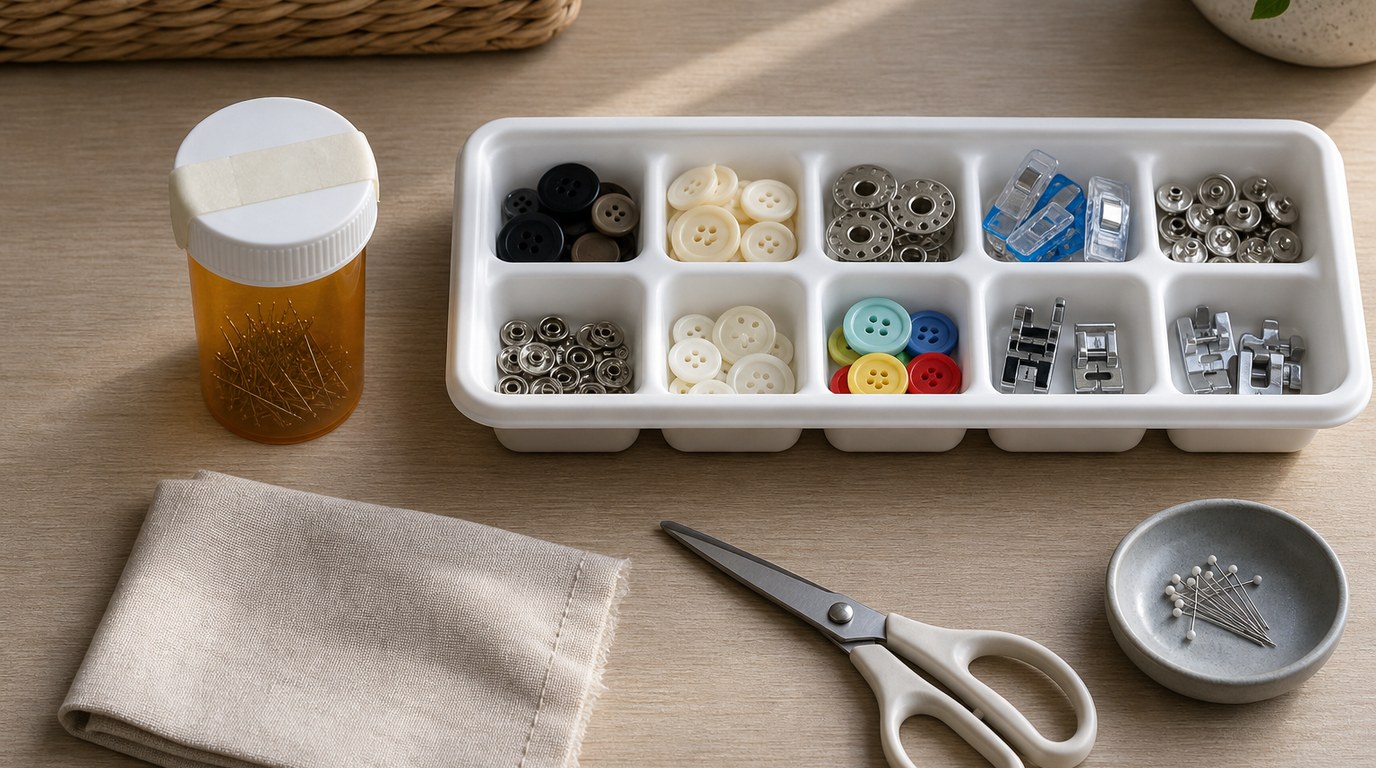
An empty pill bottle makes a safe container for dull needles, broken pins, used rotary blades, or tiny hardware. Label it clearly so no one mistakes it for medicine. When full, tape it shut before disposal.
- Ice cube tray
An ice cube tray can sort buttons, snaps, bobbins, presser feet, clips, and small notions. It is especially useful when taking apart a project because each compartment can hold pieces by step. Rounded corners make items easier to lift out.
- Lint roller
A lint roller quickly picks up thread bits from clothes, cutting tables, ironing boards, and finished projects. It is helpful after trimming faux fur, fleece, or dark fabric. Use gentle pressure on delicate fabrics or embellishments.
- Jar lid
A shallow jar lid can hold pins, bobbins, beads, snaps, or buttons while you work. It keeps tiny pieces from rolling off the table. For extra grip, line it with felt or shelf liner.
- Rubber band
A rubber band can bundle pattern pieces, hold spools together, or act as a temporary seam guide on some machine arms or rulers. It also keeps small fabric rolls tidy. Do not leave rubber bands on fabric long-term because they can dry out or stain.
- Coffee mug
A sturdy mug can hold scissors, seam rippers, marking pencils, small rulers, or turning tools within reach. It is a simple substitute for a desk caddy. Choose a heavy mug so sharp tools do not tip over.
When to Use the Real Sewing Tool Instead
Household substitutes are helpful, but some real sewing tools are worth buying early. Use proper fabric scissors or a rotary cutter for clean cutting, because dull household scissors can chew fabric. Use real sewing needles and machine needles in the correct size because they affect stitch quality.
For accurate garment fitting, a flexible tape measure beats a ruler. For frequent pressing, a dependable iron and pressing cloth are safer than improvising every time. If a substitute slows you down, marks fabric, or makes results less accurate, upgrade the tool.
Quick Starter Kit: the Best 10 to Grab First
If you are new to sewing, start with a ruler, painter’s tape, cardboard, binder clips, safety pin, chopstick, clean towel, parchment paper, lint roller, and ice cube tray.
This small group covers measuring, marking, holding, turning, pressing, cleaning, and organizing. Add more substitutes as specific problems appear instead of filling your sewing space with every possible hack.
FAQ
What Should a Beginner Know First About 30 Household Items That Can Be Used as Sewing Tools?
Start by matching the item to the task. A binder clip holds, a ruler measures, a chopstick turns corners, and parchment paper protects during pressing. Test anything that touches fabric, especially markers, tape, metal, or damp items.
What Matters Most When Evaluating 30 Household Items That Can Be Used as Sewing Tools?
Safety and fabric protection matter most. The item should be clean, smooth, stable, and easy to control. A good substitute makes the step easier without leaving marks, stretching fabric, dulling blades, or damaging your machine.
What Mistakes Should Readers Avoid with 30 Household Items That Can Be Used as Sewing Tools?
Avoid dirty, rusty, sticky, sharp, or heat-sensitive items near fabric. Do not sew over clips or pins, press over unknown plastics, or assume washable markers will disappear. Test first, and stop using any substitute that creates poor results.
What Is the Next Logical Step After Learning About 30 Household Items That Can Be Used as Sewing Tools?
Gather a small starter set and try it on a simple project, such as a pillow cover, tote bag, hem, or drawstring pouch. Notice which substitutes you use most often. Those are the areas where buying real sewing tools may be worthwhile.