
If you are trying to buy a new presser foot, the key question is not just what the foot does but how it attaches to your machine. That is where shanks matter. The shank is the part on the machine that holds the presser foot. Presser feet are the attachments that press fabric against the feed dogs while you sew. A foot only works if its attachment style matches your machine’s shank system.
For most home sewists, the practical goal is simple: identify whether your machine is low shank, high shank, or slant shank, then check whether the foot is snap-on or screw-on and whether it needs an adapter. Once you understand that machine-side connection, choosing compatible feet becomes much easier and far less frustrating.
Quick Answer
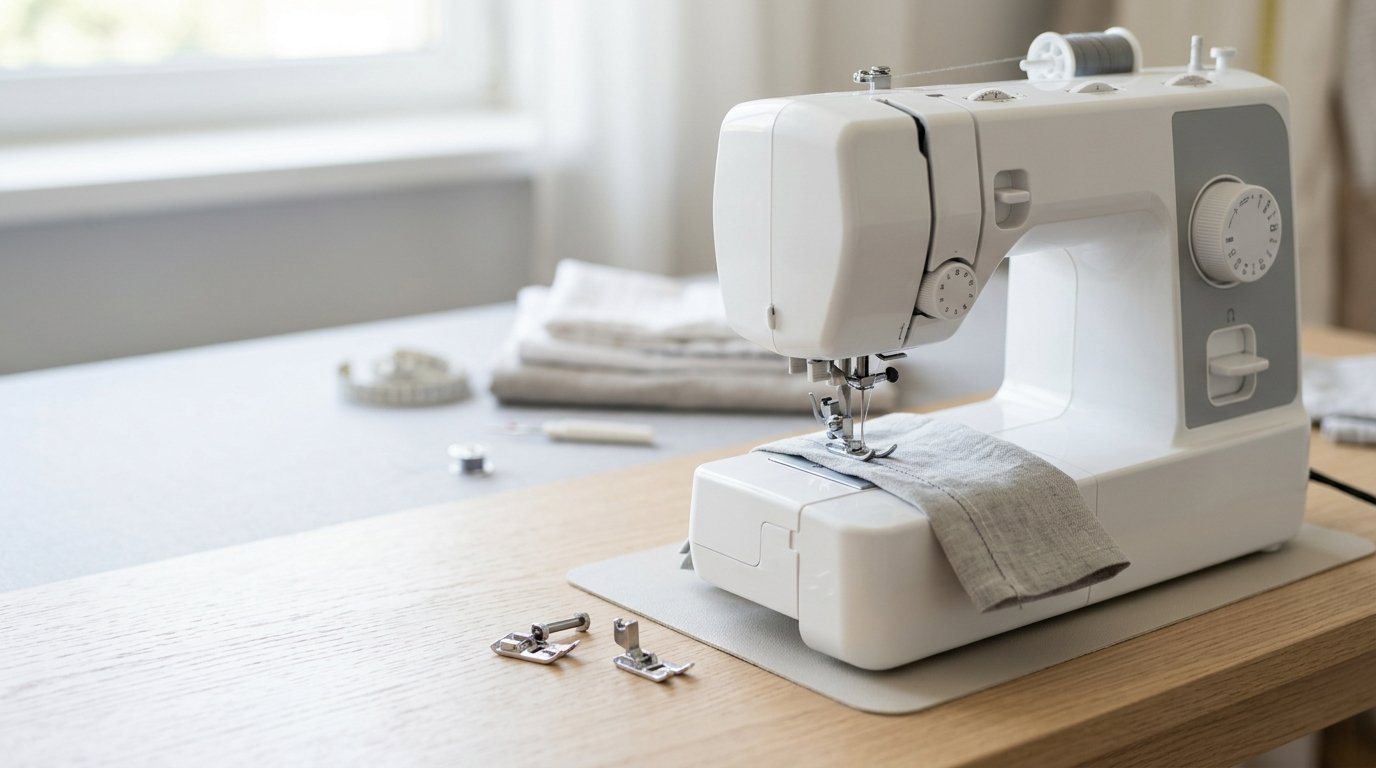
The main takeaway is this: a sewing machine shank is the holder on the machine, and the presser foot is the accessory that attaches to it. To know whether a presser foot will fit, you need to match the foot’s attachment style to your machine’s shank type.
Most home sewing machines use a low shank system. Some machines use high shank or slant shank systems, and these are not automatically interchangeable. On top of that, many modern machines use snap-on feet, where the foot clicks onto a small ankle or adapter, while others use screw-on feet that attach directly with a screw.
A simple way to think about compatibility is:
- Identify your machine’s shank type.
- Check whether your machine uses snap-on or screw-on feet.
- Confirm whether the specific foot is made for that shank or needs an adapter.
- Check your manual if the machine is a specialty, industrial, or brand-specific model.
If a foot listing says “fits most low shank machines,” that usually means many domestic machines, not every machine on the market. The safest match comes from combining your manual, the machine model number, and the foot’s stated compatibility.
How to Think About This Topic
A helpful mental model is to split the system into two sides:
- Machine side: the shank setup on the sewing machine
- Accessory side: the presser foot that attaches there
That matters because many beginners shop by function first: zipper foot, walking foot, rolled hem foot, edge-stitch foot. But the better question is: Will this foot physically connect to my machine? That is the real issue behind understanding sewing machine shanks presser feet.
The shank is not the same thing as the foot. The shank is the support arm or holder behind the foot. On some machines, the shank and ankle remain on the machine and you swap only the bottom foot. On others, especially with some specialty feet, you remove more of the assembly and install a larger unit.
Here is a quick comparison:
| Shank type | Visual clue | Common on | Feet that usually fit |
|---|---|---|---|
| Low shank | Short distance from presser bar screw to needle plate area | Most home machines | Many domestic snap-on and low shank screw-on feet |
| High shank | Taller distance from presser bar screw to needle plate area | Some quilting and older machines | High shank feet or high shank attachments |
| Slant shank | Presser bar angles forward | Certain vintage Singer models | Slant-shank-specific feet |
| Snap-on system | Foot clicks onto ankle | Many modern domestic machines | Snap-on feet that match the machine’s shank setup |
| Screw-on system | Foot fastens directly with a screw | Older or specialty setups | Screw-on feet made for that shank type |
The “low,” “high,” and “slant” labels describe the machine’s geometry, not the task the foot performs. A zipper foot can exist in low shank, high shank, snap-on, or screw-on versions. A walking foot may be sold for low shank or high shank machines. So the function name alone does not guarantee fit.
This is why product labels can feel confusing. A listing may say “low shank snap-on foot,” which actually gives you two pieces of information: the machine is low shank, and the foot attaches through a snap-on ankle. Another listing may say “low shank walking foot,” which often means a larger attachment designed for a low shank machine, usually installed with a screw rather than snapped on.
For your purposes, the goal is not to memorize every foot type. It is to understand the connection system well enough to avoid buying the wrong part.
Practical Guidance
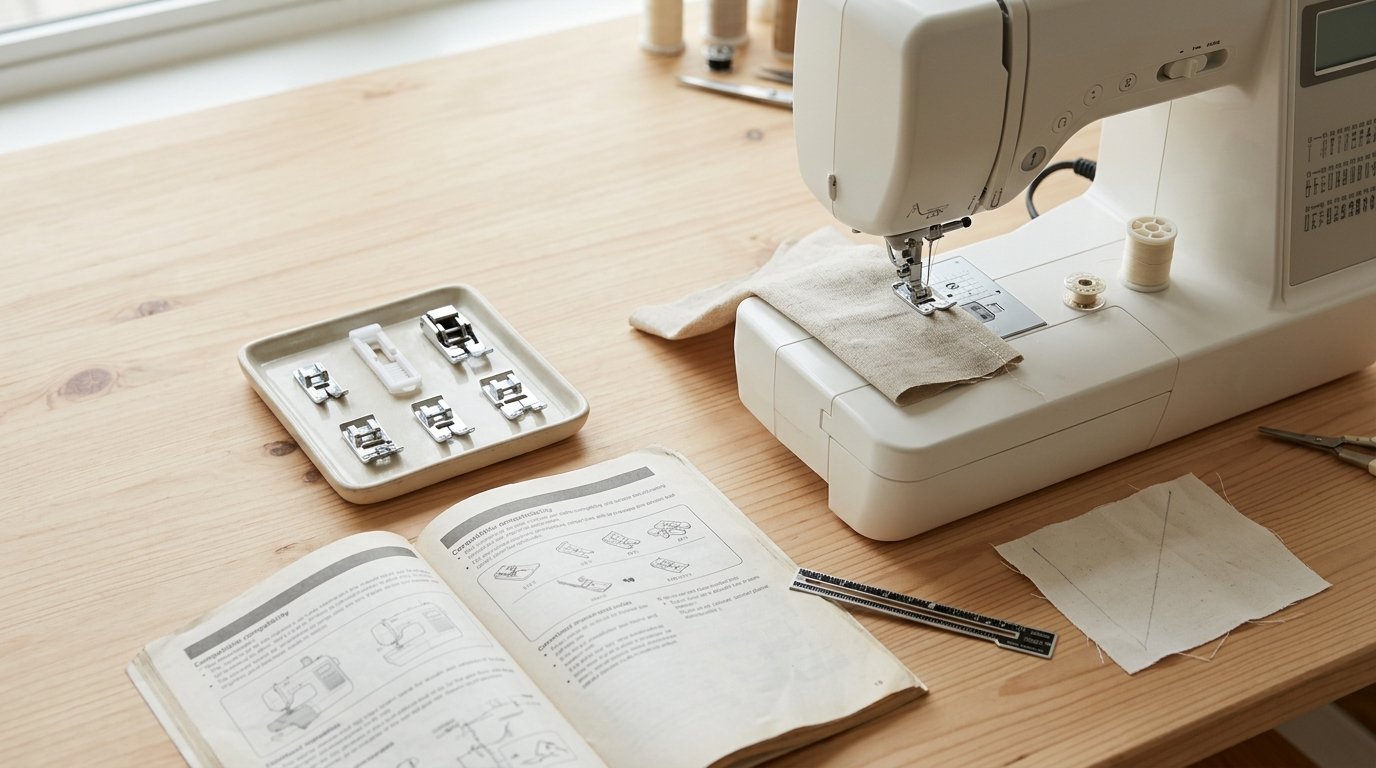
The easiest way to identify compatibility is to work through a short checklist.
1. Check Your Machine Manual First
Your manual often states whether the machine uses low shank, high shank, slant shank, snap-on feet, or specific branded feet. If you still have the original standard foot attached, the manual may also name that foot and show how it mounts.
If the manual is missing, search by exact model number on the manufacturer’s site before relying on a marketplace listing.
2. Look at How the Current Foot Attaches
If your current foot clicks onto a small holder, you likely have a snap-on setup. If you remove the whole foot with a side screw, you may be dealing with a screw-on foot or a larger specialty attachment.
Also look at the vertical space between the presser bar screw and the needle plate area. That helps distinguish low shank from high shank. Slant shank machines are usually visually obvious because the presser mechanism angles forward rather than sitting straight.
3. Read Foot Listings Carefully
Look for phrases such as:
- “Fits most low shank machines”
- “Snap-on foot for domestic machines”
- “High shank adapter required”
- “Not compatible with slant shank machines”
- “Brand-specific foot for [model series]”
These phrases matter more than the foot’s sewing purpose. For example:
- A zipper foot may come in snap-on and screw-on forms.
- A walking foot often replaces more of the foot assembly and must match shank height.
- A ruffler or other bulky specialty attachment may have stricter compatibility than a simple straight-stitch foot.
4. Know When “Most Machines” Does Not Mean Yours
“Universal” usually means broadly compatible with many domestic low shank machines. It does not guarantee compatibility with:
- slant shank machines
- some computerized specialty models
- industrial machines
- certain brand-specific systems
- needle-feed or dual-feed designs
If your machine has built-in dual feed, unusually wide stitches, or a proprietary foot holder, generic feet may need extra checking.
5. Use Adapters When Appropriate
Adapters can solve some mismatch problems, especially between snap-on and certain low shank configurations. But adapters do not make every foot safe or effective. A bulky foot on the wrong geometry can sit at the wrong angle, strike the needle, or feed fabric poorly.
A good example is a low shank machine that uses a particular snap-on ankle. You may be able to use many generic snap-on feet with a compatible ankle. But a high shank foot is not something you should force onto a low shank machine just because a seller says “adjustable.”
6. Match the Foot to the Job After You Match the Shank
Once fit is confirmed, then choose by function. A beginner might sensibly start with:
- zipper foot
- blind hem foot
- overcasting foot
- walking foot
- quarter-inch quilting foot
That is enough to cover many common tasks without getting lost in dozens of specialty options.
7. Watch for Compatibility Warning Signs
A foot may be the wrong match if:
- it will not latch securely
- it sits crooked
- the needle does not line up with the needle opening
- the foot blocks zigzag width your machine normally uses
- fabric feeding becomes uneven immediately
- the needle hits metal
Stop and recheck before sewing further. Compatibility problems are not just inconvenient; they can damage needles, feet, or the machine.
A Simple Buying Routine
Before ordering, gather three facts:
- Your exact machine model
- Your shank type and attachment style
- The foot listing’s compatibility statement
If those three line up, you are usually on solid ground. If not, buy from a source that lists model compatibility clearly or consult the manufacturer’s presser foot chart.
FAQ
Are All Low Shank Presser Feet Interchangeable?
No. Many low shank feet fit many domestic machines, but not all are interchangeable. You still need to check whether the foot is snap-on or screw-on, whether it is made for your stitch width, and whether your machine has any brand-specific or specialty limitations.
Can I Use a High Shank Foot on a Low Shank Machine?
Usually no. High shank and low shank systems are different in height and alignment. Even if something seems close, the foot may sit incorrectly or cause needle strikes. Use a foot designed for your machine or a manufacturer-approved adapter when one exists.
What Is the Difference Between a Snap-on Foot and a Shank?
The shank is part of the machine’s foot-holding setup. A snap-on foot is a type of foot attachment that clicks onto an ankle or holder. In other words, the shank describes the machine-side system, while snap-on describes how the foot connects.
Do I Need an Adapter for Specialty Presser Feet?
Sometimes. Some specialty feet attach directly, while others need a specific ankle, adapter, or shank height match. Walking feet, rufflers, and brand-specific accessories are common examples. Check the product instructions and your machine manual before buying rather than assuming a generic fit.